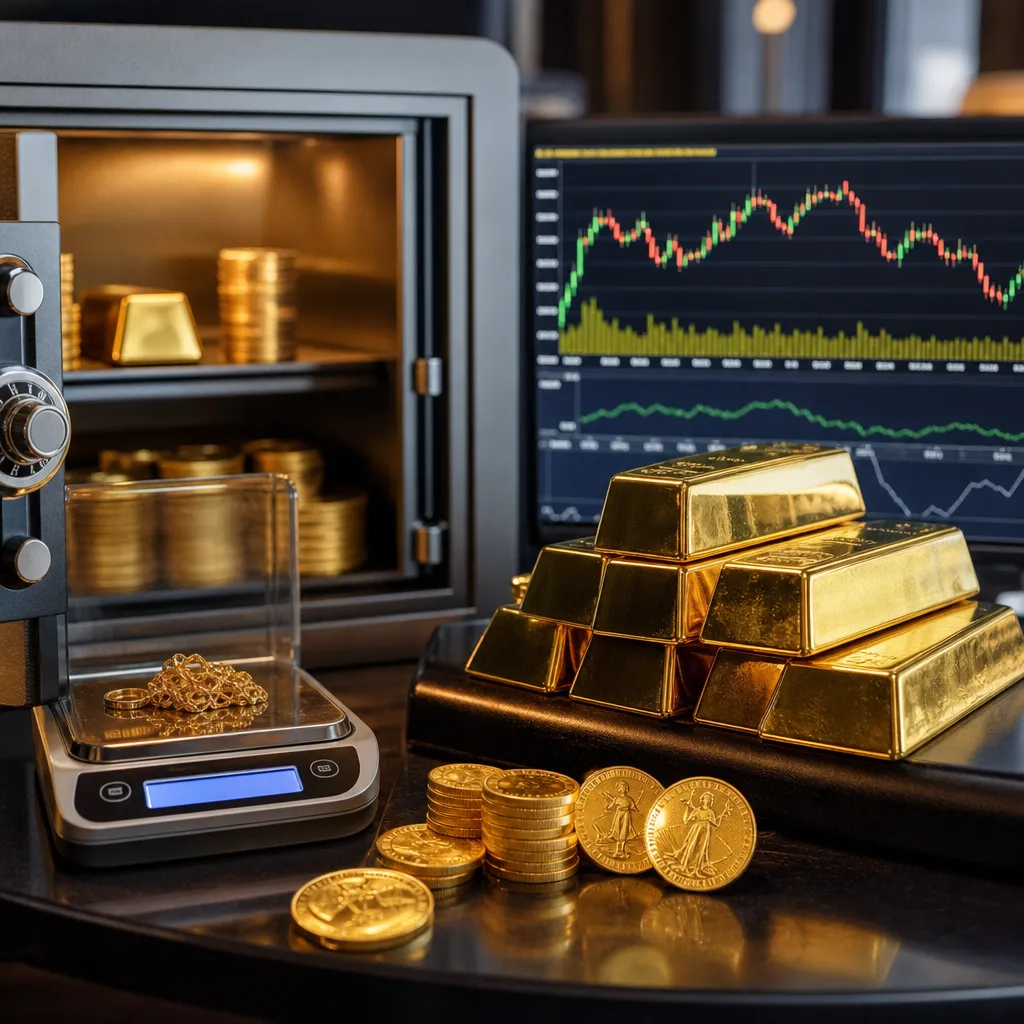
Gold market opening hours are not as simple as a single bell ringing on one exchange. Gold trades through overlapping global markets including the over-the-counter spot market, futures exchanges such as COMEX, and regional physical trading hubs. For most practical purposes, gold is available to trade nearly 24 hours a day from Monday to Friday, but liquidity, spreads, volatility, and price reliability change a lot depending on the time of day.
If you want to trade gold, buy bullion, follow the live gold price, or understand why price moves often cluster around certain hours, the key is to know which gold market you are looking at. The opening hours for spot gold, gold futures, retail CFD platforms, and physical dealers are related, but they are not identical. That distinction matters because execution quality, market depth, and gap risk depend heavily on timing.
What “gold market opening hours” actually means
When people search for gold market opening hours, they usually mean one of four things: when the global gold price starts moving for the week, when gold futures can be traded, when the spot market is active, or when local dealers and brokers are open. These are different layers of the market.
Unlike a national stock exchange, gold does not have one single global opening and closing time. The international price is discovered across a chain of trading centers that hand off activity from one time zone to the next. As Asia opens, liquidity begins to build. As Europe joins, trading deepens. When the US comes in, gold often sees its heaviest volume.
| Market segment | What it is | Typical availability | Why it matters |
|---|---|---|---|
| Spot gold | Global OTC market for immediate pricing reference | Effectively 24 hours, Monday to Friday | Drives the widely quoted international gold price |
| Gold futures | Standardized exchange-traded contracts, mainly on COMEX | Nearly 24 hours on trading days, with brief maintenance breaks | Very important for price discovery and short-term trading |
| Retail broker platforms | CFDs, spread bets, or broker spot products | Usually broad weekday access, broker-dependent | Access point for many individual traders |
| Physical bullion dealers | Bars and coins sold to investors | Local business hours or online ordering windows | Retail purchase prices can differ from spot due to premiums |
The main takeaway is that there is no single universal gold opening hour. What opens and closes depends on whether you mean the institutional market, exchange-traded futures, or retail physical trading.
When the gold market opens each week
In practical market terms, gold trading resumes for the week when the first major financial centers in Asia begin operating after the weekend. Retail platforms often reflect this as a Sunday evening open in North American time zones, which corresponds to Monday morning in Asia.
For many traders, the most useful rule is this: gold is generally tradable from late Sunday evening to late Friday evening in US time, with continuous pricing through the business week except for short pauses on some platforms and futures venues.
That said, the exact opening timestamp varies by:
- the broker or platform you use,
- your time zone,
- daylight saving time changes,
- the product being traded,
- exchange maintenance windows.
This is why two platforms may show slightly different “market open” times even when both are referencing the same global gold market.
Main gold trading sessions and why they matter
Gold trading follows the rhythm of the global foreign exchange and commodities ecosystem. Liquidity and volatility typically change as major regions come online.
The table below shows the practical structure of global gold trading activity.
| Session | Main centers | Typical market character | What traders often watch |
|---|---|---|---|
| Asian session | Sydney, Tokyo, Hong Kong, Shanghai, Singapore | Market opens for the week; liquidity builds gradually | Gap reactions, early directional tone, regional physical demand |
| European session | London, Zurich | Deeper liquidity and stronger institutional participation | More reliable price discovery, stronger moves on macro news |
| US session | New York | Often the highest futures activity and strong reaction to data | COMEX flows, US yields, dollar moves, macro releases |
| Session overlaps | Europe-US overlap especially | Usually the most liquid period | Tighter spreads, faster execution, breakout potential |
For many active traders, the London and New York overlap is often the most important part of the day. This is when large institutional participants are active simultaneously, which can improve depth and tighten spreads.
Spot gold hours versus gold futures hours
Spot gold and gold futures are closely linked, but they are not the same market. Spot gold is primarily an over-the-counter market centered around major banks, dealers, and liquidity providers. Gold futures are listed contracts on exchanges, with COMEX futures being especially influential.
Spot gold appears continuous because dealers quote prices around the clock during the business week. Futures, by contrast, trade according to exchange schedules. Modern electronic futures trading is extensive, but it still usually includes short daily interruptions for clearing or system maintenance.
Why this difference matters
- Price gaps: futures may pause briefly while the OTC market framework remains broader.
- Execution: some retail platforms mirror futures liquidity more than true wholesale spot liquidity.
- News sensitivity: US economic releases often have an especially strong effect during active COMEX hours.
- Chart differences: different products may show slightly different highs, lows, or candle closes.
If you trade short term, it is important to know whether your chart is based on spot gold, front-month futures, or a broker’s synthetic pricing feed.
When are gold market hours most important for traders?
Opening hours matter because market conditions are not uniform throughout the day. Gold can technically be tradable for most of the week, but the quality of trading opportunities changes by session.
Here is a practical guide to what the opening hours often imply.
| Time condition | Typical effect on gold trading | Practical implication |
|---|---|---|
| Weekly open | Higher risk of gaps after weekend news | Be careful with stop placement and thin liquidity |
| Early Asian hours | Lighter liquidity than later major overlaps | Moves can be less reliable and spreads may be wider |
| London open | Liquidity usually improves | Institutional participation becomes more meaningful |
| US data release window | Volatility can jump sharply | Gold may react quickly to yields, inflation, and the dollar |
| End of US session | Liquidity may fade | Short-term signals can become less dependable |
The practical lesson is that the “best” time to trade gold is often not the earliest time it is open, but the time when enough participation exists to support efficient execution.
How opening hours affect spreads, liquidity, and volatility
Gold does not behave the same way in every session. Three market features tend to change the most: spreads, liquidity, and volatility.
Spreads
Bid-ask spreads are usually tighter when more banks, funds, hedgers, and futures traders are active at the same time. They may widen around the weekly open, during holidays, or in thin overnight periods on some platforms.
Liquidity
Liquidity is the market’s ability to absorb trades without large price disruption. It is generally stronger when London and New York are active. Lower liquidity increases slippage risk and can make breakouts look more dramatic than they really are.
Volatility
Gold volatility often rises during major macroeconomic releases, central bank events, or sudden geopolitical headlines. Volatility is not always highest during low-liquidity periods; more often, the biggest durable moves come when both liquidity and information flow are high.
This is one reason gold may appear calm during one part of the day and suddenly accelerate during another. It is not only about the clock; it is about who is active and what information is hitting the market.
What physical gold buyers should know about market hours
If you are buying coins or bars rather than trading charts, opening hours still matter, but in a different way. Most dealers price products based on the live wholesale gold market while also adding premiums for fabrication, distribution, inventory, and margin.
That means a dealer’s website may show prices updating through the day even if its shipping desk or customer service team is only open during local business hours. Some dealers pause quoting during very fast markets or outside core liquidity windows.
Physical buyers should pay attention to:
- dealer operating hours, which are separate from the global gold market,
- premium changes, especially during volatility spikes,
- local holidays, which can affect delivery and quoting,
- weekend pricing, when some dealers may widen margins or stop live repricing.
The spot price may be global, but the actual retail purchase experience is local and operationally constrained.
Common exceptions and limitations
It is a mistake to assume that “24 hours” means constant trading conditions. Gold may be accessible most of the week, but several exceptions matter.
- Weekends: the main global market is not continuously active through the weekend.
- Exchange maintenance breaks: futures venues often pause briefly each day.
- Public holidays: liquidity can be thin even if a platform remains open.
- Broker-specific schedules: CFDs and retail products may have narrower hours than institutional markets.
- Daylight saving shifts: session overlaps move by one hour in some parts of the year.
Another important limitation is that not all quoted gold prices come from the same source. A bullion dealer, a CFD broker, a futures exchange, and a data website may all display slightly different prices at the same moment because of product structure, spread policy, and data timing.
How to monitor gold market hours in practice
The most effective approach is to track the schedule of the specific product you use rather than rely on a generic statement that gold trades 24/5. A futures trader should follow exchange hours. A CFD trader should follow broker hours and rollover times. A bullion buyer should check dealer quoting and settlement procedures.
In practice, pay attention to:
- the opening time of your own platform in your local time zone,
- the daily maintenance break if you trade futures or broker derivatives,
- the London open and New York open,
- major US economic data times,
- holiday schedules in the US, UK, China, and other major financial centers.
For short-term traders, gold market hours are not just administrative details. They are part of market structure, and market structure directly affects risk.
FAQ
Is the gold market open 24 hours a day?
Not in a literal uninterrupted universal sense, but for practical purposes gold trades nearly 24 hours a day from Monday to Friday across global spot and futures markets. There are usually short exchange pauses and product-specific interruptions.
What time does the gold market open on Sunday?
Many retail platforms begin quoting gold on Sunday evening in North American time, which corresponds to Monday morning in Asia. The exact time depends on the platform, the product, and daylight saving adjustments.
What is the best time to trade gold?
For many active traders, the most efficient period is often when London and New York activity overlaps. That window tends to offer deeper liquidity, tighter spreads, and stronger reactions to macroeconomic news.
Why does gold sometimes gap at the weekly open?
Weekend geopolitical events, central bank developments, currency moves, or shifts in market sentiment can cause repricing before full liquidity returns. When trading resumes, the market may open at a different level from the previous close.
Are gold futures hours the same as spot gold hours?
No. They are closely related but not identical. Spot gold is an OTC market with broad global continuity, while gold futures trade according to exchange schedules and usually include brief daily maintenance breaks.
Do physical gold dealers follow the same hours as the global market?
Not exactly. Dealers may reference the live global gold price, but their order processing, customer support, delivery operations, and even live quoting policies follow their own business hours and risk rules.
Why are gold spreads wider at some times of day?
Spreads often widen when liquidity is thinner, such as around the weekly open, on holidays, or outside major session overlaps. They can also widen during sudden news events when volatility rises sharply.
Sources
- CME Group – gold futures contract and trading hours information
- LBMA – global OTC gold market and benchmark information
- World Gold Council – gold market structure and trading research