The golden era of the early twentieth century witnessed a unique interplay between currency systems and precious metals. The global adherence to the gold standard shaped trade balances, influenced domestic policies, and ultimately determined the fate of national economies. By retracing events from the Roaring Twenties through the depths of the Great Depression, one uncovers critical insights into how fluctuations in the world gold price affected international commerce and financial stability. This exploration sheds light on enduring principles that continue to guide modern **central banks** and investors seeking to navigate volatile markets.
The Gold Standard and the Roaring Twenties
Throughout the 1920s, most major economies maintained strict convertibility of their currencies into gold at fixed parities. This arrangement fostered a perception of monetary stability that underpinned cross-border transactions. Nations with large gold **reserves** were lauded for their ability to defend exchange rates, while others struggled to maintain parity when external pressures mounted. The establishment of the Bank for International Settlements in 1930 aimed to coordinate central bank policies, ensuring adequate liquidity flourished in an increasingly interconnected financial system.
Industrial expansion and consumer optimism drove stock markets to unprecedented highs, with gold acting as a silent pillar of trust in the system. Investors believed that behind every currency note lay a tangible claim to the precious metal. This belief restrained frivolous monetary expansions, as governments hesitated to issue excessive currency without the necessary gold backing. In theory, rigid adherence to the gold standard insulated economies from rampant **inflation**, while promoting fiscal discipline and encouraging long-term planning among businesses and households.
Yet beneath the surface, structural imbalances emerged. Countries running persistent trade deficits lost gold to surplus nations, gradually eroding their ability to uphold convertibility. Competitive deflationary measures, such as raising interest rates and cutting public expenditure, were adopted to stem outflows. While these steps temporarily preserved fixed exchange rates, they often aggravated domestic recessions, sowing the seeds for the more dramatic breakdown that lay ahead.
The Collapse and the Disintegration of Global Gold Links
The Wall Street crash of October 1929 triggered capital flight and triggered rising protective tariffs. As export earnings plunged, deficit countries saw their gold **reserves** deplete at an alarming pace. By late 1931, the United Kingdom became the first major economy to suspend gold convertibility, accepting a floating currency value that reflected market forces. This signaled the unraveling of the Bretton Woods-like order that had prevailed through the 1920s, and it foreshadowed an epoch of monetary experimentation.
With the breakdown of gold links, some nations devalued their currencies to regain export competitiveness, while others clung to the old regime, deepening their downturns. The United States initially maintained its gold peg, but deflationary spirals worsened unemployment and bank failures. In a bold departure from orthodoxy, President Franklin D. Roosevelt in 1933 prohibited private gold ownership and revalued the dollar from $20.67 to $35 per ounce. By artificially raising the gold price, the administration aimed to expand the money supply, counteract deflation, and restore public confidence.
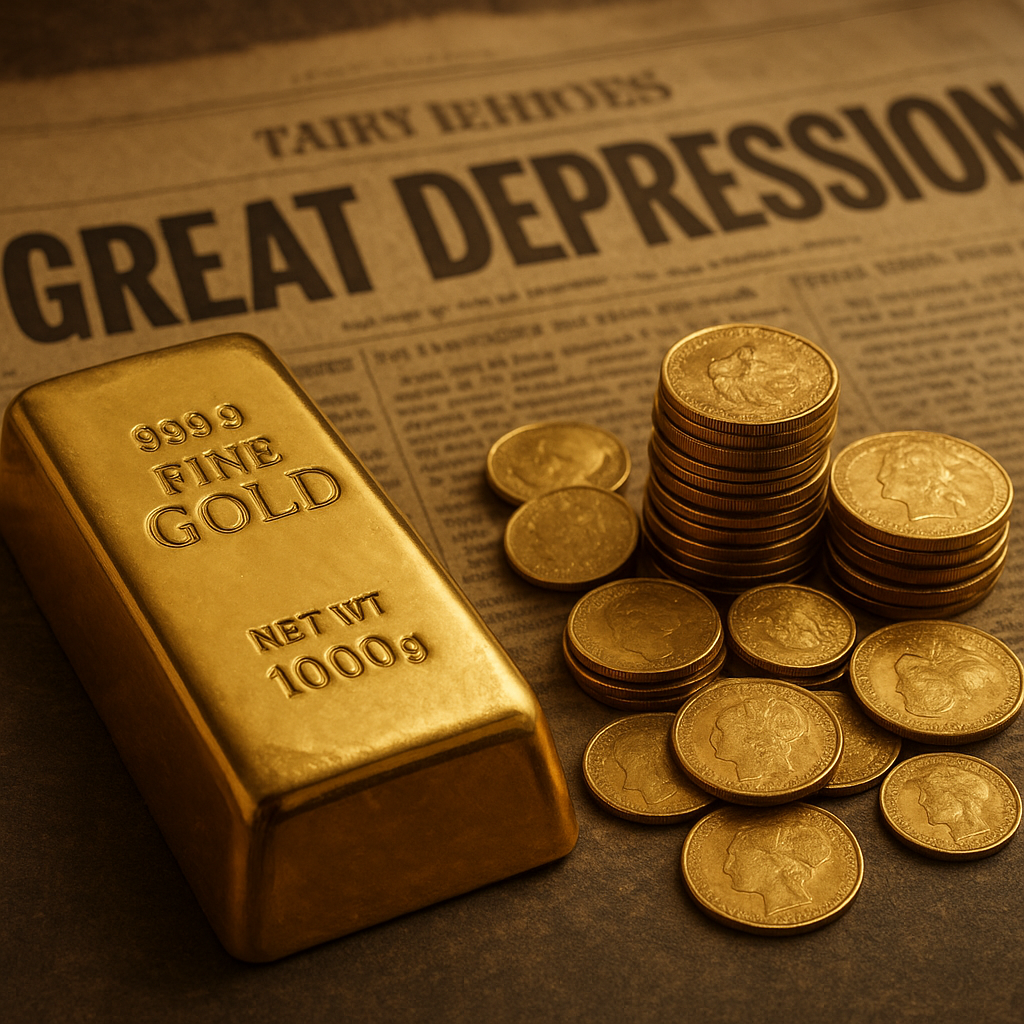
Despite these interventions, global trade contracted by nearly two-thirds between 1929 and 1933. The discordant patchwork of devaluations and discriminatory trade barriers underscored how the collapse of a unified gold system can exacerbate economic dislocation. In this maelstrom, gold’s role shifted from an automatic stabilizer to a scarce asset prized for its scarcity rather than its function as a universal monetary anchor.
Lessons for Modern Markets
The experience of the Great Depression offers sobering reminders about the limits of rigid monetary frameworks. While a hard link to gold once enforced fiscal restraint and curbed runaway inflation, it also restricted policy flexibility during crises. Today’s policymakers balance the need for price stability with the agility to employ unconventional tools—quantitative easing, forward guidance, and negative rates—to prop up demand when standard levers prove insufficient.
Investors, too, glean valuable guidance from history. In times of uncertainty, gold often serves as a hedge against currency debasement and financial turmoil. The 1933 revaluation taught that artificial price controls can only temporarily distort market fundamentals before triggering unintended consequences. Modern portfolios frequently include gold for diversification, recognizing its low correlation with equities and fixed income. By allocating a modest share to precious metals, investors preserve purchasing power during episodes of excessive money creation or geopolitical strife.
Speculative frenzies that drive gold prices to stratospheric levels may echo the irrational exuberance seen in stock markets before 1929. Vigilance is essential to distinguish between fundamentals—such as central bank demand and mine production—and sentiment-driven swings. Robust risk management frameworks should account for gold’s storied history as a crisis commodity, while guarding against undue exposure to potential cyclical reversals in price.
Ongoing Role of Gold in Contemporary Economies
In the twenty-first century, gold no longer anchors currencies but remains a strategic asset on sovereign balance sheets. Many governments bolster their foreign exchange holdings with bullion, viewing it as insurance against economic shocks, capital controls, or currency wars. Even as digital payment networks and cryptocurrencies gain traction, gold retains its physical allure and centuries-old legacy as a store of value.
Recent decades have witnessed central bank purchases of gold at record rates, particularly among emerging economies seeking to reduce reliance on a single reserve currency. This shift reflects broader concerns about global financial architecture and the desire for greater resilience. Meanwhile, gold exchange-traded funds and futures markets offer private investors exposure to bullion without the complexities of storage and security.
The commodity’s dual character as both a financial instrument and an industrial input ensures that developments in jewelry demand, technology, and mining production continually influence its price dynamics. Environmental and geopolitical challenges—such as resource nationalism and sustainable mining practices—add new layers of complexity to supply projections. Consequently, tracking world gold price trends demands a multifaceted approach that blends economic indicators, policy analysis, and market sentiment.
By revisiting the triumphs and tribulations of the gold standard era, today’s stakeholders gain enduring perspectives on risk, regulation, and the delicate balance between rules-based frameworks and adaptive policy responses.