Assessing the genuine worth of gold demands more than watching its daily price tick upwards. Investors and analysts must factor in the erosive effect of inflation on nominal returns to understand the real value of this timeless commodity. By applying a systematic adjustment process—often through the Consumer Price Index or other price indices—one can reveal how much purchasing power has truly been preserved or lost over time. This article explores the methodology for converting a historical nominal price series into inflation‐adjusted terms, highlights key global drivers that shape gold’s buying power, and outlines practical insights for market participants seeking a reliable hedge against economic uncertainty.
Understanding Inflation and Gold Price
Before calculating an inflation‐adjusted gold value, it’s crucial to distinguish between nominal and real metrics. The nominal price of gold is simply the face value quoted by exchanges or dealers, unadjusted for any changes in the general price level. In contrast, the real value of gold reflects its capacity to maintain or grow purchasing power over extended periods. Inflation, which measures the rate at which consumer goods and services increase in price, erodes the real returns of any asset held in currency terms. While gold is often viewed as a safeguard against inflationary pressures, ignoring its inflation‐adjusted performance can lead to misleading conclusions about its long‐term appeal. A one‐ounce bar valued at $400 in 1990 might seem to have multiplied several times over the decades, but once you apply a deflator to account for rising living costs, the story can look quite different. Properly distinguishing these concepts is the first step toward accurate analysis.
Calculating Real Gold Value Over Time
To calculate the inflation‐adjusted price of gold, follow a structured approach:
- Gather nominal gold price data for your target period, sourced from reputable exchanges such as the London Bullion Market Association (LBMA) or COMEX.
- Choose an appropriate price index. The most common is the Consumer Price Index, but some analysts prefer the Producer Price Index (PPI) or a GDP deflator.
- Retrieve index values for both the base year and the comparison year. This will form your adjustment ratio.
- Compute the adjustment factor: (Index in comparison year) ÷ (Index in base year).
- Multiply each historical nominal price by the adjustment factor to obtain inflation‐adjusted figures.
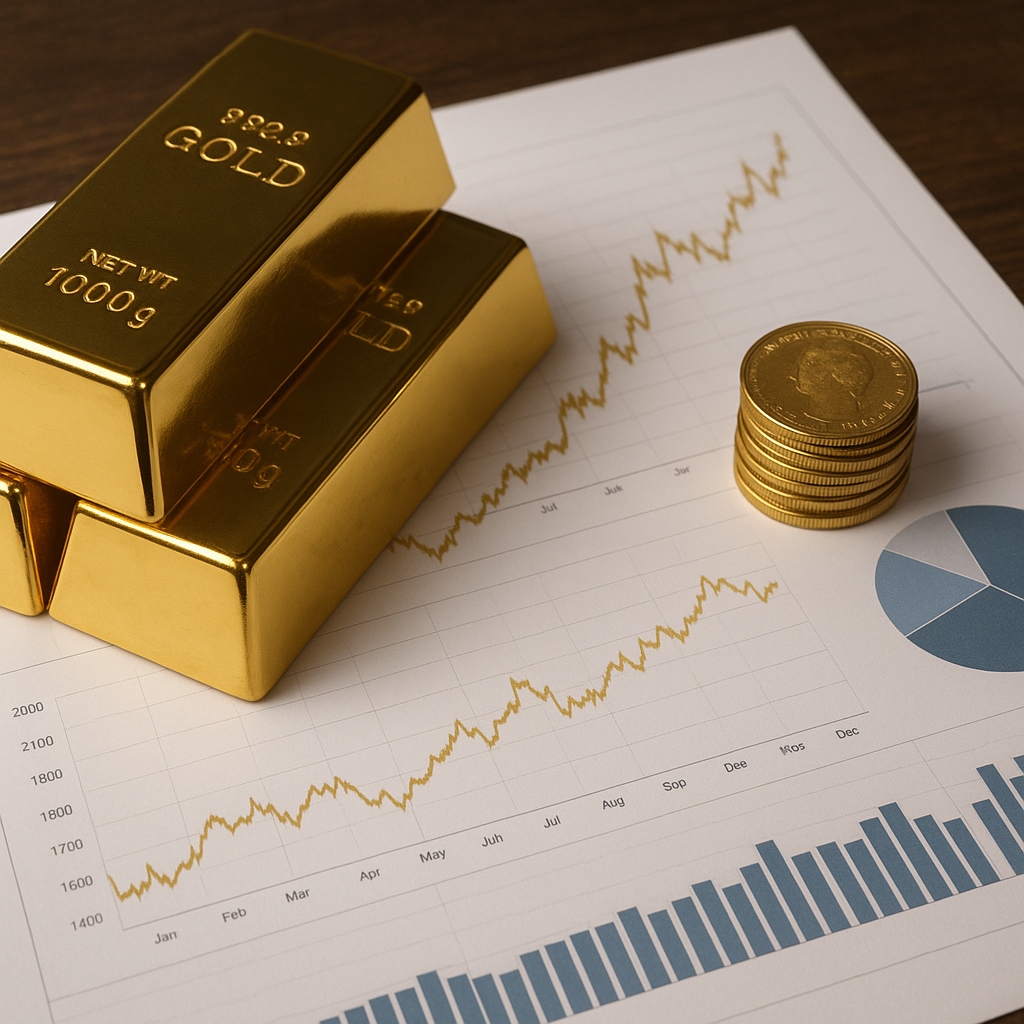
For example, if the CPI was 130 in the year 2000 and 260 in 2020, the adjustment factor is 260 ÷ 130 = 2. A nominal gold price of $300 per ounce in 2000 would equate to $600 in 2020 dollars. This simple yet powerful calculation converts raw market data into a historical series that reveals whether gold truly outpaced general price increases or merely kept pace with them. By charting these real prices alongside nominal figures, one gains a clearer perspective on long‐term performance and potential overvaluation or undervaluation episodes.
Global Factors Shaping Gold’s Inflation-Adjusted Performance
While inflation is a key variable, several other forces influence gold’s real value around the world. Geopolitical tensions, central bank policies, mining production costs, and currency fluctuations all play significant roles. Below are some critical factors:
- Currency Movements: Since gold is priced in dominant reserve currencies like the US dollar, shifts in exchange rates can magnify or dampen local currency returns.
- Central Bank Reserves: When major central banks increase or decrease gold holdings, they signal shifts in confidence toward fiat money, affecting global demand.
- Geopolitical Risk: Wars, trade disputes, and political instability often drive investors to gold as a safe haven, temporarily boosting its price.
- Mining Supply Dynamics: Operational costs, exploration success, and regulatory changes alter production levels, influencing price trends.
- Market Sentiment: Speculative flows and derivative positions can introduce short‐term spikes or dips that diverge from fundamental valuations.
When analyzing real returns, it’s essential to overlay these drivers on top of inflation‐adjusted data. Doing so helps explain periods when gold outperforms inflation dramatically—such as during the 2008 financial crisis—and stretches when it underwhelms despite high headline inflation. Recognizing the interplay between market volatility and macroeconomic trends empowers investors to interpret inflation‐adjusted charts with nuance rather than assume a direct one‐to‐one relationship.
Practical Implications for Investors
Translating inflation‐adjusted gold data into actionable investment strategies involves several considerations. First, determining an appropriate time horizon is vital. Short‐term traders might focus on monthly or quarterly real returns, while long‐term wealth preservers examine decade‐long inflation‐adjusted performance. Second, calibrating portfolio exposure depends on individual risk tolerances and liability profiles. For instance, an endowment fund seeking to match inflation might allocate a stable proportion to gold, adjusting holdings as valuations move above or below historical real averages.
Third, combining gold with other real assets—such as real estate or inflation‐protected securities—can enhance overall portfolio resilience. Since each asset reacts differently to inflationary regimes, a diversified basket reduces reliance on a single inflation hedge. Lastly, keep in mind transaction costs, storage fees, and tax implications, which can erode the theoretical benefits of inflation‐adjusted returns. By continuously monitoring the gap between nominal and real performance, investors can time purchases or sales when gold appears undervalued on a purchasing‐power basis, securing a more robust defense against future price‐level shifts.
Leveraging Historical Trends for Future Outlook
Reviewing centuries of inflation‐adjusted gold data offers valuable insights into its long‐term role as a store of value. From the post–Bretton Woods era through the dot-com bubble and beyond, gold has delivered periods of extraordinary real appreciation interspersed with extended consolidations. Identifying cyclic patterns—such as multi‐decade bull markets followed by prolonged corrections—can guide expectations and inform rebalancing decisions. For example, a long slump in real terms might signal a buying opportunity before the next leg up, whereas a sustained real peak could precede profit‐taking for risk‐averse holders.
Ultimately, no single indicator guarantees future returns. However, by grounding analyses in rigorous inflation‐adjusted frameworks and complementing them with awareness of evolving global trends, market participants stand a better chance of navigating uncertainty. The disciplined application of real‐value calculations transforms gold from a mere speculative asset into a strategic component of a well‐balanced financial plan.