The global financial landscape has witnessed a fascinating interplay between traditional safe-haven assets and emerging digital commodities. One of the most intriguing relationships is between the price movements of Bitcoin and the world gold price. As investors navigate geopolitical tensions, monetary policy shifts, and macroeconomic uncertainty, understanding the dynamics between these two asset classes has become crucial. This article delves into market drivers, historical trends, and strategic considerations, shedding light on how Bitcoin and gold interact in an ever-evolving investment environment.
Market Dynamics of Gold and Bitcoin
The market dynamics governing gold and Bitcoin illustrate two very different yet interconnected narratives. Gold has been revered for millennia as a store of value, a hedge against inflation, and a symbol of wealth preservation. In contrast, Bitcoin emerged in 2009 as the first digital asset, promising decentralization, censorship resistance, and a limited supply capped at 21 million coins. Despite their distinct origins, both assets share certain features that attract a similar investor base.
Supply Mechanics and Scarcity
Gold’s scarcity is rooted in geological constraints. Mined quantities increase slowly year over year, and above-ground stockpiles grow at a modest pace. Bitcoin’s scarcity, on the other hand, is protocol-enforced: miners receive diminishing block rewards, leading to the well-known halving events every 210,000 blocks. This engineered scarcity creates deflationary pressure similar to gold’s natural supply constraints.
Demand Drivers
- Central banks and sovereign reserves often accumulate gold to diversify foreign-exchange holdings.
- Retail and institutional investors seek Bitcoin exposure for portfolio diversification and potential high returns.
- Industrial demand for gold in electronics and jewelry underscores its multifaceted utility.
- Speculative trading and venture capital flows contribute significantly to Bitcoin’s volatility.
Historical Correlation and Price Behavior
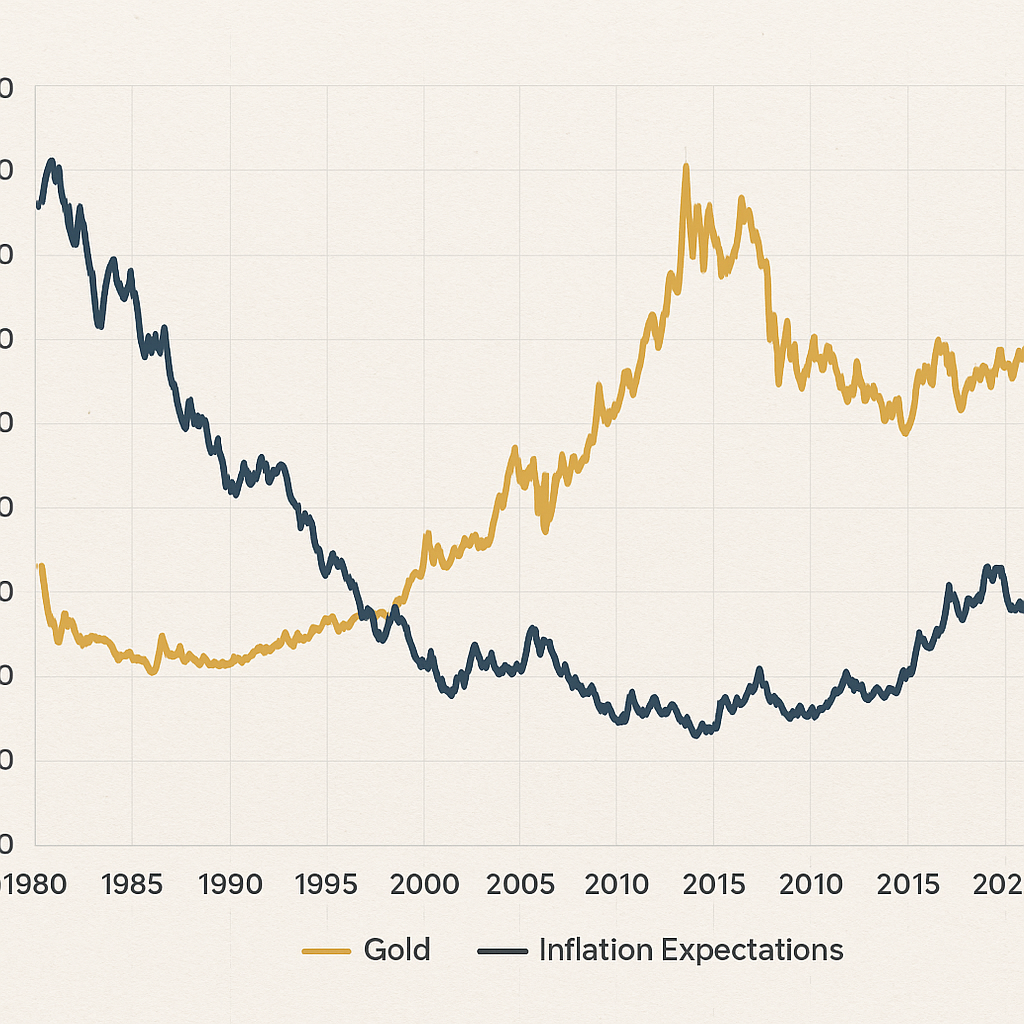
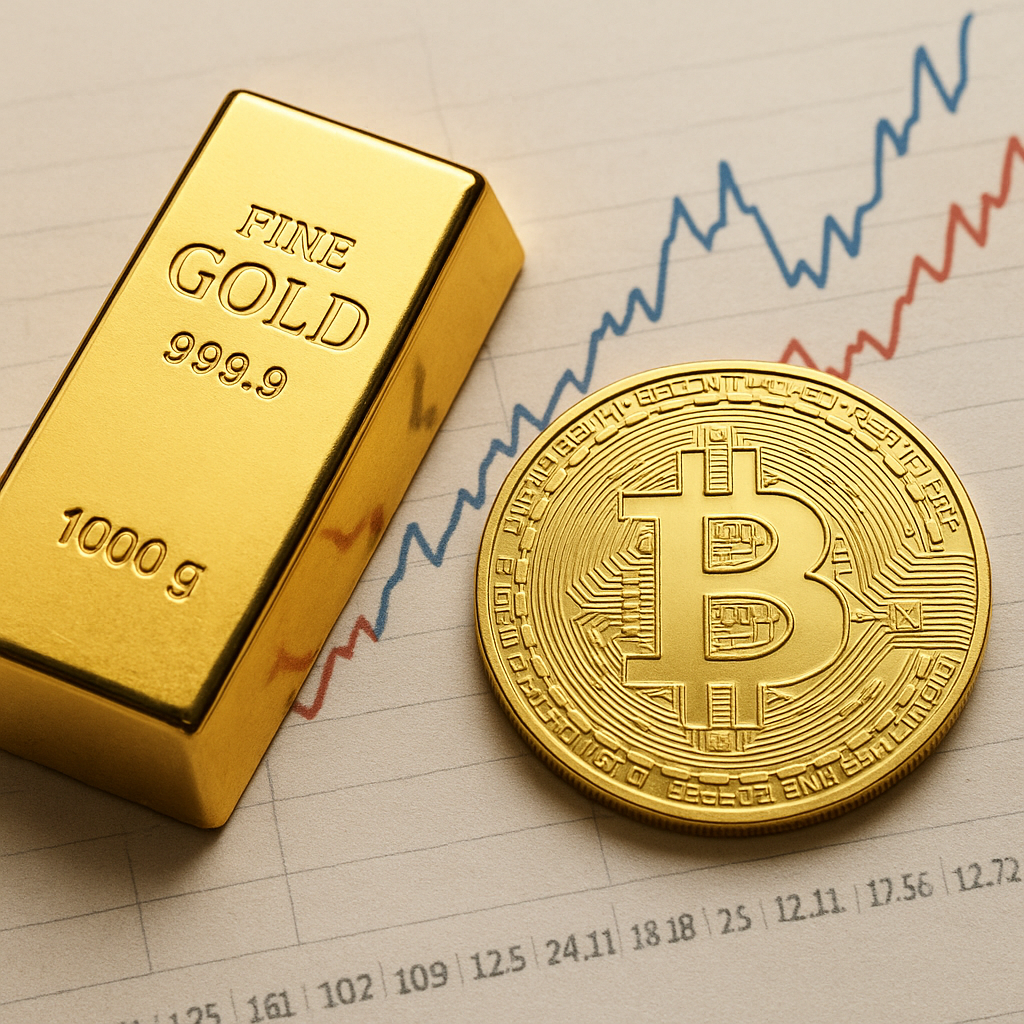
Examining the historical price charts of gold and Bitcoin reveals periods of both convergence and divergence. Traditional wisdom suggests that during times of market stress, gold prices rally as a safe haven while risk assets suffer. Bitcoin, often dubbed “digital gold,” occasionally exhibits similar behavior, but its correlation with gold is far from consistent.
Periods of Positive Correlation
- COVID-19 Market Shock (March 2020): Both Bitcoin and gold experienced rapid price fluctuations followed by strong recoveries as global stimulus measures rolled out.
- Inflationary Pressures (2021–2022): Rising consumer price indices boosted interest in both assets as hedges against currency debasement.
Episodes of Divergence
Despite moments of co-movement, Bitcoin often behaves more like a high-beta technology stock than a stable commodity. For instance, during the 2022 Federal Reserve rate hikes, gold sustained relative strength, while Bitcoin plunged sharply, reflecting its higher sensitivity to volatility and risk-off sentiment. These divergences underscore the need to view each asset’s unique risk-return profile separately.
Investment Strategies: Hedging and Diversification
Investors frequently ponder whether to allocate capital to gold, Bitcoin, or both. The answer depends on investment objectives, risk tolerance, and time horizon. Incorporating both assets into a portfolio can enhance diversification due to their imperfect correlation.
Gold as a Traditional Hedge
- Acts as a buffer against severe market drawdowns.
- Provides liquidity in times of systemic stress.
- Backed by centuries of monetary usage and institutional frameworks.
Bitcoin as an Alternative Growth Engine
- Offers outsized upside potential driven by technological adoption.
- Enables borderless transactions and programmable finance use cases.
- Attracts younger demographic segments seeking higher returns.
For balanced portfolios, a modest allocation to Bitcoin—often between 1% and 5%—can capture growth without overwhelming downside risk. Gold allocations of 5% to 15% help cushion against macro shocks and currency depreciation. An optimal mix depends on market conditions and individual goals, but a combined approach leverages the strengths of both assets.
Future Outlook and Macro Drivers
Looking ahead, several macro drivers will shape the interplay between Bitcoin and gold prices. Central bank policies, global debt levels, and geopolitical flashpoints will influence demand for safe havens. Meanwhile, regulatory developments, technological upgrades (like Bitcoin’s Lightning Network), and institutional adoption will dictate digital asset trajectories.
Central Bank Actions
Should major央banks tighten monetary policy aggressively, real interest rates will rise, potentially pressuring both gold and Bitcoin. Conversely, renewed quantitative easing or rate cuts could reignite bullish momentum for both assets as investors search for inflation-resistant stores of value.
Regulatory Landscape
Regulation remains a double-edged sword for Bitcoin. Clear frameworks can spur institutional inflows and broader acceptance, boosting prices. Yet onerous restrictions or outright bans in key markets could hamper liquidity and adoption, leading to prolonged periods of underperformance.
Technological and Market Innovation
Innovations in blockchain scalability, decentralised finance (DeFi), and tokenization of precious metals may blur the lines between the physical and digital value worlds. Portfolio solutions that combine allocated gold tokens with native cryptocurrency holdings could emerge, offering blended exposures that appeal to a diverse set of investors.
Ultimately, while gold retains its status as a time-tested store of wealth, Bitcoin continues to carve out its niche as a high-growth, speculative asset. Monitoring the evolving correlation patterns, understanding underlying drivers, and adjusting allocations dynamically will be essential for investors seeking to navigate the complexities of modern financial markets.