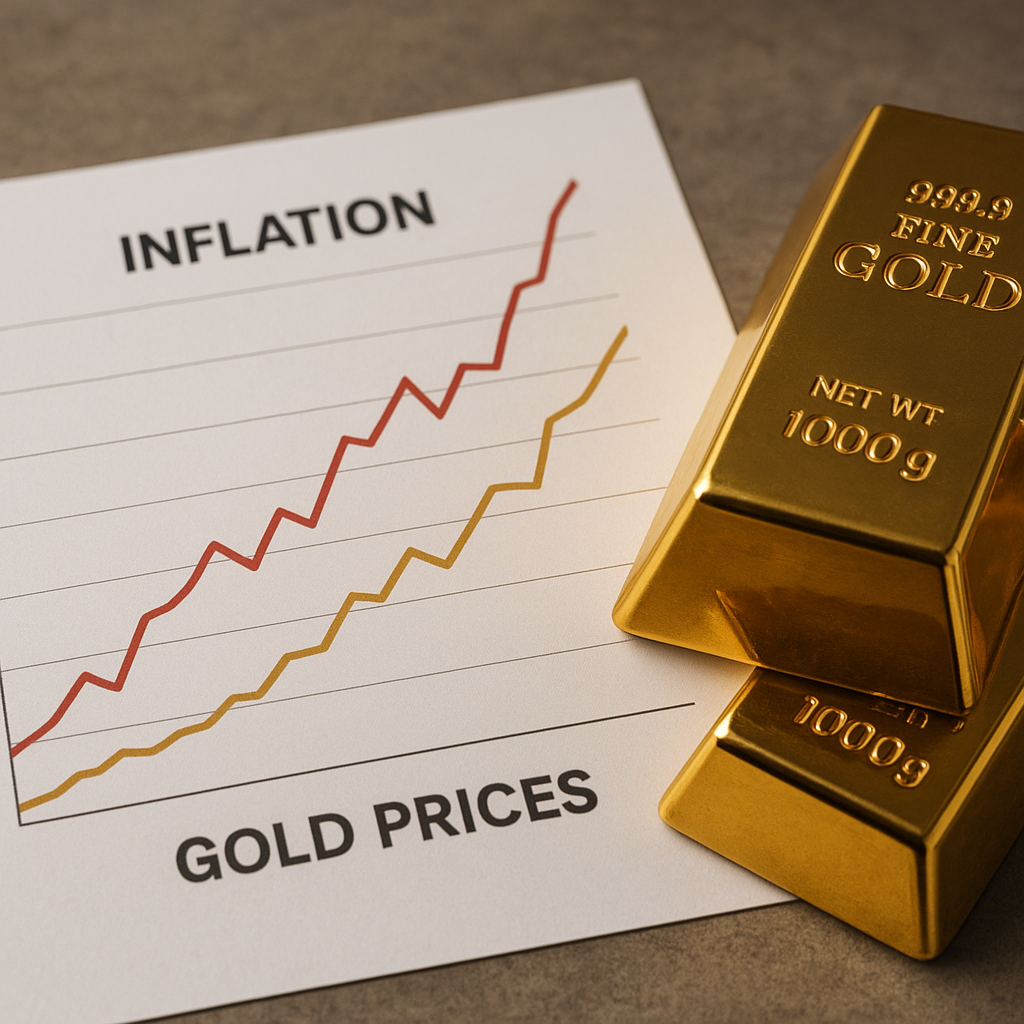
Gold has long been perceived as a fortress against the corrosive effects of economic instability. While many investors assume that rising inflation automatically propels gold prices higher, the metal’s market behavior often tells a more nuanced story. Understanding why gold does not always move in lockstep with inflation requires examining a host of financial, geopolitical, and psychological factors that influence its value.
Understanding the Historical Relationship between Gold and Inflation
Throughout much of the 20th century, gold maintained its allure as an inflation hedge. During periods of skyrocketing consumer prices, such as the 1970s in the United States, gold prices soared as investors scrambled to preserve purchasing power. However, this relationship has not held up consistently in subsequent decades. Modern financial systems and policy tools have altered how inflationary pressures impact asset valuations.
From Gold Standard to Fiat Currency
Under the gold standard, national currency values were directly convertible into a fixed weight of metal, tying monetary supply to gold reserves. As economies transitioned to fiat money, central monetary authorities gained the ability to expand or contract the money supply without immediate constraints from gold holdings. This shift decoupled price levels and gold quotes, introducing a new dynamic between inflation data and bullion demand.
Expectations versus Reality
Market participants often price inflation expectations well in advance. When actual consumer price index (CPI) figures fall in line with forecasts, gold may exhibit muted reactions despite elevated inflation. Conversely, a sudden deflationary surprise could send bullion tumbling if investors believe disinflation will persist. In short, anticipated inflationary trends factor into gold pricing far earlier than the release of headline data.
Key Factors Causing the Disparity
Several critical forces can cause gold prices to diverge from inflation trajectories. Recognizing these elements helps explain why the metal sometimes underperforms even amidst rising price levels.
- Real interest rates – When inflation rises but central banks lift nominal rates aggressively, real rates (nominal rates minus inflation) turn positive. Higher real rates increase the opportunity cost of holding non-yielding assets like gold, weighing on its price.
- Monetary policy signals – Forward guidance from central banks regarding future rate hikes or balance sheet adjustments can offset inflationary fears, drawing capital toward fixed-income securities instead of precious metals.
- Global demand shifts – Industrial and jewelry consumption, particularly in Asia, can sway the market independently of Western inflation readings. A slump in physical demand will pressure prices even if inflation is accelerating elsewhere.
- Geopolitical risk perception – Gold thrives on uncertainty. Periods of low geopolitical tension often correspond with subdued bullion performance despite climbing prices in consumer goods.
- Currency dynamics – A strong U.S. dollar frequently undermines gold, making it more expensive for holders of other currencies, thus dampening international buying interest.
Real-world Examples of Decoupling
Historical episodes offer vivid illustrations of gold’s unpredictable dance with inflation. By examining distinct market cycles, one can observe how other drivers sometimes overshadow raw price pressure.
Late 1990s to Early 2000s
During the dot-com bubble and its aftermath, U.S. inflation remained notably low, yet gold prices flatlined for nearly a decade. As equities attracted speculative capital and central banks focused on combating asset bubbles, the precious metal lost its luster despite benign consumer price metrics.
Post-2008 Financial Crisis
In the wake of the global banking meltdown, central banks unleashed unprecedented monetary stimulus. Inflationary concerns abounded, but deflationary headwinds from collapsing demand limited CPI growth. Gold climbed initially but plateaued by 2011, as worries shifted from inflation to the pace of global economic recovery.
Mid-2010s Slide
Between 2013 and 2015, commodity prices faced steep declines. Oil and metal benchmarks tumbled, exerting downward pressure on inflation expectations. Even though headline inflation in many economies hovered near target, gold prices retraced gains amid slumping market sentiment.
Implications for Investors and Future Outlook
For the modern Investor, recognizing gold’s complex interplay with inflation is vital for portfolio construction. Assuming a linear relationship can lead to missed opportunities or unintended exposures. Instead, successful strategies weigh multiple factors simultaneously.
Balancing Volatility and Protection
While gold may not always surge in high-inflation regimes, it remains a potent diversifier. Combining bullion with inflation-linked bonds, equities, and real assets can smooth portfolio returns. Investors must stay alert to shifts in central banks rhetoric and major macroeconomic releases rather than relying solely on CPI trajectories.
Geopolitical and Macro Triggers
Periods of intensified geopolitics or systemic risk often catalyze sharp gold rallies irrespective of inflation trends. Monitoring political tensions, changes in major banks’ reserve policies, and sudden currency devaluations can provide earlier signals for bullion entry or exit.
Long-term Diversification Imperative
Over decades, gold has demonstrated the capacity to preserve wealth in real terms, especially during regime shifts from deflationary recessions to inflationary recoveries. Even in short stretches when it underperforms consumer prices, the metal’s unique financial and psychological appeal justifies a measured allocation in diversified portfolios.