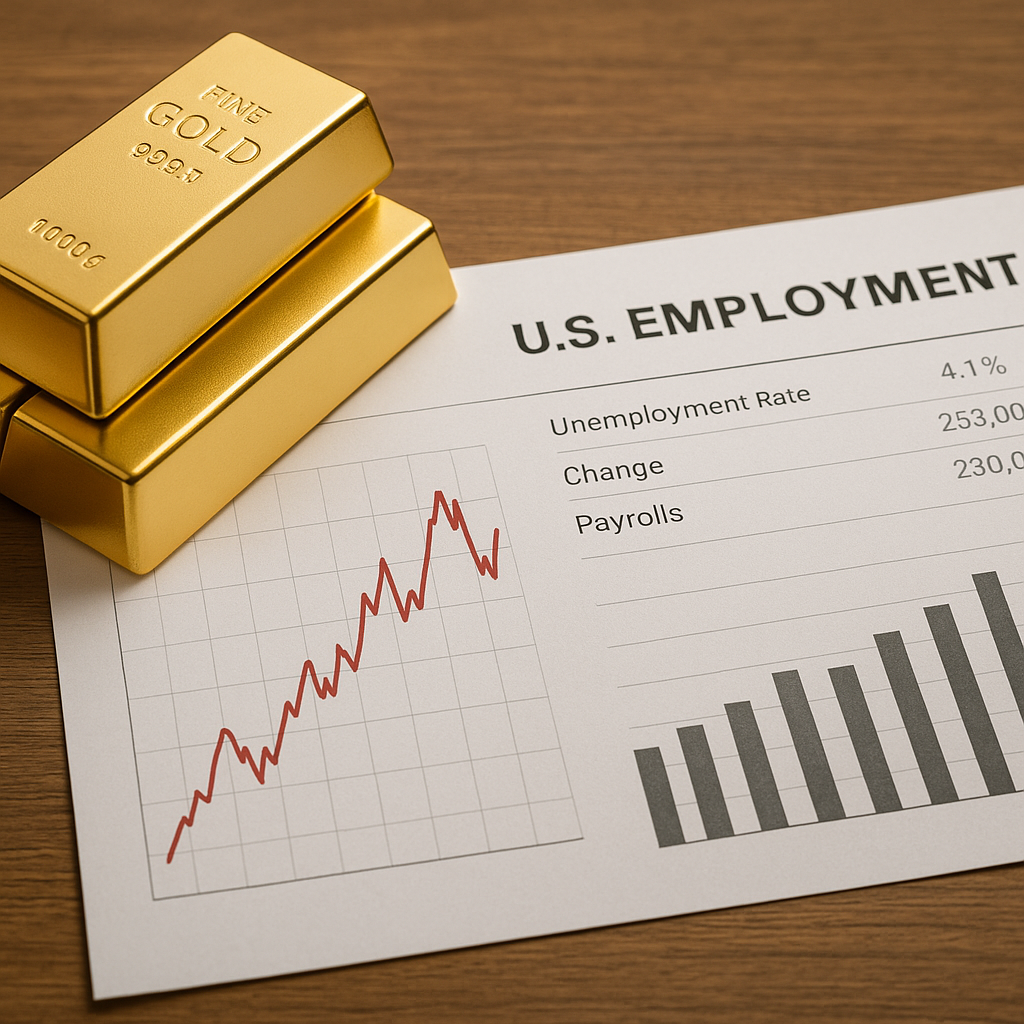
Global gold markets often exhibit pronounced sensitivity to U.S. jobs data, reflecting the intricate link between labor statistics and precious metals pricing. Investors, policymakers, and traders worldwide monitor employment figures as an important gauge of economic health. This article explores the dynamic relationship between U.S. jobs reports and gold prices, delving into the underlying drivers, market reactions, and strategies for participants navigating these fluctuations.
Gold as an Economic Barometer
While many view gold primarily as a safe-haven asset during geopolitical turmoil, its price trajectory is equally tied to broader economic indicators. Employment statistics—especially monthly nonfarm payrolls published by the U.S. Bureau of Labor Statistics—serve as a critical proxy for growth momentum in the world’s largest economy. A robust jobs report often signals strengthening consumer spending, rising wage pressures, and potential central bank action to curb inflation, all of which can influence gold’s appeal.
Inflation Expectations and Central Bank Policy
Gold frequently competes with interest-bearing assets. When employment figures come in above expectations, rising wages and consumer confidence can fuel concerns over inflation. In response, central banks—led by the Federal Reserve—may adopt a more hawkish stance, pushing up benchmark yields. Higher interest rates increase the opportunity cost of holding non-yielding gold, prompting price declines.
Liquidity, Volatility, and Market Sentiment
Conversely, weaker-than-forecast payroll gains can rattle investors, stoking fears of an economic slowdown or easing monetary policy. Such shifts can trigger a surge in gold demand due to its reputation as a diversifier and hedging instrument. Sharp adjustments in volatility around jobs announcements also underscore how participants rapidly reposition portfolios in anticipation of significant market moves.
Interplay Between U.S. Jobs Reports and Gold Prices
The immediate aftermath of a U.S. jobs report often witnesses pronounced intraday swings in gold futures, spot prices, and related exchange-traded funds. These reactions stem from algorithmic trading strategies and discretionary moves by hedge funds, bullion banks, and institutional investors.
- Pre-release positioning: Many traders establish positions ahead of the data release, using options and futures to express bullish or bearish views on gold.
- Actual versus expected: The difference between reported payroll numbers and market forecasts is crucial. A positive surprise—higher employment growth—typically triggers a short-term gold selloff.
- Wage growth dynamics: Average hourly earnings form a key subcomponent of the report. Faster wage increases intensify inflationary pressures and may amplify gold price declines when yields rise.
- Revision effects: Upward revisions to previous months’ data can reinforce market conviction about economic strength, layering additional pressure on gold.
Case Studies in Market Reaction
Historical episodes illustrate the intensity of these connections. For instance, following a stellar jobs report indicating over 300,000 new payrolls in January of a particular year, gold prices tumbled more than 1.5% in under an hour. By contrast, a dismal report that missed forecasts by 100,000 jobs saw gold spike over 2%, as traders anticipated renewed monetary easing by central banks.
Strategies for Navigating Post-Report Volatility
Given the pronounced swings around U.S. employment announcements, market participants employ various approaches to manage risk and capitalize on potential moves in gold prices.
Hedging with Options
Options provide defined-risk strategies. Traders can buy gold call or put options to profit from directional moves while limiting downside. Straddle or strangle setups around the release can capture elevated implied volatility without forecasting the report’s outcome.
Leveraging Correlated Assets
Since gold often moves inversely to the U.S. dollar and yields, sophisticated investors may take positions in currency pairs (e.g., USD/JPY) or Treasury futures to hedge unwanted exposure. This cross-asset strategy can reduce margin requirements while maintaining positioning flexibility.
Timing and Position Sizing
Cautious traders reduce position size ahead of the NFP (Nonfarm Payrolls) release, opting to re-enter once initial chaos subsides. This approach avoids sharp stop-outs caused by algorithmic spikes and liquidity gaps. Alternatively, aggressive participants may exploit these gaps by placing limit orders just beyond anticipated trading ranges.
Global Implications for Gold Pricing
Although U.S. employment reports have a direct impact on gold prices, the ripple effects extend to global markets. Emerging economies holding significant gold reserves and sovereign wealth funds actively monitor these statistics to guide reserve allocations. Moreover, central banks in Asia and the Middle East may adjust their buying patterns in response to changing yield landscapes.
- Reserve diversification: National banks often boost gold holdings when U.S. yields face downward pressure.
- Physical demand: Lower prices post-weak jobs data can spur increased consumer and jeweler purchases in India and China.
- FX interventions: Currency authorities may tap gold as a hedge against dollar volatility emanating from labor market surprises.
In sum, the intricate dance between U.S. jobs data and gold prices underscores gold’s role as both a barometer of monetary policy expectations and a critical component of global financial stability. By understanding the drivers behind these reactions, market participants can better position themselves to navigate the daily ebbs and flows of the world gold price.