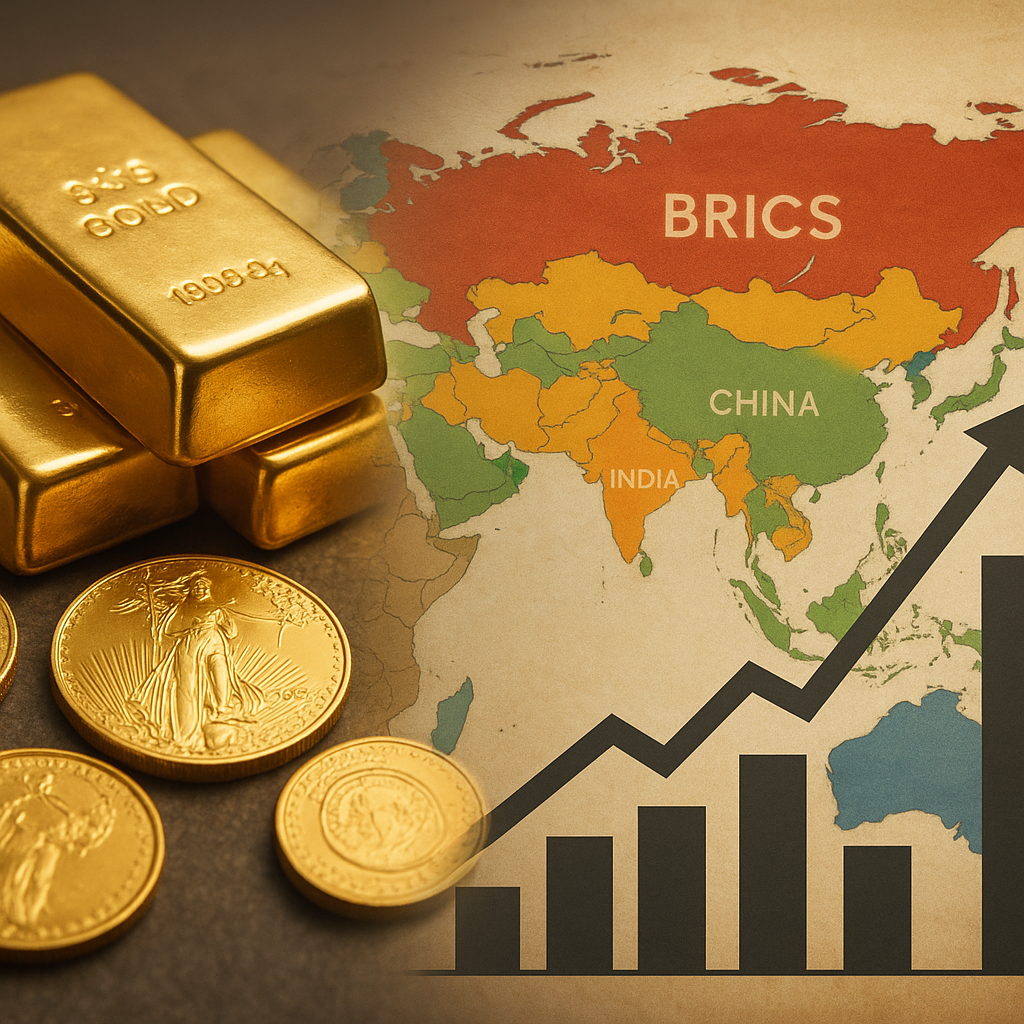
The rapid ascent of BRICS nations—comprising Brazil, Russia, India, China, and South Africa—is reshaping global economic power structures. These emerging markets are no longer just peripheral players; they are pivotal forces influencing commodity flows, monetary policies, and investor sentiments worldwide. Among the metals that feel the most pronounced impact is gold. As BRICS countries deepen their cooperation and adjust their economic strategies, the trajectory of world gold demand and price dynamics undergoes significant change. This article explores the key drivers behind this shift, evaluates the consequences for investment portfolios, and considers the broader implications for market participants seeking both security and growth.
Global Economic Realignment and BRICS Momentum
The consolidation of BRICS nations reflects a broader diversification of economic influence away from traditional Western financial centers. Over the past decade, these economies have achieved substantial growth rates, underpinned by vast resource endowments, booming domestic markets, and strategic geopolitical alliances. Such a transformation carries several repercussions for gold markets:
- Shifting Reserve Strategies: Several BRICS central banks have ramped up gold purchases to bolster foreign exchange reserves. This shift is partly motivated by a desire to reduce reliance on the US dollar and to secure a tangible asset that can withstand volatility in credit markets.
- Currency Stability Goals: As BRICS currencies like the Chinese yuan and Indian rupee seek broader international acceptance, national policymakers view gold as a tool to reinforce stability in exchange rates and domestic money markets.
- Strengthening Financial Cooperation: Initiatives such as the New Development Bank and local currency swap arrangements encourage member states to denomininate certain trades in rubles, renminbi, or rupees, rather than dollars. Consequently, gold emerges as an alternative medium of exchange and store of value.
In this evolving landscape, gold is no longer just an inflation hedge for Western investors; it has become a multifaceted instrument entwined with the strategic objectives of rising powers.
Gold Demand Dynamics in Emerging Market Economies
The gold consumption patterns in BRICS nations exhibit distinct characteristics compared to mature markets. While jewelry remains a traditional anchor of demand, newer forces have become increasingly influential:
- Central Bank Acquisitions: Over recent years, central banks in Russia and China have emerged as some of the world’s largest official net purchasers. These institutions view gold as a crucial element in achieving greater financial autonomy.
- Retail and Institutional Growth: In India, annual gold imports for jewelry and investment remain robust, driven by cultural preferences and rural demand. At the same time, growing sophistication in local capital markets encourages institutional investors to allocate a portion of their portfolio to gold-backed exchange-traded funds (ETFs).
- Tech and Industrial Use: South Africa, traditionally a major producer, has seen a resurgence in gold demand from the electronics and renewable energy sectors, where gold’s conductivity and corrosion resistance are prized.
Collectively, these trends signal a diversification of gold applications and a steady upward trajectory in total BRICS consumption. Rapid urbanization, rising incomes, and expanding financial inclusion initiatives further underpin this robust demand profile.
Implications for World Gold Price Formation
As BRICS nations intensify their gold-related activities, several price-determining factors come to the forefront:
- Supply-Scarcity Pressures: Major gold-producing operations in South Africa and Russia face labor, regulatory, and environmental challenges. A combination of reduced output growth and heightened demand from national banks tightens global supply, exerting upward pressure on prices.
- Currency Fluctuations: With BRICS currencies gaining more visibility in cross-border trade, the traditional link between the dollar’s strength and gold pricing becomes more complex. Gold priced in renminbi or rubles can decouple partially from dollar-driven moves, creating distinct regional price dynamics.
- Geopolitical Risk Premiums: Heightened tensions among major powers often spur safe-haven buying. As BRICS countries define a more assertive international posture, any escalation in diplomatic or trade disputes can ignite sudden surges in gold demand.
- Monetary Policy Divergence: While advanced economies may pursue interest rate cuts to support growth, some BRICS nations maintain tighter policy stances to tame inflation. Such divergence influences the opportunity cost of holding non-interest-bearing assets like gold, affecting its relative appeal.
Ultimately, these intertwined forces suggest that world gold prices will not only respond to Western central bank directives or US economic data but also to policy shifts and market developments within the BRICS bloc.
Strategic Responses and Emerging Opportunities
For investors, producers, and policymakers, adapting to a BRICS-influenced gold environment requires nuanced strategies:
- Portfolio Rebalancing: Global fund managers increasingly consider BRICS-driven gold demand in their investment models. Allocations can be fine-tuned to benefit from potential price appreciation triggered by rising Official Sector purchases.
- Hedging Currency Risk: Corporations with exposure to BRICS markets may use gold derivatives to hedge against local currency depreciation. Such instruments provide a layer of protection when national currencies come under stress.
- Supply Chain Adaptations: Mining companies are exploring partnerships within BRICS to secure access to capital and technology. Co-investment agreements can accelerate project development, ensuring a steadier flow of newly mined gold to meet surging demand.
- Market Infrastructure Enhancement: Exchanges in Shanghai and Moscow are expanding gold futures and options offerings. This enhanced liquidity broadens the avenues through which institutional and retail participants can engage in price discovery and risk management.
In the face of these developments, staying attuned to policy pronouncements from BRICS central banks and trade ministries is paramount. Those who anticipate shifts in official reserves policies or local consumption trends stand to capitalize on price movements before they materialize in global benchmarks.