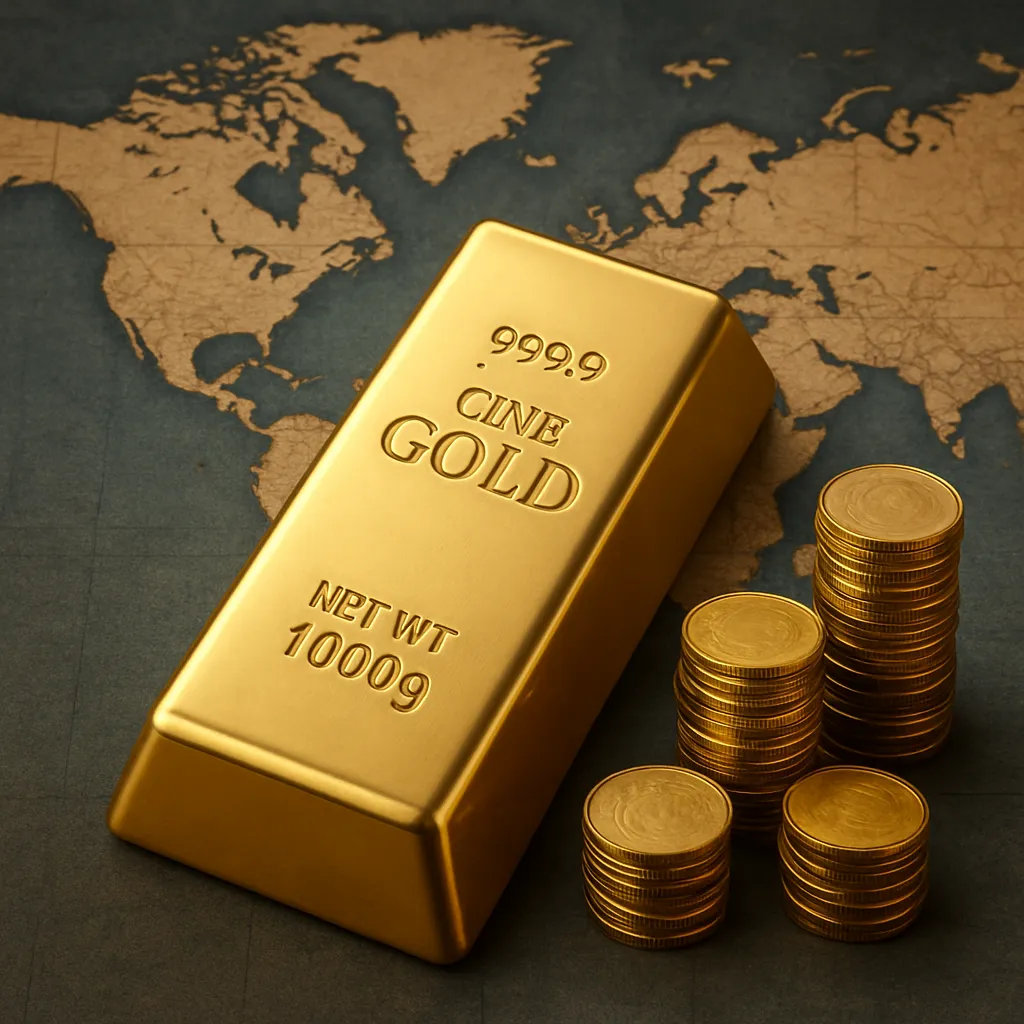
Gold’s radiant allure transcends millennia, embodying a unique blend of scarcity, intrinsic value, and cultural significance. From ancient civilizations minting coins to modern financial institutions accumulating reserves, this precious metal continues to stand as a pillar of stability in an ever-evolving economic landscape. Its capacity to preserve purchasing power and resist the erosive pressures of time cements gold’s position as a benchmark for wealth and a strategic asset for nations, corporations, and individuals alike.
The Enduring Legacy of Gold as a Financial Standard
Origins of a Universal Measure
The history of gold as a medium of exchange and store of value dates back over 5,000 years. Early societies in Mesopotamia, Egypt, and the Indus Valley recognized its lustrous appeal and durability. Over centuries, gold evolved from jewelry and ornamentation to standardized currency, facilitating trade across continents. Empires from Rome to Byzantium minted coins whose purity and weight became synonymous with trust and stability.
From the Gold Standard to Fiat Currency
By the 19th century, major economies adopted the gold standard, fixing national currencies to specific gold weights. This system bolstered international trade by limiting excessive monetary expansion. However, the rigidity of the gold standard proved problematic during crises, leading many countries to suspend or abandon it during wartime. The transition to fiat currencies in the 20th century shifted monetary policy control to central banks, but gold retained a vital role as a reserve asset.
Factors Shaping the Global Gold Price
Supply and Demand Dynamics
Global gold production averages around 3,000 metric tons annually, sourced from mines in China, Australia, Russia, and the Americas. Mining output is complemented by recycled gold from jewelry, electronics, and industrial uses, amounting to roughly 1,200 metric tons per year. Despite ongoing exploration, substantial new discoveries are rare, reinforcing gold’s innate scarcity. On the demand side, central banks, institutional investors, and private collectors each compete for allocations, driving price volatility.
Economic Indicators and Market Sentiment
Gold often behaves as an inverse function to major stock indices and interest rates. During periods of geopolitical tension, economic slowdowns, or currency devaluation, investors flock to gold as a safe-haven. Conversely, robust global growth and rising bond yields can curb gold’s appeal, redirecting capital towards equities and other yield-bearing instruments.
Influence of Central Bank Policies
Central banks hold over 34,000 metric tons of gold in reserves, accounting for nearly 20 percent of all above-ground stocks. Their buying and selling activities can significantly sway prices. Policies such as quantitative easing, interest rate adjustments, and foreign exchange interventions indirectly shape gold’s trajectory by impacting real interest rates and currency valuations.
- Interest Rates: Higher real rates increase opportunity cost of holding gold, dampening demand.
- Inflation Pressures: Gold is perceived as a hedge against rising consumer prices.
- Currency Movements: A weaker US dollar typically boosts gold, as it is priced in dollars.
The Role of Gold in Modern Economic Strategies
Portfolio Diversification and Risk Management
Institutional investors and wealth managers allocate a portion of assets to gold to enhance portfolio resilience. As a non-yielding asset with low correlation to stocks and bonds, gold can mitigate drawdowns during market turmoil. Research suggests that a 5–10 percent gold allocation may improve risk-adjusted returns over full market cycles.
Central Bank Reserves and Sovereign Wealth
Gold remains a cornerstone in official reserve portfolios. Sovereign wealth funds and monetary authorities maintain holdings for several reasons:
- Preservation of capital against currency debasement.
- Liquidity diversification beyond foreign exchange.
- Psychological assurance of an asset free from counterparty risk.
Emerging Trends: Digital Gold and Innovations
Recent advances have given rise to digitally tokenized gold and exchange-traded funds (ETFs), broadening access for retail and institutional clients. Blockchain-based platforms enable users to purchase fractional interests in physical gold, combining the metal’s tangible properties with 21st-century innovation. Meanwhile, demand from the technology sector, particularly for high-purity gold in electronics and medical devices, adds a fresh dimension to consumption patterns.
Geopolitical and Macro-Economic Implications
Gold Amid Global Tensions
In times of international conflict or trade disruptions, gold’s appeal intensifies. Portfolios shift toward assets that preserve wealth without reliance on any single government or financial system. Gold’s intrinsic value and universal acceptance make it a strategic hedge against geopolitical uncertainty.
The Future of Gold Pricing
Market analysts monitor a spectrum of indicators to forecast gold’s next moves:
- Real yields on inflation-linked bonds.
- Monetary policy stances of the Federal Reserve, ECB, and other major central banks.
- Mining production forecasts and capital expenditure trends.
- Demand shifts in emerging markets, notably India and China.
While no asset is immune to volatility, gold’s proven track record as an inflation hedge and store of value positions it favorably for the decades ahead. Technological advancements, evolving monetary frameworks, and shifting demographic trends will continue to influence its supply-demand equilibrium and price dynamics.
Why Gold Remains the Global Benchmark
Gold’s unparalleled combination of scarcity, durability, and historical pedigree underpins its enduring role as a benchmark for global wealth. Unlike fiat currencies or digital assets, it carries no counterparty risk, offering a tangible refuge in times of systemic stress. As central banks expand reserves, investors seek ballast against market cycles, and industries harness its unique physical properties, gold’s status is unlikely to diminish. In a financial world marked by complexity and uncertainty, the lustrous metal endures as a symbol of stability and a cornerstone of diversified strategies.