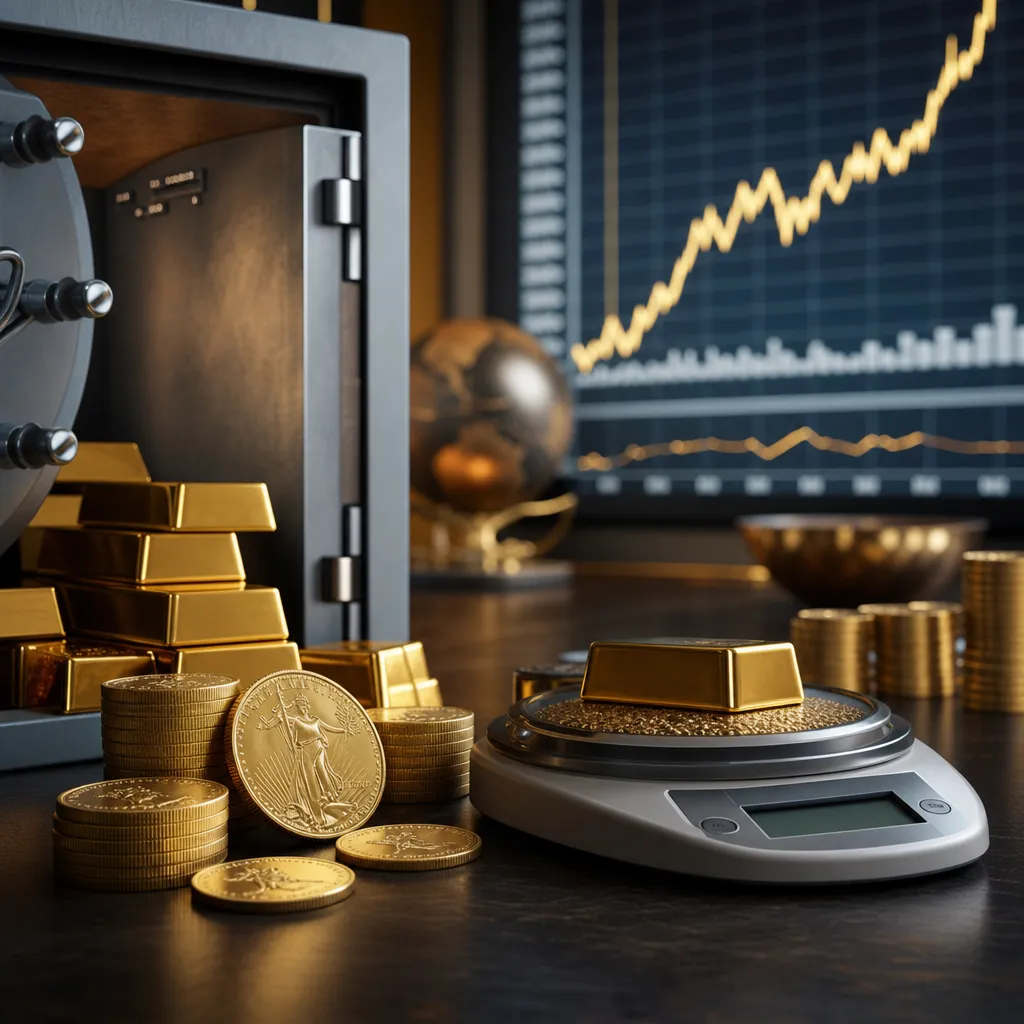
From the dawn of recorded history, human societies have assigned extraordinary value to certain metals. Among them, gold has emerged as the unrivaled standard of wealth, underpinning economies from ancient empires to modern financial markets. This enduring legacy stems not only from its natural rarity and physical allure but also from its pivotal role in shaping the global monetary system. As nations wrestle with debt crises, currency devaluations, and geopolitical uncertainties, the trajectory of the world gold price remains a barometer of confidence in sovereign credit and economic resilience.
Evolution of Gold as the World’s Monetary Bedrock
Long before paper notes and digital transfers, traders and rulers recognized gold’s intrinsic worth. Its corrosion resistance, malleability, and universal appeal made it ideal for coinage and high-value exchanges. In Mesopotamia and Pharaonic Egypt, gold adorned temples and symbolized divine favor, while in medieval Europe it financed crusades and underpinned royal treasuries. Over centuries, a web of trade routes—from the Silk Road to oceanic voyages—linked disparate civilizations through the medium of gold, foreshadowing today’s interconnected markets.
By the 17th century, European powers formalized gold’s role through minted coins with standardized weight and purity, establishing an early blueprint for a global monetary system. Mercantilist policies hoarded bullion as national wealth, leading to rivalries over gold-rich colonies and mines. Spain’s influx of New World gold, for instance, reshaped inflation dynamics across Europe, illustrating how large-scale bullion flows could unsettle prices—a precursor to modern concerns about inflation hedging and purchasing power preservation.
The 19th-century Industrial Revolution further elevated gold’s monetary status. Expanding economies demanded a reliable medium for international settlements. Governments and merchants converged on the idea that gold-backed currencies would curb reckless money printing and foster trust. This period witnessed the conceptual birth of central reserve assets and the first inklings of what would become the classic gold standard, setting the framework for 20th-century finance.
Emergence of the Gold Standard and Central Bank Reserves
The late 19th and early 20th centuries saw the formal adoption of the gold standard, wherein currencies were pegged to a fixed weight of gold. Britain, the world’s preeminent power, led the charge by defining the pound sterling in terms of ounces of gold. Other nations followed, creating a self-regulating international system: trade imbalances automatically triggered gold flows, nudging exchange rates back toward equilibrium. This arrangement fostered unprecedented global stability, low inflation, and predictable financing costs.
However, World War I’s massive military expenditures strained gold reserves and shattered peacetime discipline. Governments suspended convertibility, printed unbacked banknotes, and drifted toward inflationary policies. The interwar period experimented with partial restorations, yet persistent currency realignments and the Great Depression’s deflationary spiral revealed the gold standard’s vulnerabilities. By 1933, many countries abandoned gold convertibility altogether, ushering in an era of fiat currency and managed exchange rates.
In the aftermath of World War II, the Bretton Woods system attempted a hybrid approach: the U.S. dollar became the primary reserve currency, convertible into gold at $35 per ounce for foreign central banks. This arrangement granted America unparalleled financial leverage while ensuring other nations held dollars as de facto gold. But growing U.S. fiscal deficits and mounting international claims eroded gold reserves, culminating in President Nixon’s 1971 decision to sever dollar-gold convertibility. Henceforth, all major currencies floated freely, and the world gold price was left to market forces alone.
Dynamics of World Gold Price in the 21st Century
Since the end of Bretton Woods, gold has traded in open markets, reacting to shifts in real interest rates, currency fluctuations, and global risk appetites. The early 2000s saw a rally as emerging economies boomed, central banks increased gold purchases, and investors sought protection against debt-laden western economies. From under $300 per ounce in 2001, the world gold price peaked above $1,900 by 2011, driven by concerns over sovereign creditworthiness and quantitative easing programs.
Even as prices stabilized in subsequent years, gold retained its status as a strategic reserve. Key factors influencing contemporary pricing include:
- Supply and demand dynamics: Mining output is constrained by geological and environmental challenges, while demand spans jewelry, industrial applications, and investment bars and coins.
- Central bank activity: Emerging markets such as China, Russia, and India have bolstered reserves, diversifying away from dollar holdings.
- Macro-economic indicators: Inflation expectations, real yields on bonds, and currency strength directly impact gold’s allure as an inflation hedging instrument.
- Geopolitical tensions: Wars, trade disputes, and political uncertainties trigger safe-haven buying, mitigating market volatility.
- Technological innovations: Advances in mining technology and recycling methods affect medium-term supply projections.
The interplay of these factors ensures that gold remains both a speculative commodity and a bedrock reserve asset for investors and sovereign treasuries alike. Portfolio managers frequently allocate a fraction of assets to bullion or gold-related securities to enhance diversification and protect against systemic shocks.
Future Trends and the Gold Paradigm in a Digital Age
As the financial world embraces blockchain, central bank digital currencies (CBDCs), and tokenized assets, gold’s role is being reimagined. Proponents of digital currencies backed by physical gold argue that such constructs could combine the transparency of distributed ledgers with the time-tested stability of bullion. Experimentation is underway in Europe, Asia, and the Middle East, with pilot projects tokenizing gold ounces on permissioned networks.
Meanwhile, the hunt for new gold sources intensifies. Deep-sea mining and asteroid prospecting, though currently speculative, hint at potential future supplies, raising questions about long-term price trajectories. Environmental and social governance (ESG) criteria are also reshaping mining practices, as stakeholders demand ethical sourcing and reduced ecological footprints.
Looking ahead, central banks will remain influential price drivers. Their decisions on reserve composition, driven by geopolitical alignments and sovereign risk management, can sway gold prices significantly. In addition, private-sector adoption of gold-backed financial instruments—exchange-traded funds, digital tokens, and structured notes—will enhance liquidity and market access for retail investors.
Despite rapid technological change and evolving asset classes, gold’s unique combination of physical scarcity, universal acceptance, and historical prestige ensures it remains a cornerstone of global finance. Its trajectory will continue to reflect the broader tensions between innovation and tradition, risk and security, fiat money and tangible wealth.