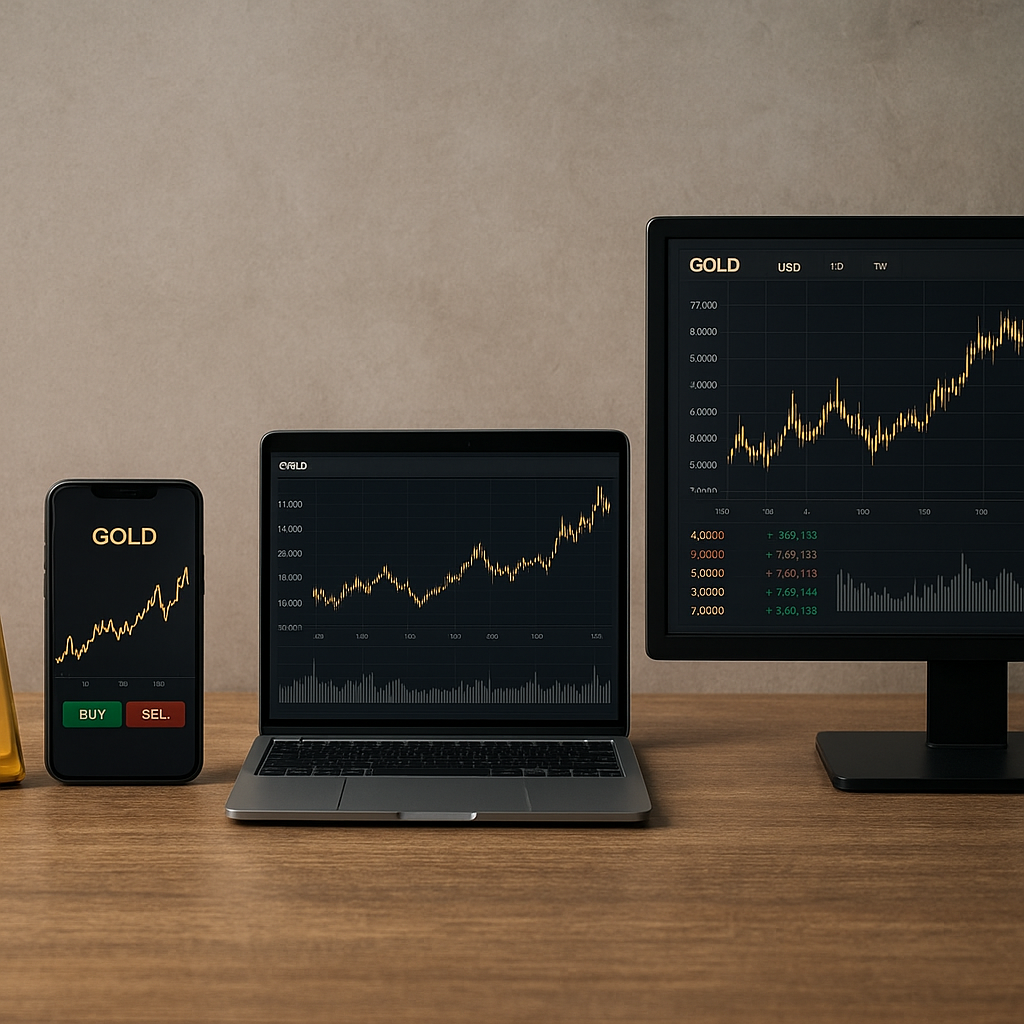
The intersection of artificial intelligence and gold trading heralds a new era for global markets. As price fluctuations grow increasingly complex, traders and institutions leverage sophisticated computational tools to gain a competitive edge. This article explores the transformation of world gold price dynamics through machine learning, predictive analytics, and cutting-edge algorithms, diving into the implications for risk appetite, liquidity, and investor confidence.
Historical Roots in the Gold Market
For centuries, gold has served as a cornerstone of monetary systems, a hedge during inflation, and a symbol of wealth preservation. Traditional trading relied on manual analysis of geopolitical events, central bank announcements, and supply-demand statistics. While these methods proved effective in a slower information environment, the modern age demands real-time data processing to navigate volatility that can shift within seconds.
Early electronic platforms offered basic charting tools, but the arrival of data-driven solutions marked a paradigm shift. Traders began integrating multi-source feeds—ranging from satellite imagery of mining operations to social media sentiment—to refine their price models. Yet, the sheer volume and velocity of these inputs soon outpaced conventional processing techniques.
With the launch of advanced processors and cloud infrastructures, institutions turned towards AI to automate tasks like pattern recognition and anomaly detection. This transition not only accelerated decision-making but also reduced human bias, laying the groundwork for the sophisticated systems in place today.
AI-Driven Price Forecasting and Strategy Optimization
In the quest to anticipate the next gold rally or downturn, market participants deploy AI models that continuously learn from historical and live data streams. Key technologies include:
- Machine Learning – Algorithms trained on decades of price charts and macroeconomic variables to detect non-linear relationships invisible to the naked eye.
- Neural Networks – Deep architectures capable of ingesting unstructured data such as news headlines, central bank minutes, and even transcripts of political speeches.
- Reinforcement Learning – Agents that iteratively test trading strategies in simulated environments and refine their approach based on success criteria like profit maximization and drawdown minimization.
- Algorithmic Execution – Systems that slice large orders into micro-transactions to reduce market impact and seize fleeting arbitrage opportunities across exchanges.
These AI applications rely heavily on optimization techniques to balance risk and reward. By incorporating measures like Value-at-Risk and stress-testing under extreme scenarios, they provide traders with adaptive frameworks that react to sudden spikes in gold’s volatility.
The Role of Big Data in Enhancing Transparency
Access to granular data feeds from mining output, refined inventories, and derivative positions has never been more abundant. AI platforms assimilate this information to produce comprehensive dashboards highlighting global supply chains and vault movements. This enhanced transparency benefits not only proprietary desks but also retail investors seeking deeper insights.
For instance, machine-driven sentiment analysis scans thousands of financial news sources in multiple languages, flagging shifts in risk perception that prelude price movements. Meanwhile, satellite-based systems monitor shipping lanes and mine tailings, estimating production trends weeks before official releases. By correlating these signals with macroeconomic indicators, AI forecasts have achieved unprecedented accuracy in predicting both short-term swings and long-term trends.
Impact on Institutional and Retail Participants
Institutional traders enjoy the ability to deploy high-frequency strategies, exploiting millisecond price discrepancies across global trading venues. These AI-powered engines can identify arbitrage in sub-seconds, capturing gains that accumulate into substantial profits over time. Meanwhile, risk management modules dynamically adjust leverage and margin requirements to guard against sudden market shocks.
Retail investors also benefit from democratized access to AI insights via robo-advisory platforms. By automating portfolio rebalancing and gold exposure recommendations, these services deliver sophisticated strategies previously reserved for hedge funds. Enhanced user interfaces display real-time probability distributions for price levels, enabling informed decisions without the steep learning curve.
Challenges, Ethics, and Market Stability
Despite its advantages, the integration of AI into gold trading raises concerns around market stability and fairness. A few key issues include:
- Model Overfitting: Systems overly tuned to past data may falter under novel market regimes, leading to unanticipated losses.
- Flash Crashes: Rapid algorithmic unwinds triggered by erroneous signals can cascade across venues, eroding liquidity and shaking investor confidence.
- Regulatory Gaps: Jurisdictions differ in oversight of algorithmic trading, creating arbitrage for participants who exploit weaker safeguards.
- Ethical Use of Data: Advanced sentiment models may inadvertently amplify misinformation or privacy breaches if trained on illicit data sources.
To address these risks, regulators and industry groups advocate for robust model validation, real-time monitoring, and coordinated circuit breakers. Standardized reporting protocols for algorithmic strategies also aim to foster a level playing field, ensuring that innovation proceeds hand in hand with market integrity.
Future Directions in Gold Price Dynamics
Looking ahead, the next frontier involves integrating quantum computing and augmented reality into gold trading. Quantum-enhanced optimization could solve complex portfolio allocation problems in seconds, while immersive AR interfaces may visualize market structures in three dimensions, empowering traders to spot emerging patterns more intuitively.
Moreover, advances in decentralized finance (DeFi) may see tokenized gold reserves traded on blockchain platforms. AI oracles would verify real-world asset backing, offering seamless gold exposure with instant settlement and fractional ownership. This synergy of technologies promises to further democratize access, reduce counterparty risk, and streamline global settlement processes.
As AI continues to evolve, its influence on gold trading will deepen, reshaping how prices are discovered, risks are managed, and value is preserved. Those who harness these innovations responsibly stand to thrive in a market where information advantage translates directly into financial gain.