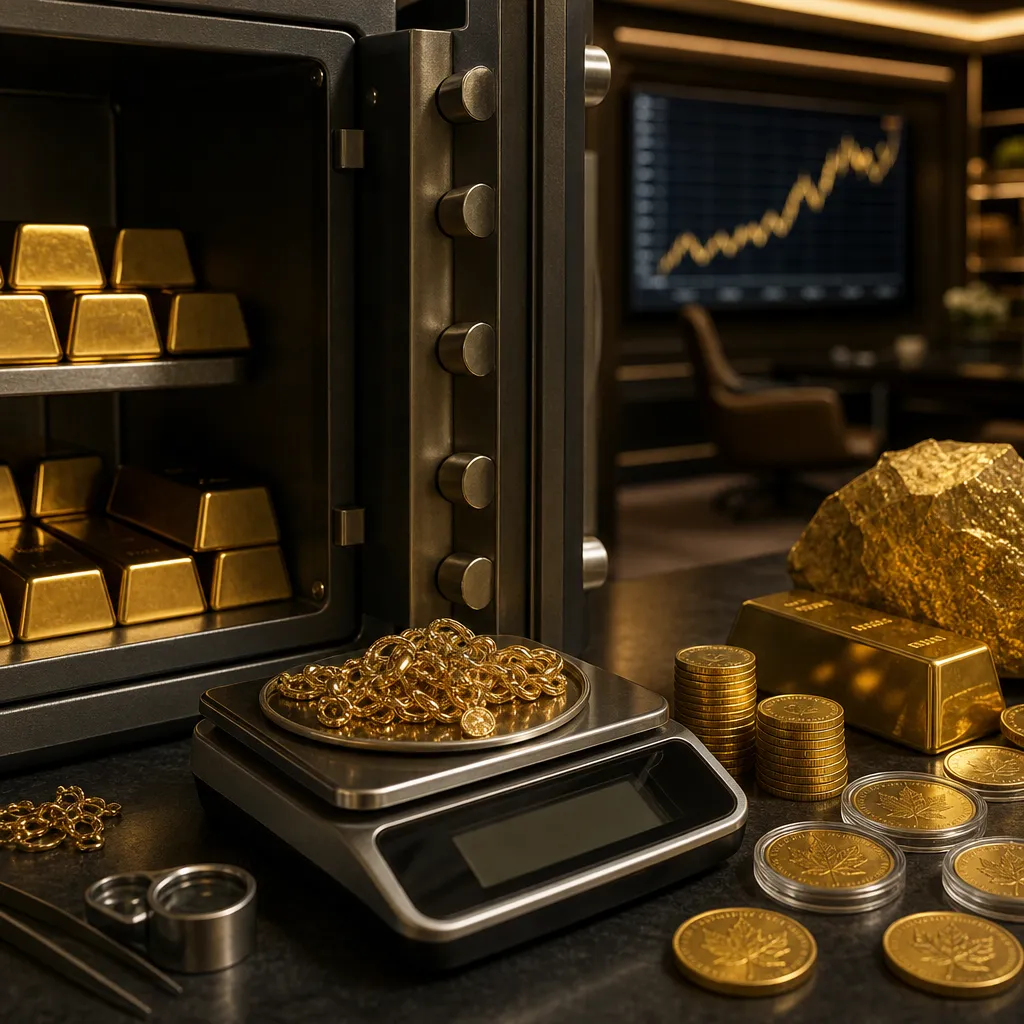
Valuing gold jewelry starts with one key distinction: the price you paid is not the same as the amount the piece is worth today. A gold ring, chain, or bracelet can have several different values at once, including retail value, resale value, scrap value, and melt value. If you want a practical estimate, the most important factors are the jewelry’s weight, purity, and the current market price of gold, plus any deductions a buyer or refiner may apply.
The main reason people get confused is simple: jewelry includes design, labor, branding, and retail markup, while a scrap buyer may care mostly about recoverable gold content. In other words, retail jewelry price ≠ resale price ≠ melt value. Understanding that difference is the foundation of valuing gold jewelry accurately.
What “gold jewelry value” actually means
Before calculating anything, define which value you need. An insurance appraisal, a pawn offer, and a refiner payout can be very different even for the same item.
| Type of value | What it means | Typical use | Important limitation |
|---|---|---|---|
| Retail value | The price a consumer may pay in a jewelry store | Replacement cost, shopping | Includes labor, branding, overhead, and margin |
| Appraised value | An estimated replacement value prepared by an appraiser | Insurance | Often higher than what you could sell it for |
| Resale value | The amount a private buyer or jeweler might pay | Secondhand sale | Depends heavily on style, condition, and demand |
| Scrap value | The value of the recoverable precious metal | Selling broken or unwanted jewelry | Usually below theoretical melt value after deductions |
| Melt value | The market value of the pure gold contained in the item | Baseline calculation | Does not include stones, craftsmanship, or dealer margin |
The practical takeaway is that melt value is usually the starting point, not the final selling price. If the piece has no collectible, branded, antique, or designer premium, many buyers will mainly evaluate it on gold content.
The three inputs that matter most
To estimate the value of gold jewelry, you usually need only three core inputs:
- Weight of the item
- Purity of the gold, usually shown in karats
- Current gold spot price in your currency
If any one of these is wrong, your estimate can be significantly off. For example, weighing a necklace with a heavy clasp, stones, or non-gold parts without adjusting for them will overstate the gold content.
1. Weight
Gold jewelry is commonly weighed in grams. Some markets may also use troy ounces, but grams are more practical for jewelry. If possible, use a scale accurate to at least 0.1 gram, and ideally better.
2. Purity
Jewelry is rarely pure 24-karat gold. Most pieces are alloys containing other metals for strength, durability, and color. A piece marked 18K is not 100% gold; it is 18 parts gold out of 24, or 75% pure.
3. Spot gold price
The spot price is the market value of pure gold in wholesale trading. Jewelry buyers do not usually pay the full spot price for your item, but spot is the benchmark used to estimate melt value.
How karat affects jewelry value
Karat tells you how much of the jewelry is actually gold. That directly determines how much fine gold the item contains.
| Karat | Approximate purity | Fine-gold fraction | Practical meaning |
|---|---|---|---|
| 24K | 99.9% or very close | 0.999 | Almost pure gold; uncommon for everyday jewelry in many markets |
| 22K | 91.6% to 91.7% | 0.916 | High gold content; common in some regions for jewelry and savings items |
| 18K | 75.0% | 0.750 | High gold content with better durability than 24K |
| 14K | 58.5% | 0.585 | Very common in jewelry; lower gold content but stronger for wear |
| 10K | 41.7% | 0.417 | Lower gold content; often more affordable and durable |
| 9K | 37.5% | 0.375 | Used in some markets; relatively low gold content |
If two rings weigh the same but one is 18K and the other is 14K, the 18K piece contains more fine gold and therefore has a higher melt value, all else equal.
How to calculate melt value step by step
The basic formula is straightforward:
Melt value = weight × purity × gold price per gram
Here is the process in practice:
- Weigh the jewelry in grams.
- Find the karat mark or have the purity tested.
- Convert karat into a gold fraction.
- Find the current gold price per gram for pure gold.
- Multiply weight by purity by price per gram.
Example calculation
Suppose a bracelet weighs 20 grams and is marked 18K.
- 18K purity = 0.750
- Fine gold content = 20 × 0.750 = 15 grams of pure gold
- If the market gold price per gram of pure gold is X, then melt value = 15 × X
This gives you a theoretical melt value. It does not guarantee that a jeweler, pawn shop, or gold buyer will pay that amount.
Why your selling price is usually lower than melt value
Most sellers discover quickly that offers are below their own calculation. That is normal. Buyers build in refining costs, testing risk, metal losses, operational costs, and profit margin.
A scrap buyer may also assume that the stamped purity needs verification. If stones must be removed, clasps separated, or mixed-metal components excluded, the payable amount can drop further.
| Factor | Effect on offer | Why it matters |
|---|---|---|
| Refining cost | Lowers payout | The buyer must process the item before recovering usable gold |
| Purity uncertainty | Lowers payout | Stamped marks can be wrong, worn, or misleading |
| Non-gold parts | Lowers payable gold weight | Clasps, springs, solder, stones, or fillers may not be gold |
| Buyer margin | Lowers payout | Dealers need room for overhead and profit |
| Branded or collectible premium | May raise resale value | Some items are worth more than scrap because of market demand |
| Damage or breakage | Often pushes value toward scrap | Broken jewelry may lose most of its design-based resale appeal |
This is why a plain broken chain is often valued very differently from a signed designer bracelet in excellent condition, even if the gold weight is similar.
How buyers test gold jewelry
If you do not know whether the piece is truly 14K, 18K, or something else, a buyer may test it. Common methods include hallmark inspection, acid testing, XRF analysis, and in some cases more destructive or laboratory-based refining tests.
Hallmarks are useful, but they are not perfect. Wear, repairs, counterfeit stamps, and country-specific marking standards can complicate matters. For that reason, professional buyers typically rely on more than just the stamp.
Common marks you may see
- 24K, 22K, 18K, 14K, 10K
- 999, 916, 750, 585, 417, 375 as purity marks
- Maker’s marks or assay marks depending on the country
Be careful with gold-plated items. A plated necklace can look valuable but contain very little actual gold. Terms such as GP, GEP, HGE, or gold-filled do not mean the same thing as solid gold.
When jewelry is worth more than scrap
Not all gold jewelry should be valued only for melt. Some pieces deserve a resale approach instead of a scrap approach.
You may have more than melt value if the item has one or more of the following:
- Recognized luxury brand or designer
- Antique or vintage significance
- Strong secondhand market demand
- High-quality craftsmanship
- Natural gemstones with independent value
- Original box, papers, or provenance
In these cases, compare private resale markets, consignment jewelers, auction specialists, or branded jewelry buyers before accepting a scrap offer. A buyer focused only on metal recovery may ignore the features that make the piece more valuable.
Practical mistakes to avoid
The biggest valuation errors usually come from mixing up weight, purity, and pricing basis.
- Using the 24K gold price for 14K jewelry without adjusting purity
- Including stones and non-gold parts in the gold weight
- Confusing retail replacement value with resale value
- Assuming all hallmarks are accurate
- Ignoring buyer deductions and spreads
- Selling collectible or branded jewelry as scrap too quickly
A practical rule is to calculate the item’s melt value first, then ask whether it deserves a premium above scrap. That keeps the valuation grounded while leaving room for brand, design, and collectible factors.
How to get the most accurate estimate
If you want a realistic number, combine your own calculation with market verification.
- Check the hallmark or purity mark.
- Weigh the item accurately in grams.
- Calculate theoretical melt value using the current price of pure gold per gram.
- Adjust for stones, clasps, and non-gold components.
- Get multiple quotes from reputable gold buyers or jewelers.
- Ask whether the offer is based on scrap, resale, or consignment value.
If the item may be branded, antique, or gem-set, consider a specialist appraisal rather than a simple scrap quote. The right selling channel can matter as much as the gold calculation itself.
FAQ
How do I calculate the value of my gold jewelry?
Multiply the item’s weight by its gold purity and then by the current gold price per gram for pure gold. That gives the theoretical melt value. Your actual selling price may be lower because of refining costs, spreads, and buyer margin.
Is 18K gold worth more than 14K gold?
Yes, gram for gram, 18K gold usually has a higher melt value because it contains more pure gold. 18K is 75% gold, while 14K is 58.5% gold.
Why is my jewelry worth less than what I paid?
Retail jewelry prices include labor, design, branding, rent, inventory costs, and markup. When you sell, many buyers focus mainly on metal recovery value, not the original store price.
Do gemstones increase the value of gold jewelry?
Sometimes, but not always. Small commercial stones may add little in a scrap transaction, while larger or higher-quality natural gemstones can materially raise resale value if evaluated properly.
What is the difference between scrap value and melt value?
Melt value is the theoretical market value of the pure gold contained in the item. Scrap value is what a buyer may actually pay after applying deductions for testing, refining, risk, and profit.
Can a hallmark be wrong?
Yes. Hallmarks can be worn, altered, counterfeit, or applied to mixed-quality items. That is why professional buyers usually test jewelry rather than relying on the mark alone.
Should I sell gold jewelry to a pawn shop or a jeweler?
It depends on the piece. For plain broken items, scrap buyers and gold buyers may be competitive. For branded, antique, or high-quality pieces, a jeweler, consignment specialist, or auction channel may offer better value than a pure scrap transaction.
Sources
- World Gold Council – gold market and pricing education
- LBMA – precious metals market standards and gold benchmark information
- CME Group – gold futures and pricing reference information