The relationship between the World Gold Price and US Treasury yields is a focal point for investors tracking the health of global markets. This article explores the key drivers behind gold movements, the impact of changing yields, analytical frameworks for studying their interlinkages, and practical approaches to incorporating precious metals into an investment portfolio.
Gold Price Trends and Global Drivers
Over the past decade, gold has demonstrated a remarkable resilience, often rallying during periods of economic stress and uncertainty. Price movements reflect a complex interplay of factors including supply constraints, industrial demand, and shifts in monetary frameworks. As global economies grapple with fiscal deficits and shifting trade balances, gold often attracts capital seeking a reliable store of value.
- Demand from jewelry and technology sectors
- Purchases by central banks and official reserve managers
- Monetary policy shifts and real interest rates
- Supply constraints and mining output fluctuations
- Geopolitical tensions influencing safe asset flows
- Currency movements, particularly the US dollar
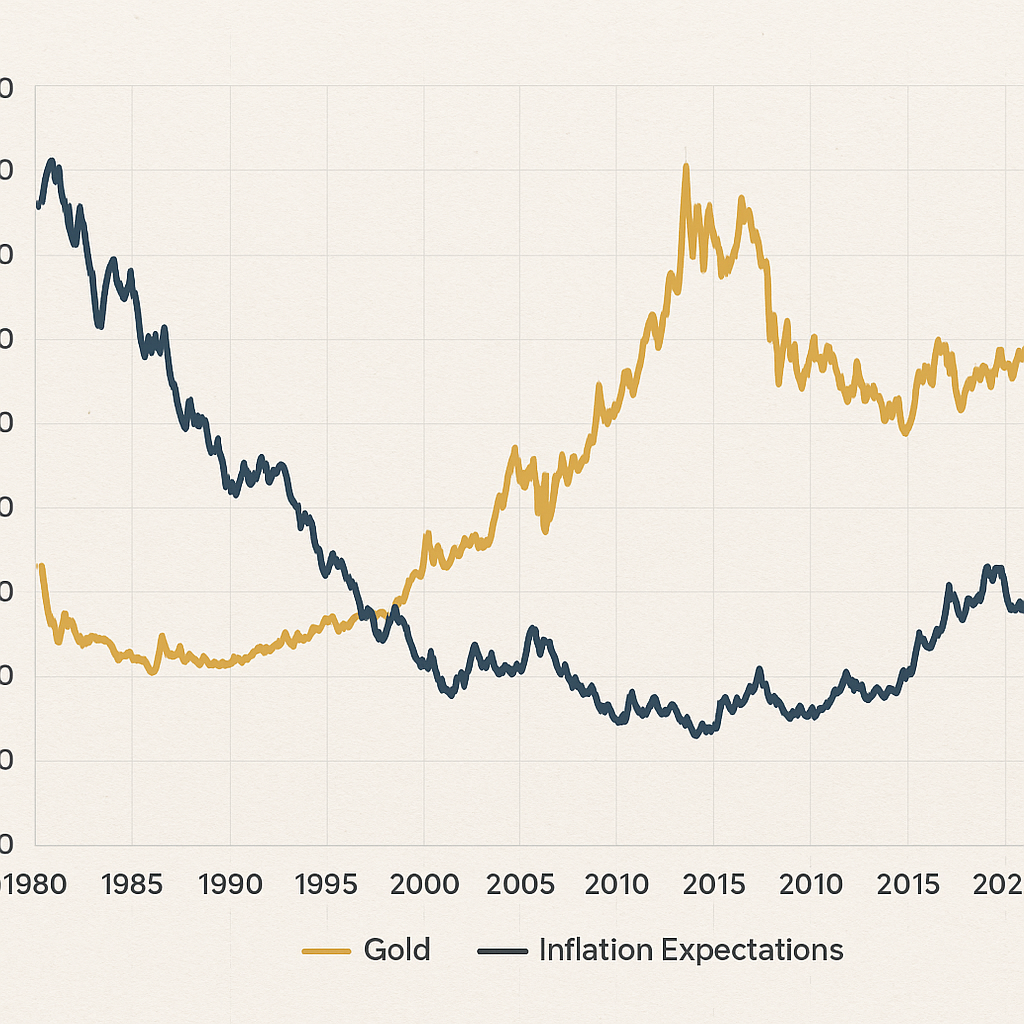
Inflation expectations also play a critical role: when consumer prices accelerate, investors may increase allocations to precious metals to hedge against eroding purchasing power. At the same time, production costs in mining can adjust gold’s supply responsiveness, creating periods of tighter markets and stronger price momentum.
The Role of Treasury Yields in Shaping Gold Market
US Treasury yields serve as a benchmark for global borrowing costs and represent the opportunity cost of holding non-yielding assets like gold. When yields on 10-year or 30-year Treasury notes rise, investors may redirect capital away from bullion toward interest-bearing instruments. Conversely, declining yields often correlate with stronger gold performance.
Central to this dynamic is real interest rate differentials, where inflation-adjusted returns on government debt set the bar for alternative investments. A negative real yield environment boosts gold’s attractiveness due to its zero coupon structure, effectively lowering the break-even cost of holding physical metal.
Monetary policy guidance from the Federal Reserve and other major central banks shapes the trajectory of yields. Forward guidance, asset purchase programs, and rate hike expectations can drive volatility in bond markets, indirectly influencing gold valuations. Investors closely monitor Federal Open Market Committee communications to gauge future rate paths and adjust their bullion exposure accordingly.
Moreover, gold benefits from its role as an inflation hedge and safe asset when credit markets tighten. In episodes of financial stress, even modest shifts in Treasury yields can signal broader risk-off sentiments, prompting spikes in gold demand. The balance between carry trades in bond markets and zero-yield bullion positions underlines a nuanced competition for global capital.
Analytical Perspectives: Correlation and Volatility
Quantitative studies often examine the correlation between gold prices and Treasury yields to uncover trading signals and refine risk models. Historically, a negative correlation emerges during tightening cycles, while positive co-movement can appear in deflationary or liquidity-driven environments. Asset managers utilize rolling correlation matrices to identify regime shifts and rebalance portfolios in real time.
Volatility metrics further inform trading strategies. Gold’s intraday and monthly price swings can be compared against bond market volatility indices to determine relative risk-adjusted returns. In periods of elevated global uncertainty, gold has outperformed traditional bonds by offering lower drawdowns and a smoother hedge against market shocks.
Advanced models incorporate macroeconomic variables—growth surprises, commodity indexes, and exchange rate fluctuations—to forecast gold’s directional bias. By combining technical indicators with fundamental drivers, traders attempt to anticipate key inflection points as Treasury auctions and Fed announcements approach.
Scenario analysis and stress testing provide additional layers of insight. For instance, simulating a sudden yield spike or inflation surprise allows portfolio managers to evaluate the impact on gold holdings and overall asset allocation. These techniques underscore gold’s unique position as a portfolio stabilizer in multi-asset strategies.
Investment Strategies and Diversification Benefits
Institutional investors and sovereign wealth funds often allocate a portion of assets to gold for its diversification and safe-haven properties. By reducing correlation with equities and credit markets, precious metals can enhance risk-adjusted performance over full market cycles. Retail investors also increasingly view gold as a long-term wealth preservation tool.
Effective portfolio construction considers both physical bullion and gold-linked derivatives such as futures and exchange-traded funds. Each instrument offers trade-offs in terms of liquidity, storage costs, and counterparty risk. Futures contracts provide high leverage and intraday access, while physical bars and coins deliver direct exposure without roll yields.
- Long-term holdings to hedge against currency debasement
- Trading ranges for tactical entries based on momentum signals
- Options strategies to capitalize on volatility spikes
- Cross-asset overlays combining bonds, equities, and precious metals
Investors must also monitor shifts in regulatory frameworks, tax treatments, and reporting requirements across jurisdictions. As more market participants integrate gold into multi-asset portfolios, liquidity patterns and bid-ask spreads can change, affecting optimal execution strategies. Staying attuned to global developments ensures that gold allocations continue to deliver the intended risk mitigation and return enhancement.