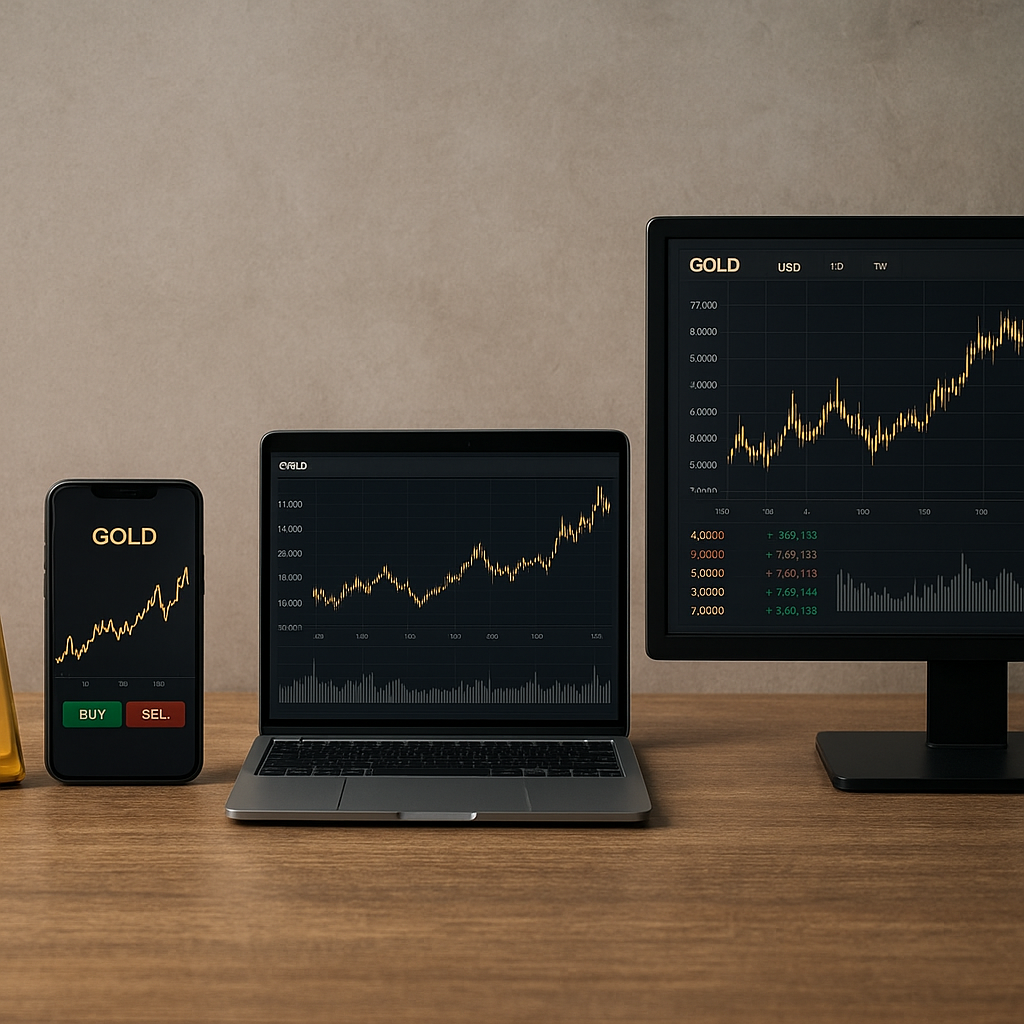
The Evolution of Gold Trading Platforms offers an in-depth look at how the world gold price has been shaped by technology, market dynamics, and regulatory frameworks. From ancient bourses to state-of-the-art digital marketplaces, the journey of gold trading reflects a constant pursuit of liquidity, transparency, and security. This article explores major milestones in trading infrastructure, examines the interplay between global events and spot prices, and anticipates future trends driven by innovation and decentralization.
Historical Foundations of Gold Trading
Long before electronic screens and mobile apps, gold exchange was conducted in bustling trading halls and through bilateral agreements among merchants. The medieval gold markets in Venice and Bruges set early standards for weighing, assaying, and pricing. As European powers expanded globally, gold bullion and coins became the primary medium of cross-border commerce. Price discovery mechanisms relied on shared knowledge among a small network of professionals, which limited accessibility but ensured tight control over counterfeit risks.
During the 19th century, the establishment of the London Bullion Market Association (LBMA) standardized contracts and defined settlement procedures for fine gold. These benchmarks laid the groundwork for a unified global spot price, known as the London Fix, which remained the de facto reference for decades. Meanwhile, the gold standard era tied national currencies to fixed gold values, fostering stability but also exposing economies to volatility when bounds were breached.
Digitization and the Rise of Online Platforms
From Telephone to Desktop
The late 20th century saw the introduction of electronic brokering systems, replacing telephone orders with screen-based trading. These early platforms improved speed but still required institutional access. With the advent of the internet, online gold markets expanded participation to a broader audience. Retail investors gained real-time quotes, and smaller dealers could execute orders with minimal overhead.
Features Driving Modern Platforms
- Efficiency: Automated matching engines execute orders in milliseconds, slashing transaction costs.
- Transparency: Live order books and historical trade data empower participants to make informed decisions.
- Security: Advanced encryption protocols and cold-wallet storage protect digital assets and private keys.
- Accessibility: Web and mobile interfaces allow investors from emerging markets to trade gold with few barriers.
- Globalization: 24/7 trading across time zones links diverse regional markets into a single network.
These features have transformed the way world gold price is determined. Spot quotes published by established exchanges are now supplemented by hundreds of electronic venues, each contributing to price formation through continuous bids and offers.
Impacts on World Gold Price Dynamics
As trading infrastructure evolved, so did the factors influencing gold price movements. Central bank policies, geopolitical tensions, and currency fluctuations have always driven demand for gold as a safe-haven asset. Yet the structure of trading platforms also plays a critical role.
Algorithmic Trading and Market Depth
High-frequency trading (HFT) algorithms now account for a significant portion of daily trading volume. By arbitraging price discrepancies across exchanges and responding to macroeconomic news in microseconds, these bots enhance liquidity but can amplify flash crashes when correlation breaks down. Deep order books maintained by liquidity providers help dampen extreme swings, yet automated strategies sometimes exacerbate short-term volatility.
Exchange-Traded Products
Gold ETFs have democratized access to bullion exposure. Funds like SPDR Gold Shares (GLD) track the spot price by holding physical bars in vaults. ETF share creation and redemption mechanisms tether fund NAVs closely to the underlying metal’s value. This innovation has increased demand elasticity and introduced institutional flows into spot markets.
Moreover, derivative instruments—futures, options, and structured notes—allow sophisticated hedging and yield enhancement strategies. The interplay between derivatives pricing and spot quotes adds complexity, requiring traders to monitor basis spreads, implied volatility, and funding rates constantly.
Regulatory and Technological Convergence
Following the LIBOR and gold-fixing scandals, regulators worldwide tightened oversight to ensure fair price setting. Independent bodies now supervise reference rates, enforce reporting standards, and mandate surveillance against market abuse. Compliance obligations have driven firms to invest heavily in audit trails and robust counterparty due diligence frameworks.
On the technological front, blockchain and distributed ledger technologies (DLT) promise to revolutionize settlement and custody processes. By tokenizing physical gold, platforms enable fractional ownership, 24/7 settlement finality, and direct peer-to-peer transfers without intermediary risk. Early pilots have demonstrated faster reconciliation, lower reconciliation costs, and end-to-end transparency of provenance.
Emerging Trends and the Future of Gold Trading
Looking ahead, several key developments are likely to shape the next phase of gold trading:
- Tokenization of bullion enabling programmable contracts and integration with decentralized finance (DeFi) ecosystems.
- Artificial Intelligence-driven analytics offering predictive insights into demand-supply imbalances and optimal execution strategies.
- Enhanced Cybersecurity measures leveraging multi-party computation (MPC) and hardware security modules to safeguard digital credentials.
- Environmental, Social, and Governance (ESG) compliance driving demand for responsibly sourced gold, traced from mine to market via immutable ledgers.
- Regulatory Harmonization across jurisdictions facilitating cross-border trading and reducing capital constraints for emerging market participants.
As these trends converge, the global gold trading ecosystem will become more interconnected, efficient, and resilient. Market participants—ranging from retail investors to multinational institutions—will benefit from improved price discovery, reduced friction, and innovative financial products. Yet, challenges such as cyber threats, regulatory fragmentation, and potential algorithmic risks remain. Success will depend on the industry’s ability to balance security with accessibility and efficiency, ensuring that the world gold price reflects true market fundamentals while embracing the promise of cutting-edge technology.