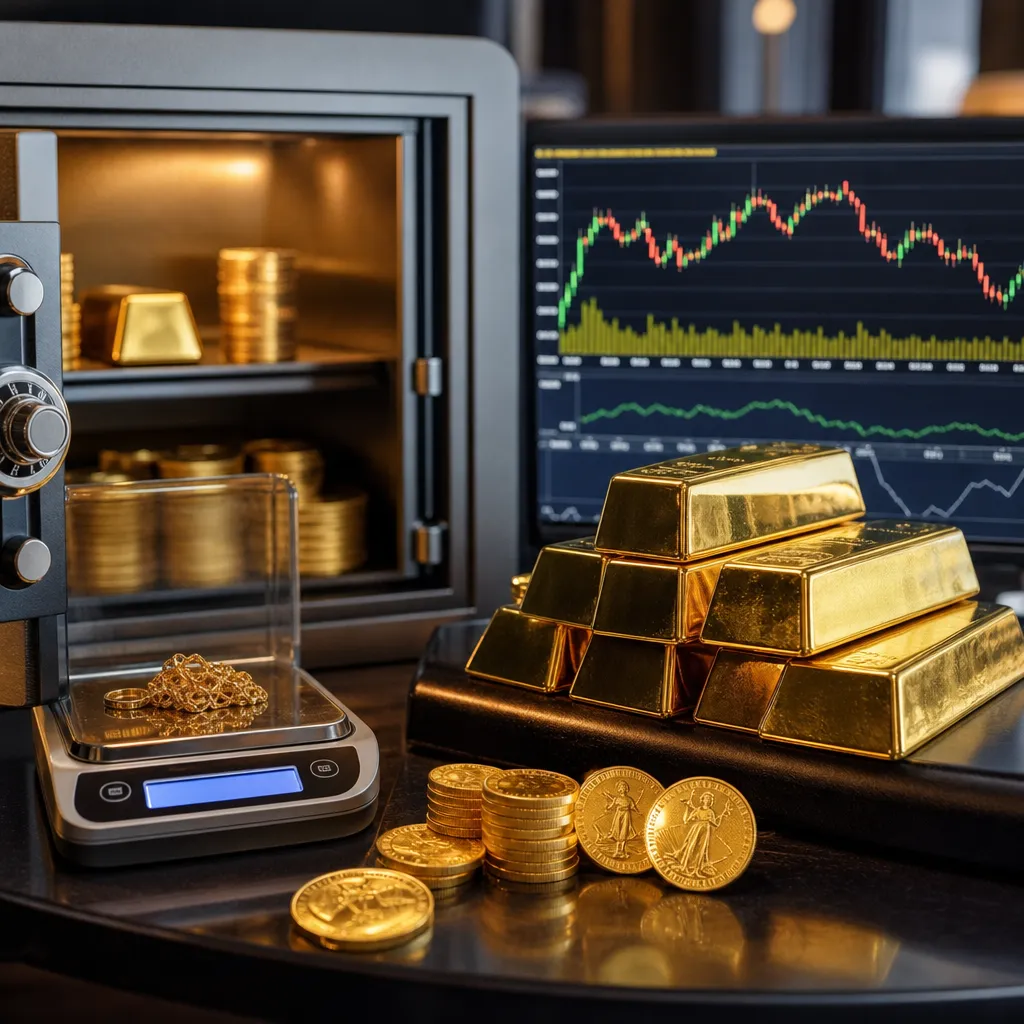
A gold investment guide should help you answer three practical questions: what kind of gold exposure you actually want, what it will cost, and what risks you are taking. Gold can play very different roles in a portfolio depending on whether you buy coins, an ETF, mining shares, or a leveraged futures contract. For most investors, the key is not simply “buy gold” but choosing the form of gold that matches your objective, time horizon, liquidity needs, and tolerance for volatility.
Gold matters because it behaves differently from many traditional financial assets. It does not produce cash flow like a bond or a dividend stock, but it can serve as a diversifier, a store of liquidity, and in some environments a hedge against currency weakness, financial stress, or declining real yields. That said, gold is not automatically protective in every scenario, and the wrong investment vehicle can create costs or risks that many buyers underestimate.
What investing in gold really means
When people say they are “investing in gold,” they may be referring to several different exposures:
- Owning physical bullion such as bars or coins
- Buying a gold ETF that tracks the gold price
- Owning gold mining stocks
- Investing in royalty and streaming companies
- Trading gold futures, options, CFDs, or spot contracts
These are not interchangeable. A one-ounce coin in your safe, a share of a gold ETF, and a leveraged futures contract can all respond to the gold price, but they differ sharply in liquidity, storage, counterparty risk, tax treatment, volatility, and operational complexity.
The table below shows the main investment methods and why the choice of vehicle matters as much as the gold thesis itself.
| Investment type | What you own | Liquidity | Main advantages | Main risks or drawbacks |
|---|---|---|---|---|
| Physical bars or coins | Direct bullion ownership | Moderate to high, depending on product and dealer access | No direct issuer risk, tangible asset, useful for long-term holding | Storage, insurance, dealer spread, premium over spot |
| Gold ETF | Fund shares linked to gold | Typically high during market hours | Easy access, low friction, no personal storage | Management fee, market dependency, no personal possession of bullion |
| Gold mining stocks | Equity in mining companies | Typically high for large miners | Potential leverage to rising gold prices, possible dividends | Company risk, cost inflation, geopolitical and operational risk |
| Royalty and streaming companies | Equity in firms financing mines for production rights | Usually high for larger names | Less direct operating risk than miners, diversified exposure | Equity market risk, valuation risk, dependence on mine counterparties |
| Futures or CFDs | Derivative exposure to gold price moves | High in active markets | Efficient trading, leverage, short-term flexibility | Leverage risk, margin calls, rollover costs, large losses possible |
The main takeaway is simple: physical gold is ownership, ETFs are access, miners are businesses, and derivatives are trading tools. Investors often blur these distinctions, which can lead to poor decisions.
Why investors buy gold
Gold is usually bought for one or more of five reasons: diversification, perceived defense against financial stress, concern about inflation or currency debasement, tactical speculation, or long-term wealth preservation. The reason matters because it should determine the instrument you use.
If you want emergency liquidity outside the banking system, physical bullion may fit better than an ETF. If you want a low-friction portfolio diversifier in a brokerage account, an ETF is usually more practical. If you want upside tied to rising gold prices and can handle equity risk, miners may be more suitable than bullion.
Gold also tends to attract demand when investors become uneasy about real yields, policy credibility, recession risk, or geopolitical tensions. But it is important not to oversimplify. Gold can rise during stress, yet it can also fall temporarily when investors sell liquid assets to raise cash.
How gold prices are driven
Gold does not have a single driver. Its price reflects a combination of macroeconomic conditions, market positioning, investment flows, and physical demand. The strongest influences often come from real interest rates, the US dollar, central bank demand, and broad risk sentiment.
Here is a practical summary of the main forces investors should monitor.
| Factor | Typical influence on gold | Why it matters |
|---|---|---|
| Falling real yields | Often supportive | Lower inflation-adjusted returns on bonds reduce the opportunity cost of holding non-yielding gold |
| Rising real yields | Often negative | Higher real returns on cash and bonds can make gold less attractive |
| Weaker US dollar | Often supportive | Gold is widely priced in dollars, so a weaker dollar can support demand and local purchasing power abroad |
| Stronger central bank buying | Potentially supportive | Official sector demand can reinforce long-term confidence and absorb supply |
| Geopolitical or financial stress | Often supportive, but not always | Safe-haven demand may rise, though liquidity selling can interrupt that pattern |
| ETF inflows or outflows | Can amplify moves | Investment flows can materially influence market momentum |
| Jewelry and physical retail demand | Supportive in some regions | Consumer demand can matter, especially when prices or currencies shift sharply |
The key limitation is that these relationships are not mechanical. For example, inflation alone does not guarantee higher gold prices. If central banks respond to inflation by pushing real yields higher, gold can struggle even in an inflationary environment.
Physical gold: bars, coins, storage, and premiums
Physical gold is the most straightforward form of ownership, but it is not the simplest in practice. You need to think about product type, authenticity, storage, insurance, and resale conditions.
Bars vs coins
Bars often have lower premiums per ounce, especially in larger sizes, making them cost-efficient for investors focused on metal content. Coins, especially widely recognized bullion coins, may be easier to resell in smaller amounts and may be more familiar to retail buyers.
Spot price vs retail price
The spot gold price quoted in financial markets is not the same as the price you pay for a coin or bar. A physical product typically includes:
- The underlying gold value
- A dealer premium
- Fabrication and distribution costs
- A bid-ask spread on resale
- Possible storage or insurance costs after purchase
That means physical buyers should expect to need a meaningful price move just to break even after round-trip costs. This is one reason physical gold is usually better suited to long-term holding than frequent trading.
Storage matters more than many investors expect
Keeping bullion at home gives immediate access but raises security concerns. Bank boxes and professional vaulting can improve security, but they add cost and may reduce immediate access. Before buying physical gold, investors should decide not only what to buy, but where and how they plan to keep it.
Gold ETFs: the most practical route for many investors
For investors who want price exposure without handling metal, gold ETFs are often the most efficient option. They trade like shares, can usually be bought and sold quickly, and avoid the operational burden of storage and insurance.
The main trade-off is that an ETF is a financial product, not a coin in your possession. You are relying on the structure, custody arrangements, and functioning of the market. For many portfolio investors, that is an acceptable and even preferable compromise. But it is not the same as holding bullion directly.
Costs matter here as well. ETFs usually charge an annual fee, and investors still face market spreads and brokerage commissions where applicable. Over long holding periods, seemingly small costs compound.
Mining stocks and royalty companies: gold exposure with business risk
Gold mining shares are often bought by investors seeking more upside than bullion itself might offer. In theory, if gold rises while a miner’s production costs remain controlled, company profits can expand disproportionately. In practice, that leverage works both ways.
Mining companies are affected by many factors unrelated to the gold price, including:
- Energy and labor costs
- Mine quality and reserve depletion
- Political and regulatory risk
- Management execution
- Balance sheet leverage
- Equity market sentiment
Royalty and streaming companies are a distinct segment. Rather than operating mines directly, they finance mining projects in exchange for a claim on future production or revenue. This can reduce some operating risk, although it does not eliminate equity market risk or valuation risk.
Investors should not treat miners as a pure substitute for bullion. They are equities first and gold exposure second.
How much gold belongs in a portfolio?
There is no universal allocation that fits every investor. The right amount depends on whether gold is being used as tactical exposure, long-term diversification, liquidity reserve, or crisis insurance. A portfolio with large equity exposure may use gold differently than a portfolio already heavy in cash or government bonds.
A practical approach is to start with the role gold is supposed to play. If the objective is diversification, a modest allocation may be enough. If the objective is speculative upside, investors should recognize that they are making a directional market bet and size the position accordingly.
What matters most is that the allocation is consistent with the investor’s total portfolio, not with a generic rule. Gold can reduce some portfolio risks, but too large a position can create concentration risk of its own.
Common mistakes in gold investing
Several errors appear repeatedly in gold portfolios, especially when investors are reacting to headlines rather than working from a clear plan.
- Confusing spot price with purchase price: physical products usually cost more than spot
- Ignoring storage and insurance: these can materially reduce net returns
- Using miners as if they were bullion: company-specific risks can dominate
- Buying on macro slogans alone: inflation, rates, and crisis narratives do not always translate neatly into higher gold prices
- Overusing leverage: futures and CFDs can magnify losses quickly
- Overallocating: diversification can become concentration if the position gets too large
Gold can be useful, but it works best when the investor is precise about what type of risk is being added or reduced.
Choosing the right gold investment method
The best gold investment method depends less on the asset itself and more on your objective. This comparison helps match common goals with the tools typically used.
| Objective | Often suitable vehicle | Why it may fit | Main caution |
|---|---|---|---|
| Long-term direct ownership | Physical bars or coins | Tangible asset with no direct fund issuer exposure | Storage, spreads, and resale friction |
| Easy portfolio diversification | Gold ETF | Convenient, liquid, brokerage-account access | Ongoing fees and no personal possession |
| Higher upside sensitivity to gold | Mining stocks | Profitability can respond strongly to gold price moves | Operational and equity market risks |
| Broad precious-metals equity exposure | Royalty/streaming companies or mining funds | More diversified than a single miner | Still equity exposure, not bullion ownership |
| Short-term speculation or hedging | Futures or options | Efficient market access and tactical flexibility | Leverage, complexity, and fast loss potential |
The practical takeaway is that most long-term investors are usually deciding between physical gold and ETFs, while miners and derivatives are better viewed as separate, higher-risk categories.
Risks that gold investors should not ignore
Gold is often described as defensive, but it is still a volatile asset. Its price can move sharply, sometimes for reasons that are not obvious from daily news headlines. Investors should expect drawdowns and avoid assuming that gold will match any single macro narrative perfectly.
Key risks include:
- Price volatility: gold can experience large swings even without a recession or crisis
- No yield: bullion does not generate income, which matters when cash and bonds offer attractive real returns
- Timing risk: buying after panic-driven rallies can lead to poor entry points
- Liquidity mismatch: some physical products are less liquid than investors assume
- Structure risk: ETFs, miners, and derivatives all introduce risks beyond the gold price itself
A sound gold investment process begins with clear expectations: gold may diversify a portfolio, but it does not eliminate risk and does not reliably protect against every problem investors fear.
FAQ
Is gold a good investment for beginners?
It can be, especially through simple and liquid vehicles such as broad gold ETFs. Physical bullion can also be appropriate, but beginners should understand premiums, storage, and resale spreads before buying.
Is physical gold better than a gold ETF?
Neither is universally better. Physical gold offers direct ownership and no need to rely on a fund structure, while ETFs usually offer better convenience, easier trading, and lower logistical burden.
Do gold mining stocks move the same way as gold?
No. Mining stocks are affected by the gold price, but also by company-specific factors such as costs, production, debt, political risk, and broader equity market conditions.
Does gold always protect against inflation?
No. Gold can perform well in some inflationary periods, but the outcome also depends on real interest rates, central bank policy, the US dollar, and investor positioning. Inflation by itself is not enough to predict gold.
Can gold lose value for long periods?
Yes. Gold can go through extended periods of weak or sideways performance, especially when real yields are rising or when investor demand shifts toward income-producing assets.
Should gold be a large part of a portfolio?
That depends on the investor’s objective and overall asset mix. Gold is typically used as one component of a broader portfolio rather than as a dominant position.
Why is physical gold more expensive than the quoted gold price?
The quoted market price usually refers to wholesale or spot pricing. Physical bars and coins include fabrication, distribution, dealer premiums, and bid-ask spreads, which raise the retail purchase price.
Sources
- World Gold Council – gold market research and gold investment information
- LBMA – gold market structure and benchmark information
- CME Group – gold futures contract and market information