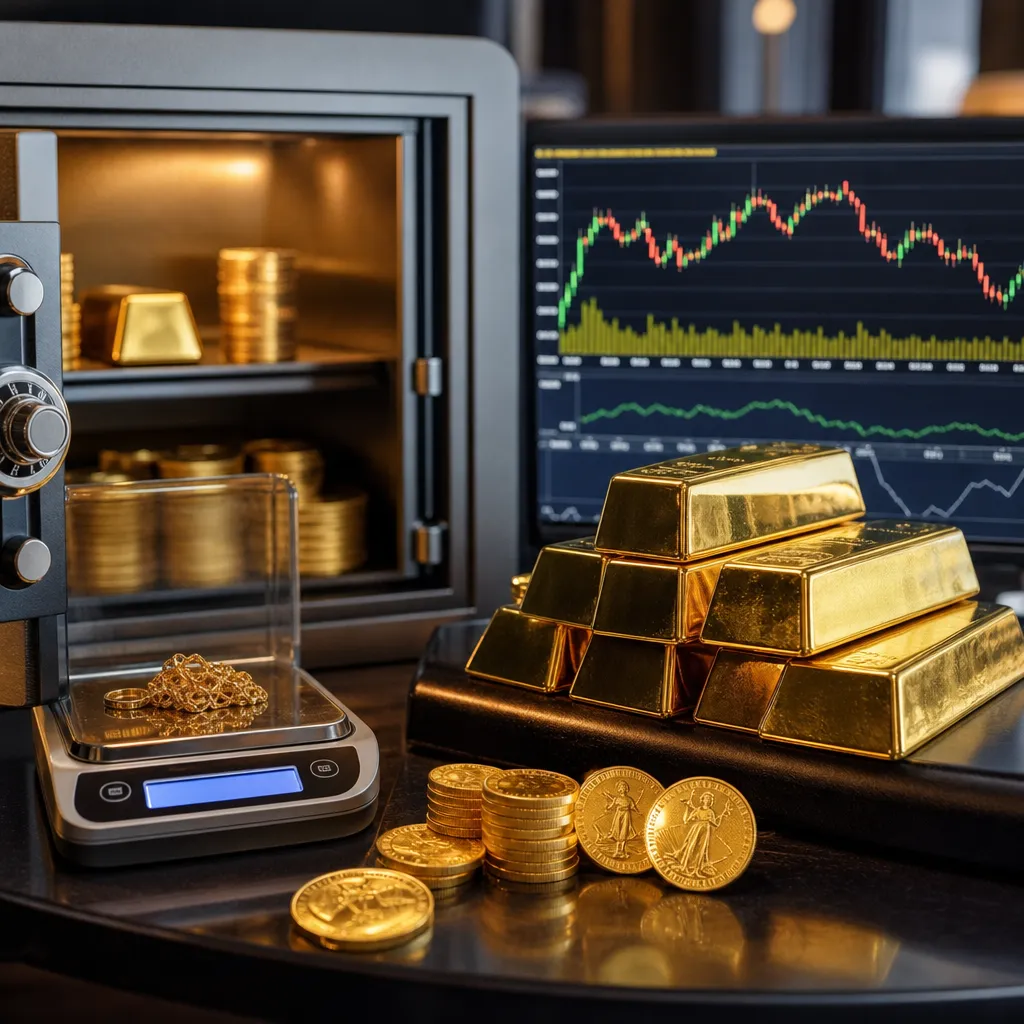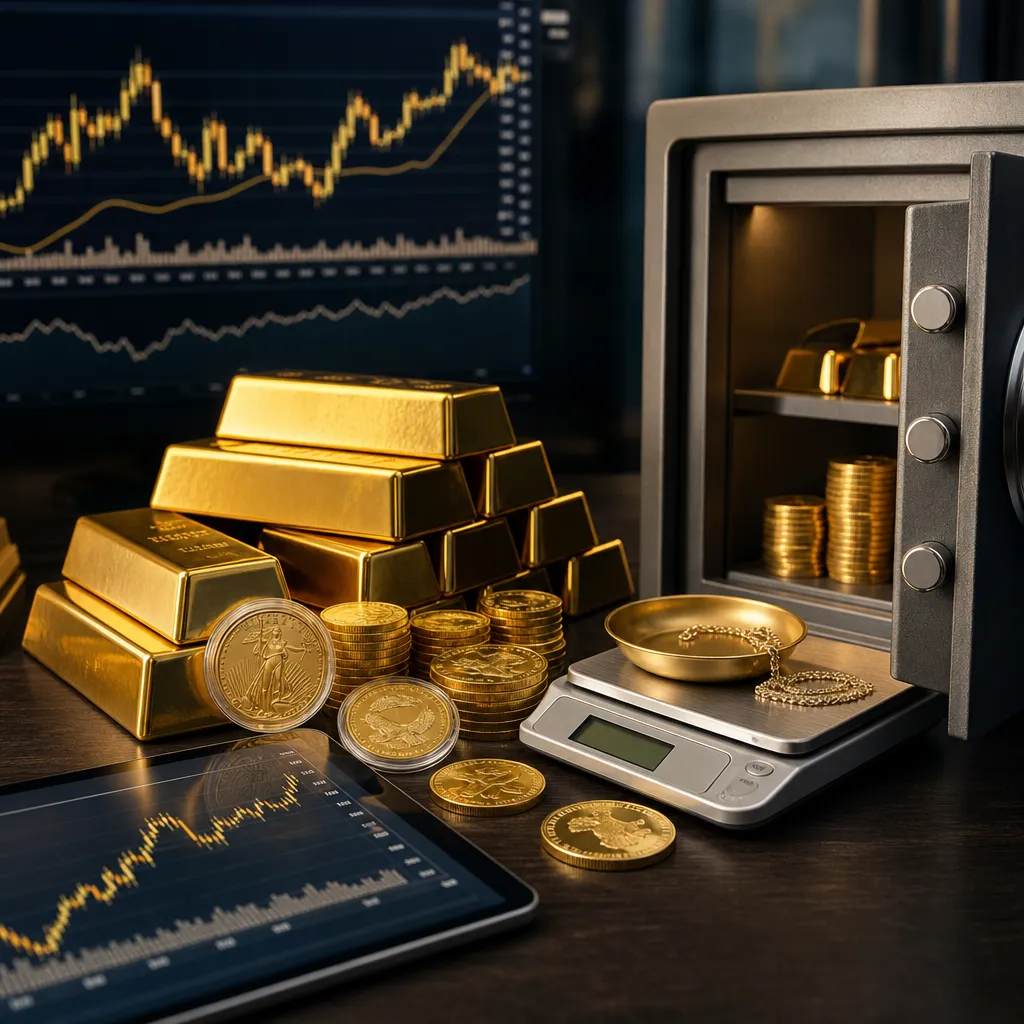
Gold price and coin sales are closely linked, but not in the simple way many buyers expect. When the market price of gold rises, gold coins usually become more expensive, yet retail coin demand may either strengthen or weaken depending on investor sentiment, dealer inventories, and the size of premiums above spot. To understand coin sales properly, you need to separate the wholesale gold price from the real price of a physical coin in the retail market. You also need to understand why demand for coins can surge even when spot gold is flat, or fall even when gold itself is performing well.
What “gold price and coin sales” really means
This topic usually refers to the relationship between the market price of gold and the buying and selling activity in physical gold coins. It matters to investors because coins are one of the most common ways individuals gain exposure to physical bullion, but coin pricing behaves differently from the quoted spot gold price shown on financial websites.
A one-ounce bullion coin contains a defined amount of gold, so its value starts with the underlying gold price. But the final retail price also includes manufacturing costs, distribution margins, dealer premiums, local taxes where applicable, and temporary supply-demand imbalances in the physical market.
The table below shows the main building blocks behind gold coin pricing.
| Component | What It Represents | Effect on Coin Price | Why It Matters |
|---|---|---|---|
| Spot gold price | The international market price for unallocated gold | Usually the main driver | Sets the base metal value of the coin |
| Coin premium | Amount above spot charged for the physical product | Raises retail cost above melt value | Can widen sharply when demand is strong or supply is tight |
| Dealer spread | Difference between dealer buy and sell prices | Affects entry and exit cost | Important for short-term buyers who may need liquidity |
| Minting and distribution costs | Fabrication, transport, insurance, and wholesale handling | Adds to final retail price | Physical bullion is a manufactured retail product, not just raw metal |
| Local currency moves | Exchange-rate effect in the buyer’s currency | Can raise or lower local prices | Gold may rise in local terms even if the USD gold price is unchanged |
The key takeaway is that coin buyers do not purchase “spot gold.” They purchase a physical retail product whose price is heavily influenced by the underlying metal but not determined by it alone.
How the gold price affects coin sales
Gold price moves influence coin sales through both valuation and psychology. When gold rises quickly, some buyers rush in because they expect further gains or want protection from inflation, currency weakness, or financial stress. At the same time, other buyers step back because coins suddenly look expensive.
When gold falls, the opposite can happen. Bargain hunters may increase purchases, especially if they view the decline as temporary. But some retail investors delay buying because they fear more downside.
This means coin sales are not driven only by price direction. They are driven by how buyers interpret the move.
Three common demand patterns
- Momentum buying: sales rise because buyers do not want to miss a rally.
- Dip buying: sales rise because lower prices are seen as an opportunity.
- Wait-and-see behavior: sales weaken because uncertainty is high and buyers hesitate.
In practice, retail coin demand often becomes strongest during periods of macroeconomic anxiety rather than during calm bull markets.
Why coin sales can move differently from spot gold
A common mistake is assuming that coin demand should always track the gold chart. In reality, the physical coin market has its own mechanics. Dealer stocks can run low, mints can face production bottlenecks, and investors may suddenly prefer small-denomination coins over bars because coins are easier to store, gift, verify, and resell in retail channels.
That is why coin sales can rise even if spot gold is not moving much. The trigger may be banking stress, geopolitical tension, capital controls, distrust of financial intermediaries, or simply strong household demand for tangible assets.
The reverse is also true. Gold may be rising, but coin sales can soften if premiums become too high, if buyers prefer ETFs for convenience, or if households are under financial pressure and have less cash available for bullion purchases.
| Market Condition | Typical Coin-Sales Response | Why the Response Varies |
|---|---|---|
| Gold price rising steadily | Sales may increase or pause | Some buyers chase momentum, others dislike paying higher prices |
| Gold price falling moderately | Sales may improve | Value-oriented buyers may treat the drop as a buying opportunity |
| Sharp financial panic | Sales often surge if supply is available | Safe-haven demand can intensify quickly |
| Very high retail premiums | Sales may weaken despite strong gold interest | Physical product looks expensive relative to spot |
| Strong ETF inflows but weak retail demand | Coin sales may lag | Investors may prefer paper exposure over physical ownership |
| Mint or dealer shortages | Sales volume may be constrained | Demand can be strong even while actual transactions are limited by supply |
The main lesson is that coin sales reflect both investment demand and market access. Strong demand does not always translate into high sales volumes if physical supply is tight.
Premiums: the most practical issue for coin buyers
For most retail investors, premiums matter more than small day-to-day changes in the spot gold price. A buyer who overpays a large premium may need a much bigger move in gold just to break even on resale.
Premiums often rise when demand spikes for recognizable sovereign-mint coins such as bullion issues from major national mints. Smaller coins usually carry higher percentage premiums than one-ounce coins because fabrication costs are spread over less gold content.
This is one reason coin sales can remain active even when investors complain about “expensive gold.” In many cases, what looks expensive is not just the metal but the premium structure of the product.
What can push premiums higher
- Sudden retail demand during a crisis
- Mint production constraints
- Limited dealer inventory
- Higher shipping, insurance, or financing costs
- Preference for popular coin formats over generic bars
For buyers, the practical question is not only “What is gold doing?” but also “How far above spot am I paying, and how liquid will this coin be if I sell?”
What drives strong gold coin sales
Coin sales usually strengthen when buyers want direct ownership and low counterparty exposure. That tends to happen during periods of financial distrust, inflation concerns, currency weakness, or geopolitical stress. The attraction of a gold coin is not just exposure to metal prices; it is also the simplicity of owning a recognized physical asset outside the banking system.
Several drivers matter most:
- Real interest rates: lower or falling real yields often support gold demand because the opportunity cost of holding a non-yielding asset declines.
- Inflation and inflation expectations: persistent inflation can increase retail interest in physical gold, though the relationship is not automatic.
- Currency weakness: if a local currency falls against the US dollar, domestic gold prices can rise even when global spot gold is stable.
- Geopolitical risk: coin demand often rises when investors want a portable and tangible reserve asset.
- Trust and system risk: banking stress can drive a preference for coins over financial gold products.
Importantly, coin sales are often more sensitive to fear and trust than to mine supply. Mine output matters for the broader gold market, but short-term retail coin demand is usually driven more by investor behavior than by immediate changes in global production.
Gold coins versus other ways to invest in gold
Coin sales must also be understood in the context of competing gold investment vehicles. Some investors buy coins for custody and sovereignty. Others prefer ETFs for liquidity and lower transaction friction. Mining stocks can offer leverage to gold prices, but they also add business and equity-market risk.
| Investment Method | Ownership Type | Typical Advantages | Main Drawbacks |
|---|---|---|---|
| Gold coins | Direct physical ownership | Tangible asset, widely recognized, no ongoing issuer exposure | Premiums, storage, insurance, wider buy-sell spreads |
| Gold bars | Direct physical ownership | Often lower premium per ounce than small coins | May be less convenient for small retail resale |
| Gold ETFs | Financial exposure to gold | High liquidity, easy trading, usually lower transaction friction | No direct possession of metal, depends on fund structure |
| Gold mining stocks | Equity ownership | Potential operational leverage to rising gold prices | Company, cost, jurisdiction, and stock-market risk |
| Gold futures | Derivative exposure | Efficient market access and leverage | Margin risk, complexity, rollover and volatility risk |
When coin sales rise while ETF flows are weak, that may signal a preference for direct ownership rather than simple price exposure. That distinction can be important during stress periods.
How to read coin sales data correctly
Headlines about strong or weak coin sales can be misleading if taken out of context. A drop in coin sales does not necessarily mean gold demand is collapsing. It may simply reflect high prices, temporary inventory shortages, changing premium levels, or a shift toward bars and ETFs.
Likewise, a surge in coin sales does not automatically mean the gold price is about to rise. It may represent defensive retail buying after a crisis has already begun, or opportunistic buying after a pullback.
Questions worth asking when you see coin-sales data
- Is demand rising because of fear, inflation concerns, or price momentum?
- Are premiums expanding or contracting?
- Are mints and dealers fully stocked?
- Are buyers choosing coins over bars, or over ETFs?
- Is local currency weakness driving domestic demand?
In other words, coin sales are a useful sentiment indicator, but not a standalone forecasting tool.
Risks and limitations for coin buyers and sellers
Physical coins offer direct ownership, but they are not frictionless. Retail holders face storage, insurance, authenticity, and liquidity considerations. They also face timing risk: if you buy during a period of elevated premiums, the gold price may need to rise significantly just to offset transaction costs.
Sellers should remember that coin resale prices are usually based on the dealer bid, not on the retail asking price. Popular coins in strong demand may retain better resale value, but spreads still matter.
Coins can also behave differently from numismatic products. A standard bullion coin is mainly valued for its metal content and marketability. A collectible coin may carry historical or rarity value, which introduces a very different set of pricing risks.
What to watch if you are following gold price and coin sales
If your goal is to understand where the retail physical market is heading, watch a combination of macro signals and physical-market indicators. Spot gold alone is not enough.
- Direction of real yields and monetary policy expectations
- US dollar strength or weakness
- Inflation concerns and recession fears
- Retail premiums on common bullion coins
- Dealer inventory conditions and mint availability
- ETF flows versus physical demand trends
- Geopolitical or banking-sector stress
The most useful framework is to treat coin sales as a behavior signal layered on top of the gold price, not as a simple byproduct of it.
FAQ
Do gold coin sales always rise when the gold price rises?
No. Higher gold prices can attract momentum buyers, but they can also discourage price-sensitive buyers. Coin sales depend on sentiment, affordability, and premiums, not just the metal price.
Why do gold coins cost more than the spot gold price?
Because a coin is a physical retail product. Its price includes fabrication, distribution, dealer margin, and often a premium reflecting current supply and demand conditions.
Can coin sales rise even if gold is not moving much?
Yes. Coin demand can increase during periods of financial stress, currency weakness, or distrust in financial institutions, even when spot gold is relatively stable.
Are strong coin sales a bullish signal for gold?
Sometimes, but not always. Strong sales can reflect safe-haven demand or dip buying, yet they do not guarantee higher future gold prices. They are better viewed as one indicator of retail sentiment.
What is more important for coin buyers: spot price or premium?
Both matter, but for many retail buyers the premium is especially important. A high premium increases the total entry cost and can reduce flexibility if you need to sell quickly.
Why might coin sales fall even during a gold bull market?
Buyers may switch to ETFs, wait for better entry points, or reduce purchases because premiums are too high. High prices can support interest in gold while still reducing actual coin transactions.
Are bullion coins and collectible coins affected in the same way by gold prices?
No. Bullion coins are primarily influenced by metal value and retail premiums. Collectible or numismatic coins may also depend heavily on rarity, condition, and collector demand.
Sources
- World Gold Council – gold market research and retail investment demand analysis
- LBMA – gold market structure and benchmark pricing information
- CME Group – gold futures and price discovery information