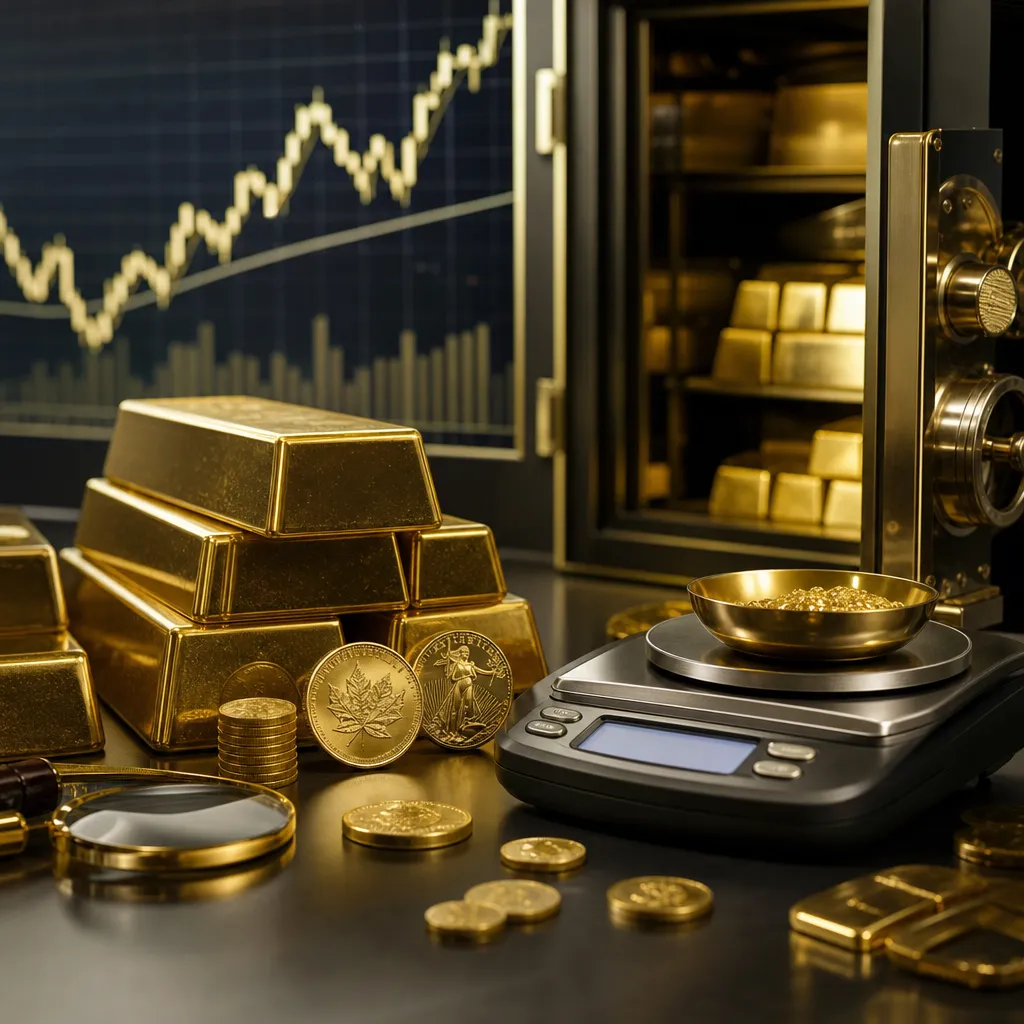
Gold price and quantitative tightening are closely connected through liquidity, interest rates, bond markets, and the US dollar. When a central bank tightens policy not only by raising rates but also by shrinking its balance sheet, the environment for gold often becomes less straightforward and sometimes less supportive. The key point is that quantitative tightening, or QT, can pressure gold by lifting real yields and strengthening financial conditions, but the relationship is not mechanical and does not work the same way in every cycle. Investors need to understand the transmission channels, the exceptions, and the signals that matter most.
What quantitative tightening means for gold
Quantitative tightening is the process by which a central bank reduces the size of its balance sheet, usually by allowing bonds to mature without reinvestment or by actively selling securities. In practical terms, QT removes liquidity from the financial system and tends to tighten broader financial conditions.
For gold, that matters because gold does not pay interest. Its appeal often improves when real returns on cash and bonds are low or falling, and when investors are worried about currency debasement, systemic risk, or inflation that is not being fully contained. QT can alter all of those forces at once.
The table below summarizes the main channels.
| QT Transmission Channel | Typical Pressure on Gold | Why It Matters | Important Exception |
|---|---|---|---|
| Balance sheet reduction | Often negative | Less central bank liquidity can reduce demand for non-yielding assets and tighten overall financial conditions. | If QT causes market stress, safe-haven demand for gold can offset that pressure. |
| Higher real yields | Often negative | Higher inflation-adjusted returns on bonds raise the opportunity cost of holding gold. | If inflation expectations rise faster than nominal yields, real yields may not increase much. |
| Stronger US dollar | Often negative | Gold is commonly priced in dollars, so a stronger dollar can make gold more expensive for non-US buyers. | Gold and the dollar can rise together during acute risk aversion. |
| Tighter credit conditions | Mixed | Reduced liquidity can weaken risk assets and change portfolio demand. | If tighter conditions raise recession fears, gold may benefit defensively. |
| Lower inflation expectations | Often negative | If investors believe inflation will be controlled, gold’s inflation-hedge appeal may soften. | Gold can still rise if growth fears dominate inflation relief. |
The main takeaway is simple: QT is usually a headwind for gold when it pushes real yields higher and supports the dollar, but it can become supportive if it destabilizes markets or increases recession and financial-system fears.
How the mechanism works in practice
Gold is highly sensitive to real yields, not just nominal rates. That distinction is critical. A central bank can reduce its balance sheet, but the gold market will care most about whether the result is a durable rise in inflation-adjusted returns on safe bonds.
Suppose QT leads to higher Treasury yields while inflation expectations remain stable or fall. In that case, real yields tend to rise, and gold often struggles because investors can earn a better real return in interest-bearing assets.
But QT is not only about yields. It also influences market liquidity, volatility, risk appetite, and confidence in central bank control. If shrinking liquidity contributes to disorder in bond markets, banking stress, or recession fears, gold can recover or rally even while QT is still technically in effect.
Why real yields matter more than the headline policy story
Many investors hear that tighter monetary policy is bad for gold and stop there. That is too simplistic. Gold responds less to the policy label and more to how policy changes the investment landscape.
If QT happens in a disinflationary environment with resilient growth, real yields may rise and pressure gold. If QT occurs while growth weakens sharply, markets may start pricing future rate cuts, lower long-term yields, or renewed policy support. In that environment, gold can hold up surprisingly well.
This is why gold sometimes rises during tightening phases. The market is forward-looking. If investors believe QT will eventually break something, slow the economy too much, or force a policy reversal, gold can begin pricing that outcome before the central bank changes course.
| Market Condition | Likely Gold Response | Main Mechanism |
|---|---|---|
| QT with rising real yields and firm dollar | Often weaker | Higher opportunity cost and dollar headwind |
| QT with slowing growth and recession fears | Often mixed to stronger | Defensive demand offsets tighter liquidity |
| QT with falling inflation and calm markets | Often weaker or range-bound | Reduced inflation hedge demand and stronger confidence in policy |
| QT with financial stress or credit accidents | Often stronger | Safe-haven demand and expectations of future policy easing |
| QT with sticky inflation and policy uncertainty | Potentially stronger | Gold benefits if inflation remains problematic despite tightening |
The practical lesson is that investors should track market outcomes, not just central bank announcements.
The role of bond yields and the US dollar
QT often works through government bond markets. When a central bank steps back as a major buyer of bonds, private investors may demand higher yields to absorb supply. That can lift nominal yields and, under some conditions, real yields as well.
Higher yields can weigh on gold, especially when the move reflects tighter policy credibility rather than rising inflation concern. At the same time, QT can support the US dollar by reducing liquidity and reinforcing a tighter monetary stance. Since gold is globally quoted in dollars, that creates another potential headwind.
However, neither relationship is fixed. Gold can rise alongside yields when inflation fears intensify. It can also rise with the dollar during severe market stress if investors seek multiple forms of liquidity and safety at the same time. That is why one-variable explanations often fail.
When quantitative tightening hurts gold most
QT tends to be most negative for gold under a fairly specific set of conditions:
- Real yields are rising meaningfully.
- The dollar is strengthening.
- Inflation is easing or expected to ease.
- Economic growth remains firm enough that recession fears stay contained.
- Risk markets remain orderly, reducing demand for defensive assets.
In that environment, the opportunity cost of holding gold rises and the argument for owning non-yielding safe assets weakens. Gold may still find support from central bank buying, geopolitical concerns, or structural diversification demand, but the macro backdrop becomes more challenging.
When QT can still be bullish for gold
QT can support gold if the tightening process becomes economically or financially destabilizing. This usually happens through one of three routes.
1. Financial stress
If liquidity withdrawal exposes vulnerabilities in banking, funding markets, or leveraged portfolios, investors may rotate into gold as a defensive asset.
2. Recession expectations
If QT contributes to a sharper slowdown, markets may begin anticipating rate cuts, lower future real yields, or an end to balance sheet reduction. Gold often responds positively to that policy pivot expectation before it actually happens.
3. Policy credibility concerns
If inflation proves sticky even during QT, investors may question whether central banks can restore price stability without triggering a downturn. Gold may benefit from that loss of confidence.
This is the core nuance many investors miss: gold does not trade on QT in isolation; it trades on what QT does to growth, yields, inflation expectations, risk sentiment, and policy credibility.
What investors should watch instead of focusing on one headline
Anyone analyzing gold price and quantitative tightening should monitor a small group of variables together rather than relying on a single narrative.
- Real yields: Often one of the most important macro drivers for gold.
- US dollar trend: A stronger dollar can create pressure, especially for non-US demand.
- Inflation expectations: These help determine whether nominal yield moves are truly bearish for gold.
- Credit spreads and financial stress indicators: Rising stress can turn QT from a gold headwind into a gold tailwind.
- Economic growth data: Weakening activity can shift the market from tightening to easing expectations.
- Central bank communication: The pace, persistence, and flexibility of QT matter.
- Gold ETF flows and official-sector demand: These can reinforce or offset macro pressure.
It is also useful to separate spot gold from gold-related equities. Gold mining stocks often respond to the gold price, but they also carry equity-market risk, operating cost risk, and management risk. During a QT-driven risk-off episode, miners may underperform bullion even if gold itself is relatively resilient.
Limits of the relationship
There is no reliable formula that says QT automatically causes gold to fall. Monetary policy is only one part of the gold market.
Gold also responds to central bank reserve diversification, geopolitical tension, jewelry and bar demand, ETF positioning, and broader trust in fiat systems. In some periods, those forces can dominate QT entirely.
Another limitation is timing. QT may matter less at the moment it is announced than months later, when the effects on reserves, lending conditions, or bond market functioning become more visible. Markets can also front-run the end of QT long before the balance sheet actually stabilizes.
Finally, not all QT is equally restrictive. The pace of runoff, the starting size of the balance sheet, the banking system’s reserve levels, and the broader fiscal backdrop all influence the effect on gold.
Bottom line for gold investors
Quantitative tightening is generally a macro headwind for gold when it lifts real yields, supports the dollar, and keeps inflation expectations under control. That is the cleanest bearish setup for bullion. But the relationship is conditional, not absolute.
If QT contributes to market stress, recession fears, or doubts about policy success, gold can perform well despite ongoing balance sheet reduction. In practice, the most useful framework is to treat QT as part of a broader matrix: liquidity, real rates, currency trends, growth risk, and investor confidence.
For anyone trying to interpret the gold price during QT, the key question is not simply whether the balance sheet is shrinking. It is whether that shrinking is pushing real returns higher and confidence stronger, or instead pushing financial stress higher and confidence weaker.
FAQ
Does quantitative tightening always lower gold prices?
No. QT often creates pressure on gold by tightening liquidity and lifting real yields, but gold can still rise if QT increases recession fears, market stress, or expectations of future policy easing.
Why do real yields matter so much for gold?
Gold does not produce income. When inflation-adjusted yields on bonds rise, the opportunity cost of holding gold usually increases. When real yields fall, gold often becomes more attractive.
Can gold rise during a period of central bank tightening?
Yes. Gold can rise during tightening if inflation remains stubborn, if markets expect the tightening to damage growth, or if investors seek safety during financial instability.
How does QT differ from rate hikes in its effect on gold?
Rate hikes directly increase short-term interest rates. QT works more through liquidity withdrawal, bond market supply-demand dynamics, and broader financial conditions. Both can affect gold, but through slightly different channels.
Is the US dollar more important than QT for gold?
Sometimes. A strong or weak dollar can have an immediate effect on gold pricing, especially internationally. But the dollar itself is influenced by the same macro forces that shape QT’s impact, such as rates, risk appetite, and growth expectations.
What should investors monitor first during QT?
Real yields are often the most important starting point. After that, watch the dollar, inflation expectations, credit stress, recession probabilities, and changes in central bank communication.
Do gold mining stocks react the same way as physical gold during QT?
Not necessarily. Mining stocks are influenced by the gold price, but they also move with equity-market sentiment, energy costs, company-specific risks, and financing conditions. QT can therefore affect miners differently from bullion.
Sources
- Federal Reserve – balance sheet and monetary policy information
- Federal Reserve Economic Data (FRED) – real yields, interest rates, and financial conditions data
- World Gold Council – gold market research and macro analysis