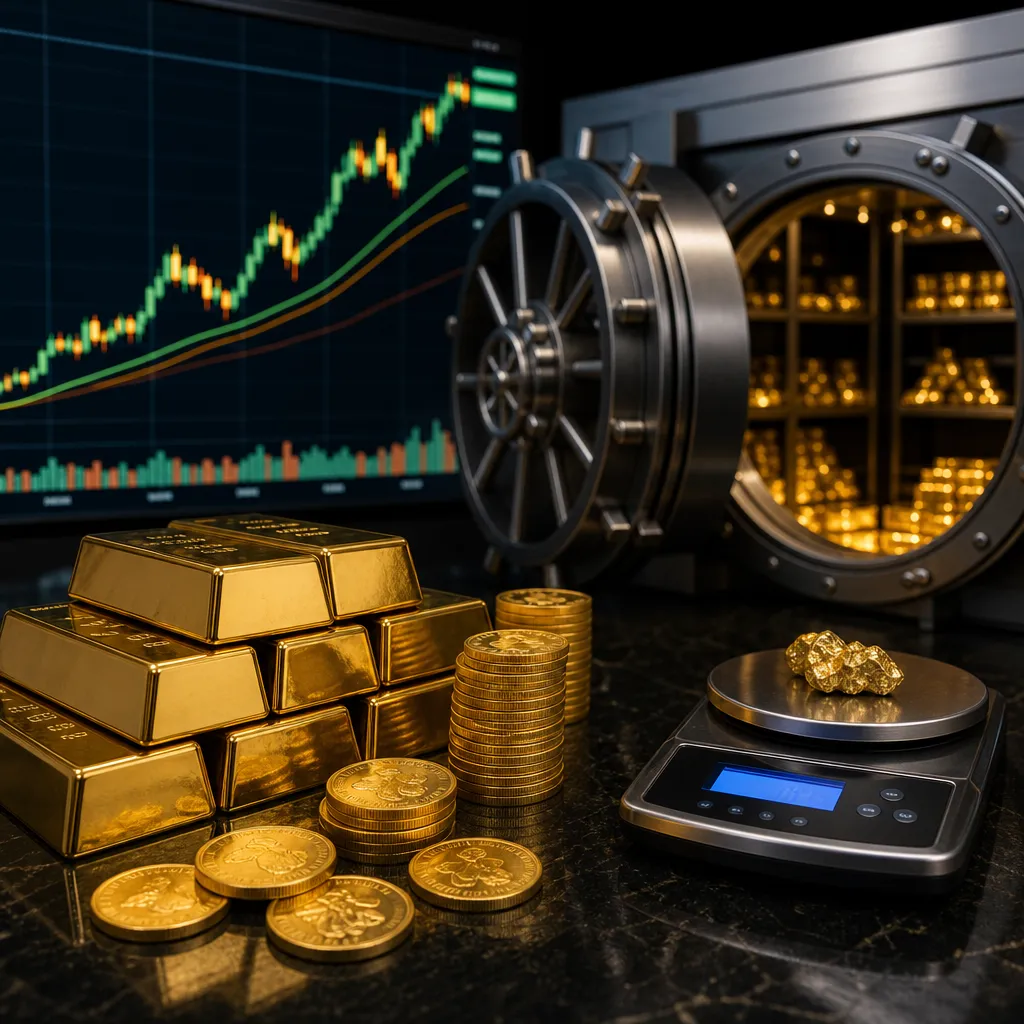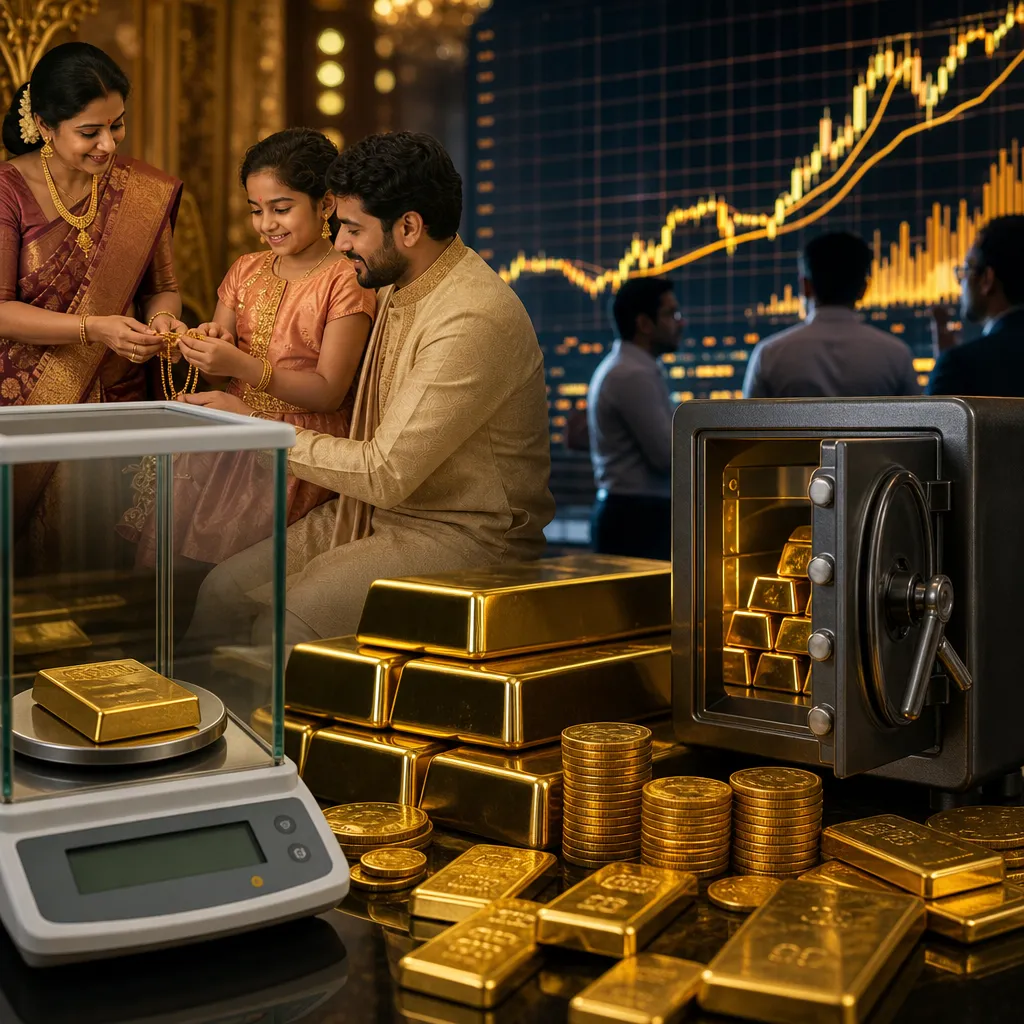
Gold prices react to India demand because India is one of the world’s most important physical gold markets. When Indian buying strengthens or weakens, it can influence global sentiment, local premiums, import flows, refining activity, and sometimes even the balance between paper and physical markets. For anyone trying to understand gold price moves, especially around festival seasons, wedding periods, or rupee volatility, India is not a side story—it is one of the key demand centers the market watches.
The main point is simple: India matters less because it “sets” the gold price directly every day, and more because it is a major source of real-world physical demand. That demand can reinforce a global uptrend, absorb supply during pullbacks, or soften when local prices become too high. The relationship is important, but it is not mechanical; India demand is one influence among several, alongside real yields, the US dollar, central banks, ETF flows, and macro risk.
Why India matters so much to the gold market
India has a deep cultural, financial, and seasonal relationship with gold. Gold is bought there not only as jewelry but also as savings, gifts, wealth storage, and, in some cases, quasi-financial security. That means Indian demand is broader than simple discretionary consumption.
In many countries, gold buying is dominated by investors. In India, jewelry demand, household accumulation, festivals, and wedding-related purchases can all drive volumes. This gives the global gold market a large, recurring source of physical demand that is often price-sensitive but persistent.
The table below shows why Indian demand gets so much attention.
| Driver | Why it supports demand | Why global gold traders care |
|---|---|---|
| Jewelry buying | Gold jewelry is widely purchased for weddings, gifts, and savings | Creates large recurring physical demand |
| Festival seasons | Buying often increases during important cultural and religious periods | Can tighten local supply and lift import interest |
| Household wealth storage | Gold is used as a long-term store of value by many families | Supports demand even when financial market participation is limited |
| Bar and coin investment | Retail investors may buy bullion when inflation, currency pressure, or uncertainty rise | Adds investment-style physical demand beyond jewelry |
| Large import dependence | Domestic demand is met partly through imported gold | Connects local buying directly to international flows |
The key takeaway is that India is a major physical buyer, and physical demand still matters in a market often dominated by futures and ETF headlines.
How Indian gold demand affects prices in practice
The global benchmark gold price is influenced heavily by wholesale markets such as LBMA and futures trading on COMEX. India does not usually dictate those benchmark prices minute by minute. However, strong Indian demand can still shape the market through several practical channels.
First, stronger Indian buying can increase import demand. Importers, banks, refiners, and dealers may need to source more metal, which supports physical tightness. Second, local premiums in India can rise when demand is robust relative to available supply. Third, strong physical buying can help validate or reinforce bullish global sentiment, especially when it occurs alongside central bank buying or ETF inflows.
When demand weakens, the reverse can happen. High local prices, a weaker rupee, or import restrictions can reduce purchases. That can soften local premiums and lower the urgency of physical restocking.
| Market condition in India | Typical local effect | Possible broader gold market implication |
|---|---|---|
| Strong festival or wedding demand | Higher retail buying and stronger dealer activity | Supports physical imports and can reinforce bullish sentiment |
| Sharp rise in domestic gold prices | Consumers delay purchases or buy lighter jewelry | Physical demand may cool even if global prices stay high |
| Rupee weakness | Imported gold becomes more expensive locally | Can suppress Indian demand even if the US dollar gold price is unchanged |
| Lower import constraints or smoother supply | Improved market availability | Can reduce extreme local premiums and normalize flows |
| Economic uncertainty or inflation pressure | Gold demand may rise as a store of value | Boosts investment-related physical buying |
This is why analysts often distinguish between paper gold drivers and physical gold drivers. India matters most on the physical side of the equation.
India demand does not move gold in isolation
A common mistake is to assume that strong Indian demand automatically makes gold prices rise. In reality, the global gold market is much bigger than any single country’s retail demand. On many days, gold moves more because of US real yields, Federal Reserve expectations, the dollar, futures positioning, or ETF flows than because of jewelry buying in India.
For example, gold can fall even during a strong Indian buying period if real yields rise sharply and the dollar strengthens. Conversely, gold can rally while Indian jewelry demand softens if investors globally are buying gold as a safe-haven asset.
This means India demand is best understood as an important supporting or offsetting force, not a single master variable.
The role of seasonality: festivals, weddings, and buying windows
One reason India attracts so much attention is seasonality. Gold buying often increases around festival periods and wedding seasons, when purchases are tied to tradition as well as wealth transfer. This can create predictable periods of stronger physical demand.
Seasonality does not guarantee price gains. Traders often anticipate these periods well in advance, and if global macro conditions are bearish, seasonal demand may only cushion declines rather than reverse them. Still, these buying windows matter because they can create a more resilient physical market.
Seasonality is especially important when prices dip into levels consumers find attractive. In that situation, Indian demand can become more price-responsive and help stabilize the market. When prices surge to record highs in local currency terms, buyers may step back, shift to lower weights, or recycle old jewelry instead of buying new gold.
The rupee effect: why local currency matters as much as global gold
Gold is internationally priced in US dollars, but Indian consumers buy in rupees. That means the local gold price in India depends on both the global gold price and the USD/INR exchange rate. Even if dollar gold is flat, rupee weakness can make gold significantly more expensive in India.
This is one of the most important mechanisms in the entire story. If the rupee depreciates, local prices can rise enough to reduce demand. If the rupee strengthens, or if global gold corrects lower, Indian buyers may re-enter the market more aggressively.
For market watchers, this means “India demand” is often really a function of local affordability, not just global bullishness. A global rally that looks positive in dollar terms may still hurt Indian demand if the currency moves the wrong way.
Why premiums and imports are closely watched
Analysts often monitor Indian gold premiums because they provide a real-time clue about the physical market. A premium is the amount local buyers are willing to pay above the international benchmark after factoring in logistics, import costs, and market conditions. Rising premiums can indicate strong physical appetite or tight supply. Discounts can signal weak demand or adequate inventory.
Imports are another key signal. Because India relies heavily on imported gold, changes in import volumes can reveal how strong domestic demand really is. However, imports can be noisy. Timing effects, inventory cycles, policy changes, and shipment patterns can distort short-term readings.
So while premiums and imports are useful, they should be interpreted carefully. One strong month does not necessarily mean a sustained shift in the global gold trend.
What can weaken the price impact of India demand
Indian demand is important, but several factors can reduce its influence on the international gold price.
- Large macro moves: Sharp changes in US yields, Fed expectations, or the dollar can dominate physical demand signals.
- ETF outflows: Weak investment demand in major financial markets can outweigh strong retail buying in India.
- High local prices: If gold becomes too expensive in rupees, consumers may postpone purchases.
- Policy or tax changes: Import rules, duties, and regulations can disrupt normal buying patterns.
- Recycling supply: High prices can encourage recycling, reducing the need for fresh imports.
This is why India demand often matters most at the margin. It can strengthen an existing trend, absorb supply during corrections, or reveal whether physical buyers are validating high prices. But it does not always overpower macro forces.
What investors and traders should watch
If you want to understand how India demand may affect gold prices, focus on a small set of practical indicators rather than headlines alone.
- Domestic gold prices in rupees: Affordability is crucial.
- USD/INR exchange rate: Currency moves can change local demand quickly.
- Festival and wedding calendar: Timing still matters for physical flows.
- Local premiums or discounts: These can reveal underlying supply-demand pressure.
- Import trends: Useful for medium-term demand signals, though noisy short term.
- Global macro backdrop: Real yields, the US dollar, and risk sentiment can amplify or override India demand.
For long-term investors, India demand is best viewed as part of the structural support for gold’s physical market. For short-term traders, it is usually a secondary factor unless it coincides with a broader shift in positioning or physical tightness.
Bottom line
Gold prices react to India demand because India is one of the world’s largest and most culturally embedded gold-buying markets. Its importance comes from sustained physical demand through jewelry, bars, coins, weddings, festivals, and household wealth preservation. Strong Indian buying can support premiums, imports, and global sentiment, while weak demand can remove an important source of physical support.
But the relationship is not absolute. India demand affects gold most clearly when local affordability is favorable and when broader macro forces are not moving strongly in the opposite direction. In practice, the gold market responds not just to whether India is buying, but to how much, at what local price, and in what global macro environment.
FAQ
Does Indian gold demand directly set the global gold price?
No. Global benchmark pricing is driven mainly by wholesale and derivatives markets such as LBMA and COMEX. Indian demand influences the market through physical buying, premiums, imports, and sentiment rather than by directly setting the international benchmark every day.
Why does gold demand in India rise during festivals and weddings?
Gold purchases in India are often tied to cultural traditions, gifting, marriage-related spending, and household savings behavior. These periods can produce recurring increases in physical demand.
Can gold prices rise even if Indian demand is weak?
Yes. Gold can rally because of falling real yields, a weaker US dollar, recession fears, geopolitical stress, central bank buying, or ETF inflows even when Indian jewelry demand is soft.
Why does rupee weakness matter for Indian gold demand?
Because gold is priced globally in US dollars but bought locally in rupees. If the rupee weakens, the local gold price rises, which can reduce affordability and slow demand.
What are Indian gold premiums, and why do they matter?
Premiums are the extra amount paid in the local market above the international benchmark after accounting for market frictions and supply conditions. Rising premiums can indicate strong physical demand or tight availability, while discounts can suggest weaker demand.
Is Indian demand more important for physical gold than for gold ETFs?
Yes. India mainly matters through physical bullion and jewelry demand. Gold ETFs are more directly linked to institutional and financial investment flows, especially in large global capital markets.
Should investors use India demand as a standalone trading signal?
Usually not. It is better used as a confirming factor alongside real yields, dollar direction, central bank activity, ETF flows, and broader risk sentiment.
Sources
- World Gold Council – gold market demand research and India market analysis
- LBMA – gold market structure and benchmark pricing information
- Reserve Bank of India – official economic and financial market information relevant to currency conditions