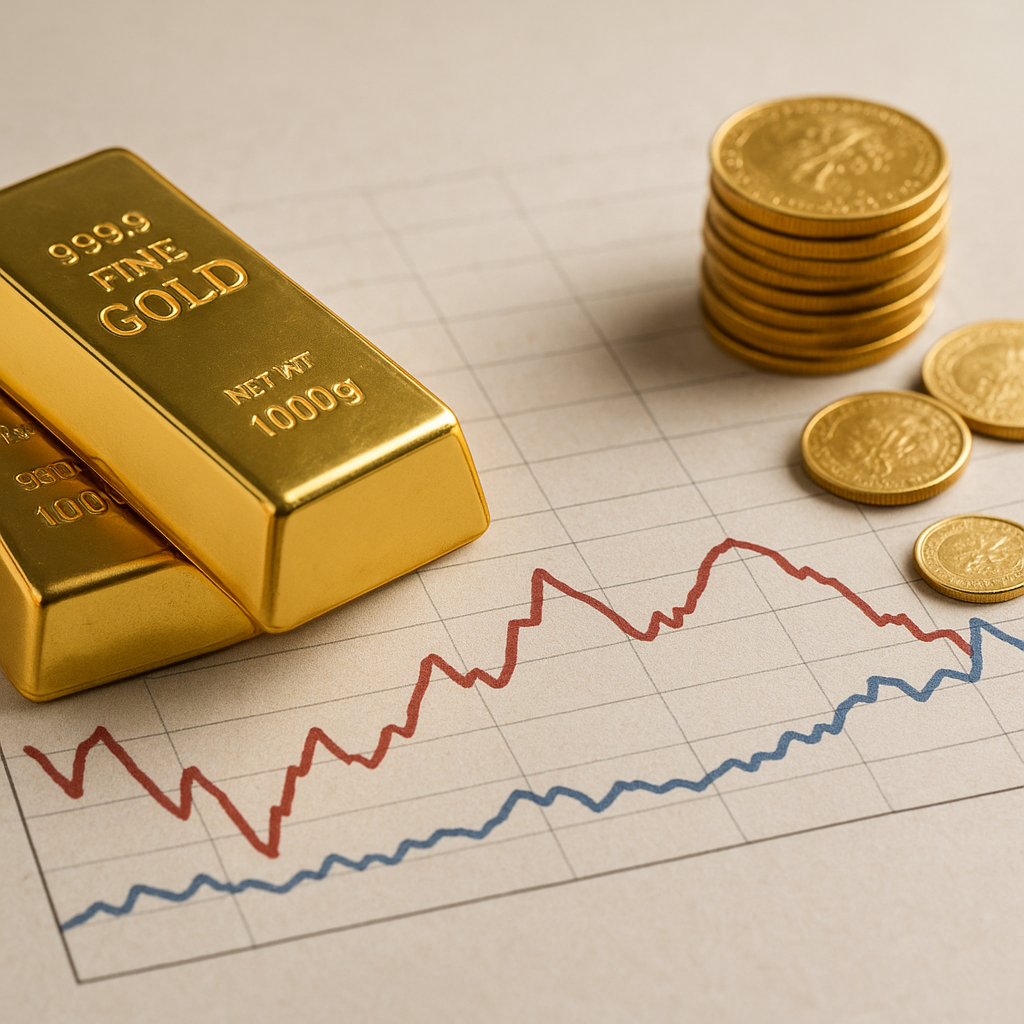
The intricate interplay between global gold prices and prevailing real interest rates has long fascinated economists, investors, and policy makers. While gold has historically been revered as the ultimate store of value, its price dynamics often reflect broader macroeconomic forces. This article examines the historical trajectory of gold, the theoretical underpinnings linking it to real yields, and the practical implications for modern portfolios.
Historical Trends in Gold Prices and Real Interest Rates
Gold’s value journey spans centuries of monetary regimes, from the classical gold standard era to our current fiat system. Throughout the 19th century, governments pegged currencies directly to gold, ensuring stable exchange rates but constraining monetary flexibility. In such an environment, real interest rates—nominal rates adjusted for inflation—tended to hover at moderate levels, and gold functioned primarily as the anchor of public confidence.
Following the collapse of Bretton Woods in 1971, gold was liberated from fixed parity, unleashing unprecedented volatility. The 1970s witnessed a surge in inflation across developed economies, driven by oil shocks and expansive fiscal policies. Real interest rates plunged into negative territory, eroding the appeal of government bonds. In response, investors flocked to gold, pushing prices from roughly $35 per ounce to over $800 by 1980.
During the disinflationary wave of the 1980s and 1990s, central banks raised nominal rates aggressively, lifting real yields into positive terrain. This environment tested gold’s luster, with prices retreating to approximately $300–$400 per ounce. The strong yield advantage of fixed-income assets rendered gold less attractive, underscoring the opportunity cost of non-yielding holdings when real rates are elevated.
The early 21st century, particularly after the 2008 financial crisis, reversed this trend once more. Quantitative easing and near-zero policy rates drove real yields down, often negative, rekindling demand for gold as a safe haven. Between 2008 and 2011, gold soared to new highs above $1,900 per ounce. Subsequent corrections and a tightening cycle (2015–2018) moderated prices, only to see them rebound in the face of renewed accommodative policies and geopolitical tensions.
Theoretical Framework: Opportunity Cost and Store of Value
To understand why real interest rates exert such influence, one must grasp the concept of opportunity cost. Holding gold yields no coupon or dividend, meaning investors forgo interest income available elsewhere. When real rates climb, the comparative appeal of interest-bearing assets intensifies, dampening gold demand. Conversely, negative or very low real rates amplify the attractiveness of gold, as the forgone yield shrinks or disappears.
- Inflation Hedge: Gold is often perceived as a protector against eroding purchasing power. When real rates are negative due to rising inflation, interest-bearing securities fail to preserve value, prompting investors to shift into gold.
- Safe Haven: In times of financial stress or geopolitical turmoil, market participants seek assets uncorrelated with equities or credit markets. Gold’s historical pedigree amplifies its defensive properties.
- Portfolio Diversification: Gold’s low correlation with major asset classes, particularly during market drawdowns, enhances the risk-return profile of balanced portfolios.
Role of Monetary Policy and Central Banks
Central banks play a dual role in this dynamic: they influence real rates through policy decisions and themselves hold significant gold reserves. During quantitative easing, large-scale asset purchases depress yields, often spurring central banks and sovereign wealth funds to rebalance into gold for diversification. The interplay between policy-driven rate suppression and official sector demand can create self-reinforcing gold rallies.
Empirical Evidence and Quantitative Easing Impact
Empirical studies consistently demonstrate a robust inverse correlation between real interest rates (typically proxied by the yield on inflation-protected Treasuries) and spot gold prices. For instance, a one-percentage-point decline in U.S. real rates has coincided historically with a 10–15% rise in gold prices over a six- to twelve-month horizon.
Cross-country analyses extend this relationship beyond the United States. Nations experiencing persistently low or negative real yields—Japan and parts of Europe—have seen domestic gold fund inflows surge. Moreover, the yield curve inversion episodes often herald economic slowdowns, during which real yields plunge further and gold tends to outperform.
- Data from the Federal Reserve and international agencies reveal that during the 2008–2012 period of aggressive easing, gold returns averaged over 20% per annum in real terms.
- Between 2015 and 2018, as the Fed normalized policy and lifted real rates back into positive territory, gold experienced drawdowns exceeding 10% in several calendar years.
- Since 2020, a renewed phase of massive liquidity injections and zero-bound rates—fuelled by pandemic relief and accommodative fiscal measures—has once again driven real yields to record lows, underpinning new highs for gold.
Case studies in emerging markets also illustrate the phenomenon. In India, where gold holds cultural significance, local prices often decouple somewhat from international benchmarks due to tax policy and import duties. Yet even here, periods of rising domestic real rates, often engineered to contain inflation, have exerted downward pressure on retail gold demand.
Implications for Investors and Safe Haven Strategies
Given the inverse relationship, market participants should monitor real interest rate expectations closely when constructing portfolios. Tools such as real yield futures, break-even inflation metrics, and forward guidance from central banks provide signals for prospective gold allocation adjustments.
- Inflation Expectations: A steep rise in breakeven inflation rates tends to depress real yields, suggesting a tactical window to overweight gold.
- Opportunity Cost Analysis: Comparing the carry from bonds versus the cost of holding gold reveals optimal allocation thresholds. When bond yields minus inflation fall below a certain hurdle, gold becomes relatively more attractive.
- Portfolio Diversification: Allocating 5–15% to gold can reduce overall volatility and drawdown in balanced equity–bond portfolios, especially when real yields approach zero or negative territory.
Portfolio Construction with Gold
Investors can access gold through physical bullion, exchange-traded funds, futures contracts, or shares in mining companies. Each vehicle carries unique considerations:
- Physical bullion and coins offer direct exposure but involve storage and insurance costs.
- Gold ETFs provide liquid, low-cost access, replicating spot prices with minimal tracking error.
- Futures contracts deliver leverage but require margin management and carry roll yield considerations.
- Equity stakes in gold mining firms introduce operational risks and leverage to underlying commodity prices.
Strategic allocations often involve layering positions across spot, futures, and equity channels to optimize flexibility and cost efficiency. Advanced investors may utilize options to express asymmetric views, such as buying calls to leverage upside in a low-real-rate environment.
Key Takeaway: Vigilant monitoring of real interest rates and central bank communication can provide critical foresight into gold market trends. By integrating these signals into risk-managed allocation frameworks, investors are better positioned to capitalize on gold’s enduring role as both an inflation hedge and a safe haven.