The global gold landscape has experienced a remarkable shift in recent years due to the growing prominence of recycled metals. This trend is not only reshaping the way investors view precious metals but also influencing market dynamics, price fluctuations, and long-term sustainability goals. As old jewelry, electronic components, and industrial by-products are processed into new bullion, stakeholders across the value chain—from mining houses to central banks—are forced to reassess strategies in light of this emerging force.
Global Gold Market Trends
As traditional sources of gold extraction face mounting operational costs and environmental regulations, industry participants have noted a slowdown in primary mine output. According to the World Gold Council, mining production rose by only 1% last year—well below historical averages. Meanwhile, refined gold demand has continued to expand, driven by both retail buyers and institutional investment funds seeking portfolio diversification. This disconnect between supply and demand has contributed to increased price volatility.
Central banks around the world have also emerged as significant net buyers of gold in recent quarters. Their purchases reflect a desire to preserve reserves amid geopolitical uncertainties and currency pressures. When combined with robust consumer demand in major markets like India and China, the upward pressure on spot prices has been palpable. Yet, despite this bullish environment, physical shortages in certain regions have spurred a search for alternative sources of bullion.
Key Drivers of Demand
- Hedging against inflation: Investors increasingly turn to gold as a safeguard when real yields are negative.
- Technological applications: Electronics and medical devices continue to require small but critical quantities of high-purity gold.
- Jewelry consumption: Cultural and ceremonial uses remain robust, particularly in emerging economies.
Emergence of Recycled Gold Supply
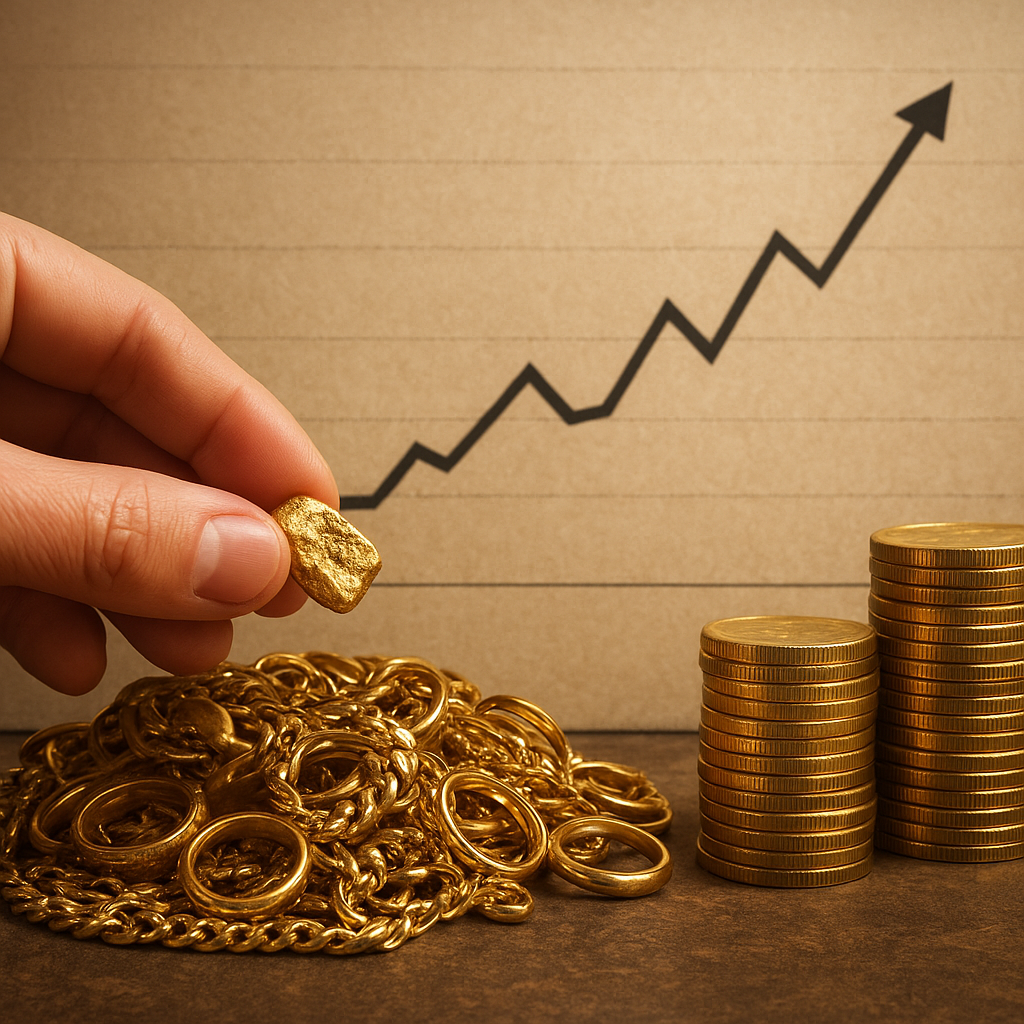
Recycled gold—which encompasses scrap from jewelry, industrial waste, and electronic components—has swiftly moved from a niche segment to a core supply pillar. Refiners have invested in advanced chemical and electro-mechanical processes to extract gold with minimal impurities. This transformation has enabled secondary sources to satisfy a growing share of global demand.
Industry analysts estimate that recycled supplies now account for approximately 25% of annual refined gold output. In years past, the recycling rate hovered closer to 15%. The surge is partly attributable to rising gold prices, which have made it economical to recover even trace amounts from e-waste. New digital tracking systems also provide greater transparency, ensuring that refined bars can be certified as originating from recycled stocks.
Advantages of Recycled Gold
- Lower environmental footprint: Less energy-intensive than mining, reducing carbon emissions.
- Ethical assurance: Minimizes concerns about conflict minerals and dubious labor practices.
- Cost efficiency: Often available at narrower premiums over spot compared to newly mined gold.
Economic Impact on Prices
The expanded inflow of recycled gold exerts downward pressure on the overall cost structure of the precious metals industry. When refiners source a larger proportion of feedstock from scrap, they can offer competitive pricing that undercuts the marginal cost of mine production. This dynamic has led some senior mining executives to reassess the viability of high-expense projects, potentially delaying new mine developments.
Still, the interplay between primary and secondary supplies is complex. In times of acute demand surges—such as during severe economic downturns or financial crises—miners retain a pricing edge due to their ability to deliver large, guaranteed volumes of newly produced bullion. Conversely, in stable markets, refiners capitalize on the agility and lower overhead associated with recycling operations.
Price Premiums and Discount Patterns
Refined recycled gold typically trades at a modest premium over the London Bullion Market Association (LBMA) spot price, usually in the range of 30–60 basis points. Newly mined gold, on the other hand, can attract premiums of upward of 100 basis points, especially when extracted from remote or technically challenging deposits. Conversely, certain scrap categories—such as electronic chips—may be sold at slight discounts due to processing complexities.
Environmental and Long-term Prospects
With sustainability commitments gaining momentum across industries, the adoption of recycled metals aligns with broader corporate responsibility agendas. Major jewellery brands and technology firms are increasingly marketing products made with fully certified recycled gold. This trend dovetails with investor pressure on mining companies to set net-zero targets and minimize ecological disturbances.
Looking ahead, advancements in recovery methods—such as bioleaching and microfiltration—promise to unlock even more latent sources of gold. These technologies could make it feasible to retrieve minute quantities previously deemed unrecoverable, further diversifying supply channels. Additionally, policy incentives, including tax credits for recycling facilities, may encourage more entrepreneurs to enter the market.
Future Scenarios
- Optimistic case: Recycled gold satisfies up to 40% of global demand within a decade, easing price pressures and supporting more stable economy cycles.
- Balanced case: Growth plateaus at 30%, as limitations in scrap availability and logistical bottlenecks curb expansion.
- Conservative case: Primary mining remains dominant, accounting for over 70% of output, due to insufficient incentives for recycling infrastructure.
Ultimately, the rise of recycled gold marks a transformative chapter in the precious metals industry. By altering the traditional supply equation, it compels miners, refiners, and end-users alike to innovate and adapt. As market participants navigate this evolving landscape, demand patterns, price trajectories, and geopolitical considerations will remain in flux, underscoring gold’s enduring role as both a commodity and a strategic asset.