Gold Jewelry Resale Value
On this page
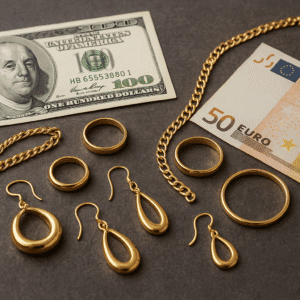
Gold jewelry resale value is usually much lower than the original retail price. That surprises many sellers, but it reflects how the market actually works: buyers pay mainly for the item’s gold content, not for the brand story, showroom markup, or most of the original craftsmanship. To understand what your jewelry is worth on resale, you need to separate retail price, second-hand market price, and melt value. Once you know the purity, weight, and likely buyer type, the pricing becomes far more predictable.
What “gold jewelry resale value” really means
Gold jewelry resale value is the amount a buyer is willing to pay for a used gold item today. In many cases, that buyer is not purchasing it as finished jewelry at all. Instead, the item may be valued as scrap gold, meaning its worth is based largely on recoverable gold after refining.
This is why a gold ring bought at a high retail price may resell for far less. Jewelry stores charge for design, labor, brand positioning, inventory costs, rent, marketing, and margins. Those costs rarely carry over into the resale market unless the piece is from a sought-after luxury brand, has collectible appeal, or includes valuable gemstones with verified quality.
The three values you must not confuse
The most important point is simple: retail price is not resale price, and resale price is not always melt value. These are different markets with different pricing logic.
| Value Type | What It Reflects | Usually Includes | Typical Relevance for Sellers |
|---|---|---|---|
| Retail price | The price paid in a store | Gold content, design, labor, branding, store markup | Useful as purchase history, but usually poor as a resale benchmark |
| Resale price | What a second-hand buyer may pay | Gold value plus possible brand or jewelry appeal | Most relevant if selling to a jeweler, pawn shop, dealer, or private buyer |
| Melt value | The raw metal value of the gold content | Fine-gold content based on weight and purity | Sets a practical floor for scrap gold transactions |
The key takeaway is that most ordinary used gold jewelry trades close to scrap logic, not original retail logic. Exceptions exist, but they need evidence.
How gold jewelry resale value is calculated
At a practical level, resale starts with four variables: total weight, purity, current gold price, and buyer discount. If the item is being bought mainly for scrap, the calculation is straightforward.
Step 1: Determine purity
Gold jewelry is usually marked in karats. Karat indicates how much pure gold is contained in the alloy. Higher karat means more fine gold and, all else equal, higher intrinsic value.
| Karat | Approximate Purity | Fine Gold Content | Practical Meaning for Resale |
|---|---|---|---|
| 24K | 99.9% pure | Very high | Closest to bullion purity; generally easiest to value by metal content |
| 22K | 91.6% pure | High | Strong gold content; common in some regional jewelry markets |
| 18K | 75.0% pure | Moderately high | Good intrinsic value; widely used in fine jewelry |
| 14K | 58.5% pure | Moderate | Common in mass-market jewelry; lower melt value than 18K at same weight |
| 10K | 41.7% pure | Lower | Contains less gold, so resale is more limited by lower metal content |
Step 2: Weigh the item
The heavier the item, the more gold it may contain. But total weight alone is not enough. Stones, clasps, fillers, and non-gold components can reduce the actual fine-gold portion.
Step 3: Convert total weight into pure-gold weight
If a piece weighs 20 grams and is 18K, then only 75% of that weight is pure gold. Its fine-gold content would be 15 grams before any deductions for stones or non-gold parts.
Step 4: Apply the current gold price
The market reference is typically the spot price of gold. For jewelry, that spot value must then be adjusted for purity and weight to estimate gross melt value.
Step 5: Expect a buyer discount
Refiners, gold buyers, pawn shops, and dealers need a margin. They may also face refining losses, testing costs, market risk, and operating expenses. As a result, offers are usually below theoretical melt value.
Why resale value is often much lower than the original purchase price
The biggest reason is that retail jewelry pricing contains many non-metal costs that do not hold up in resale. A customer may pay a large premium for craftsmanship, display, brand presentation, or emotional appeal. The second buyer often does not value those elements nearly as highly.
Another issue is liquidity. A plain gold chain can be sold as scrap relatively easily because its gold content has immediate value. A fashion-oriented ring with dated styling may have weak second-hand demand even if it originally sold at a premium.
Stones also create confusion. Small diamonds in mass-market jewelry often add little to scrap offers. Unless gemstones are sizable, certified, and marketable on their own, many buyers focus almost entirely on the gold.
Who you sell to makes a major difference
The same item can receive very different offers depending on where you sell it. That is because each buyer has a different business model.
| Buyer Type | How They Usually Value the Item | Potential Advantage | Main Limitation |
|---|---|---|---|
| Pawn shop | Conservative, quick-liquidity pricing | Fast transaction | Often lower offers |
| Gold buyer or refiner | Mainly metal content less fees/margin | Transparent scrap-based pricing possible | Usually little value for design or branding |
| Jeweler | Metal value plus possible resale potential | May pay more for wearable pieces | Selective on style and condition |
| Consignment or resale platform | Second-hand retail logic | Higher possible price for attractive pieces | Slower sale, commissions, uncertain timing |
| Private buyer | Negotiated market price | Can exceed scrap value | Requires trust, time, and proof of authenticity |
If your item is standard, broken, mismatched, or outdated, scrap-oriented buyers may be the realistic benchmark. If it is branded, well-designed, or in demand, a consumer resale channel may produce a higher result.
Factors that increase or reduce resale value
Not all gold jewelry is treated the same in the resale market. A few variables matter far more than sellers expect.
- Purity: Higher karat generally means higher intrinsic value per gram.
- Weight: More weight usually means more gold, but only net gold content matters.
- Current gold price: Rising gold prices tend to support higher scrap offers.
- Condition: Good condition helps if the piece may be resold as jewelry rather than melted.
- Brand: Recognized luxury brands can support prices above melt value.
- Design and demand: Timeless, wearable styles may attract higher second-hand bids.
- Gemstones: Large or certified stones may add value; small accent stones often add little.
- Documentation: Original receipts, certificates, and brand packaging can help, especially for designer pieces.
The practical distinction is this: intrinsic value comes from the gold; extra value must be proven. If the buyer cannot confidently resell the piece as jewelry, they will usually default to metal value.
Melt value versus true jewelry resale value
Melt value is a useful baseline, but it is not always the final answer. Some pieces trade above melt because they are desirable as finished items. Others trade below theoretical melt because of testing uncertainty, embedded stones, alloy complexity, or low-volume buyer margins.
A bracelet from a recognized brand, for example, may command a premium because buyers know the style, trust the hallmark, and can sell it again as jewelry. By contrast, a damaged 14K chain with broken clasps may be worth little beyond scrap.
For this reason, sellers should think in layers:
- Estimate the item’s melt value.
- Ask whether the item has resale appeal as wearable jewelry.
- Ask whether it has brand, antique, or collectible value.
If the answer to the second and third questions is no, melt value is usually the right anchor.
Common limitations and mistakes when valuing gold jewelry
A frequent mistake is using the full spot price of pure gold on the item’s total weight. That overstates value because jewelry is rarely pure gold, and buyers rarely pay 100% of melt.
Another mistake is assuming appraised value equals cash resale value. Insurance appraisals are often based on replacement cost in a retail environment. That number can be far above what a resale buyer would pay.
Hallmarks can also be misleading if the item is damaged, altered, plated, hollow, or partly non-gold. Professional testing may be needed. Acid tests, XRF analysis, and weighing methods help buyers verify what they are actually purchasing.
Finally, sellers often ignore transaction costs. Shipping, commissions, consignment fees, authentication, and delays can materially affect net proceeds.
What sellers should do before accepting an offer
Preparation can materially improve the outcome. Even if the final sale still tracks scrap value, informed sellers are less likely to accept an unnecessarily weak bid.
- Identify the karat marking and check for hallmarks.
- Weigh the item accurately, ideally excluding removable non-gold parts where possible.
- Understand whether stones are real, certified, or commercially significant.
- Check the current gold price as a reference point, not as the expected payout.
- Request multiple offers from different buyer types.
- Ask whether the offer is based on total weight or net gold weight.
- Clarify whether stones are included, ignored, or deducted.
- If the piece is branded or antique, explore specialist resale channels before selling for scrap.
The best approach is usually comparison. One buyer may see only melt value, while another may see resale potential as jewelry.
FAQ
Why is gold jewelry resale value lower than the retail price?
Retail price includes design, labor, branding, store overhead, and markup. Resale buyers usually focus on gold content and their own ability to resell or refine the item. Most of the original retail premium does not transfer to the secondary market.
How do I calculate the melt value of gold jewelry?
You need the item’s weight, its purity, and the current gold price. Convert the item into its fine-gold content first, then apply the gold price. After that, remember that actual offers are often below theoretical melt value because buyers need a margin.
Does 18K jewelry have better resale value than 14K?
At the same weight, 18K usually has higher intrinsic value because it contains more pure gold. However, final resale value still depends on buyer type, condition, design, and whether the piece is being bought as jewelry or as scrap.
Do diamonds and gemstones increase gold jewelry resale value?
Sometimes, but not always. Large, certified, and commercially desirable stones may add value. Small accent stones in mass-market jewelry often contribute little to scrap-based offers, and in some cases they are ignored or removed for valuation purposes.
Should I sell gold jewelry to a pawn shop or a gold buyer?
It depends on the item and your priorities. Pawn shops may offer speed and convenience, while gold buyers may provide a more direct scrap-based valuation. If the piece is branded or attractive for second-hand wear, a jeweler or resale platform may produce a better result.
Can gold jewelry sell for more than melt value?
Yes. Designer pieces, collectible items, antique jewelry, and wearable pieces with strong second-hand demand can sell above melt value. But that premium is not automatic and usually requires the right sales channel.
Is an appraisal the same as resale value?
No. An appraisal often reflects replacement cost for insurance purposes, which can be much higher than cash resale value. For selling, market demand and recoverable gold value matter more than the appraisal figure.
Sources
- World Gold Council – gold market and gold valuation research
- LBMA – precious metals benchmark and spot market information
- CME Group – gold futures and price discovery information
This guide is general information about the gold market. It is not investment advice and does not take your financial situation into account.