The ancient world witnessed the ascent of a lustrous metal that would shape empires, define value and influence the evolution of civilization. As societies carved river valleys and expanded into arid plains, the discovery and utilization of gold played a pivotal role in forging political power, facilitating long-distance exchange and stabilizing emerging monetary structures. This article explores how gold transformed early economies, anchored trade networks, and laid the groundwork for modern price dynamics in global markets.
The Origins of Gold in Early Economies
Gold artifacts dating back to the Neolithic period reveal early communities’ fascination with the metal’s unique properties. Its resistance to corrosion, malleability and radiant sheen elevated gold beyond mere ornamentation, conferring symbolic associations with the divine and the eternal. As techniques in metallurgy advanced, gold began to assume roles in transactional exchanges within burgeoning city-states.
From Decorative Object to Medium of Exchange
- Local barter systems often traded livestock, grains and textiles, but gold emerged as a universal standard capable of representing wealth in compact form.
- Gold dust and small nuggets served as provisional currency before standardized ingots or coins became widespread.
- The intrinsic scarcity of gold imparted a measure of anti-inflation stability, since extraction required significant labor and technological investment.
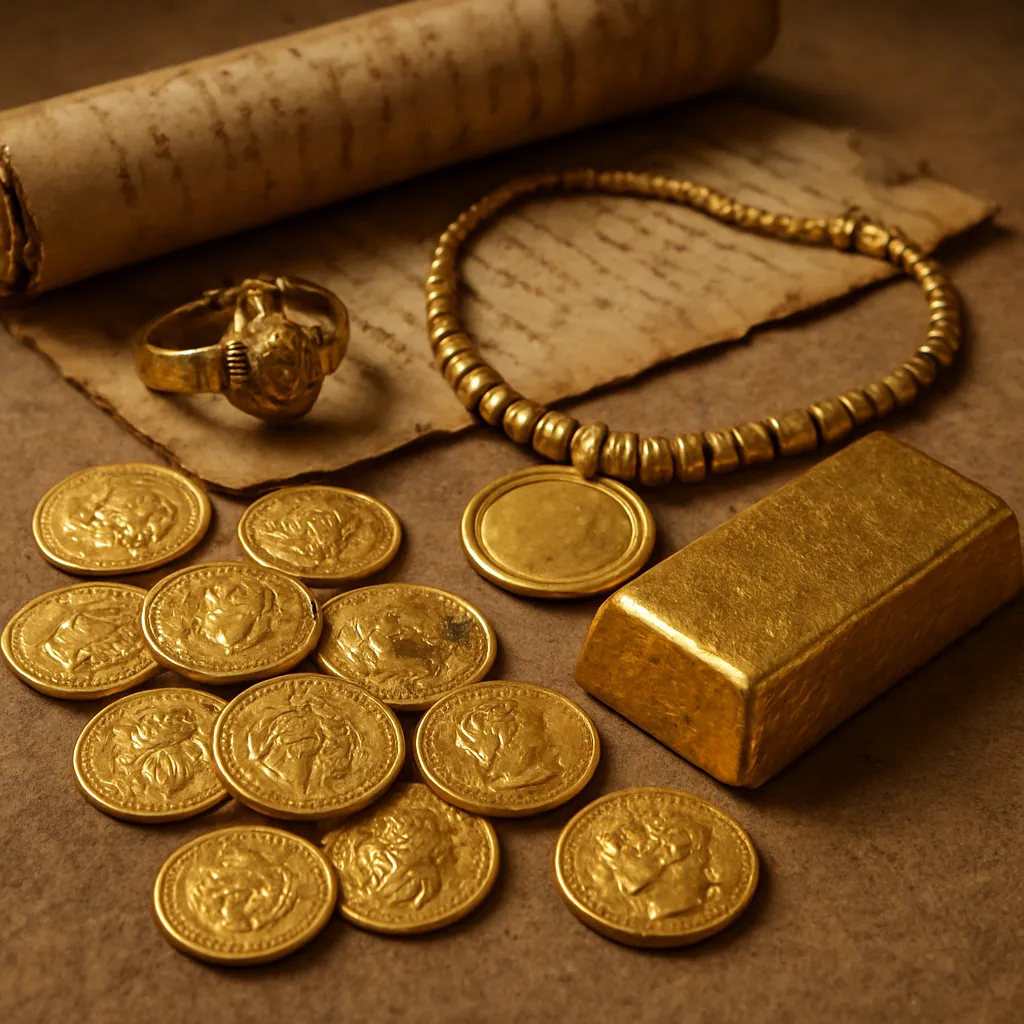
Between 3500 and 2000 BCE, Mesopotamian and Egyptian couples sealed contracts with gold rings or bracelets, hinting at its early reputation as a store of value. The emergence of goldsmith guilds around 1500 BCE facilitated more precise weight-based valuation, spurring demand for specialized scales and certified weights, the precursors to modern minting operations.
Gold and the Emergence of Trade Networks
Transcontinental trade routes connected Mediterranean powers to Sub-Saharan Africa, South Asia and East Asia. As traders traversed deserts, mountains and rivers, gold functioned both as a portable reserve and as a symbol of political clout. Kingdoms boasting rich gold mines often leveraged that resource to negotiate alliances, fund armies and host extravagant religious ceremonies.
Key Trade Routes and Gold Flows
- The Saharan caravan routes linked gold fields in the forests of modern-day Ghana and Mali to Mediterranean ports, financing the splendour of North African city-states.
- The Silk Road corridors facilitated the eastward flow of bullion in exchange for silk, spices and ceramics, creating a multi-directional exchange of luxury goods.
- Indian Ocean maritime networks carried gold ingots between the Arabian Peninsula, the African Swahili coast and South Indian kingdoms, underpinning wealthy port cities.
Within these networks, gold did more than pay for imports. It established credit lines, secured diplomatic treaties and served as collateral during times of conflict. The metal’s fungibility meant traders could melt and recast ingots to conform with local currency standards, enabling flexible valuations and reducing transaction costs.
The Monetary Systems of Ancient Powers
As societies matured, formal mints and treasury warehouses institutionalized gold’s role in economic governance. By coining standards and issuing certificates against physical reserves, rulers created the first centralized monetary authorities, shaping fiscal policy and influencing market sentiment.
Pioneering Coinage and Fiscal Innovation
- Lydia (modern Turkey) struck the earliest known gold coins around 600 BCE, standardizing units of weight and purity to facilitate interstate trade.
- Persian emperors imposed tribute systems denominated in gold, using the metal to pay professional soldiers and bureaucrats, ensuring loyalty and administrative efficiency.
- Roman denarii and aurei became paradigms of reliable gold coins, fostering a pan-Mediterranean monetary zone that persisted for centuries.
These ancient monetary systems wielded gold reserves to stabilize prices and suppress inflation. During periods of economic strain, rulers could recall older coins, melt them down and adjust purity levels to replenish state coffers. While effective in crisis management, such debasement practices sometimes eroded public trust and spurred speculative hoarding of higher-purity bullion.
Long-Term Impact on Modern Gold Markets
The legacy of gold’s ancient economic functions echoes today in how global investors view the metal as a hedge against volatility. Historical precedents—the metal’s scarcity, portability and universal acceptance—inform contemporary strategies for portfolio diversification. Investment demand in exchange-traded funds, municipal reserves and private holdings draws on centuries of perception that gold preserves real wealth and guards against currency debasement.
From Ancient Ingots to Modern Bullion
- Central banks maintain strategic gold reserves to bolster confidence in national currency stability and provide liquidity in systemic crises.
- Spot price discovery mechanisms are rooted in open trading floors and futures markets, echoing age-old conventions of weight, purity and fashioning protocols.
- Numismatic and collectible coins carry both intrinsic bullion value and historical premiums, attracting specialized collectors worldwide.
Global market infrastructure continuously evolves, employing digital platforms and blockchain registries to ensure provenance, track transactions and reduce settlement risks. However, the fundamental drivers of gold demand—geopolitical uncertainty, inflationary pressures and fluctuations in fiat economy performance—remain constant. As nations and private actors recalibrate asset allocations, the metal’s time-honored attributes underscore its enduring appeal.
Contemporary Reflections on an Ancient Metal
By tracing gold’s journey from riverbed nuggets and temple offerings to sovereign coinage and modern bullion vaults, one observes a continuous narrative of value preservation and economic integration. Ancient civilizations recognized gold’s unique capacity to embody trust, facilitate exchange and serve as a beacon of sovereignty. These qualities persist in twenty-first-century markets, where gold retains its position as a strategic asset class.
The interplay between historical precedent and modern financial innovation ensures that gold’s role will adapt but never diminish. From stabilizing rudimentary economies to underpinning central bank policies, gold remains a testament to the power of a metal that transcends eras, borders and ideologies.